





















Constructing a personal home represents one of the most substantial financial milestones in an individual's life, demanding careful financial planning and a deep understanding of raw material requirements. A major portion of any household savings typically goes directly into procurement expenses for basic elements such as bricks, cement, sand, and reinforcement steel bars. Alongside material purchases, the charges paid to skilled masons and daily construction workers also represent a heavy recurring expense throughout the project timeline. Without a clear and realistic assessment of how much material is actually needed for a planned carpet area, builders and homeowners frequently encounter unexpected budget shortfalls mid-way through their structural work. Among all building materials, bricks constitute the literal framework of the living space, making an accurate count essential before placing site orders.
Calculating Brick Volumes for a 1200 Square Foot 2 BHK Unit
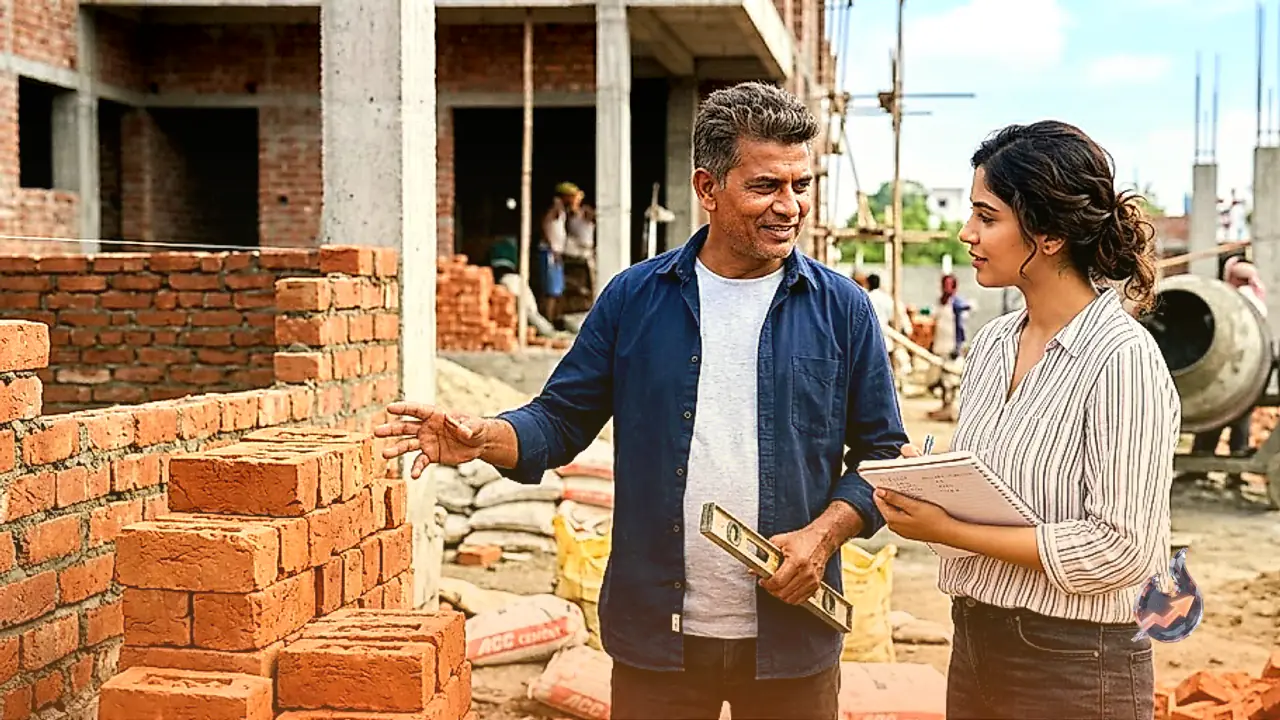
Offering direct practical insight from the construction sector, Baiju Kumar, a mason residing in Ghosi Bazar within the Jehanabad district of Bihar with 11 years of professional experience in masonry and site contracting, outlines the exact requirements for a standard home. He explains that developing a 2 BHK apartment unit comprising two bedrooms, one central hall, and a kitchen across a 1200 square foot area depends largely on wall specifications. When a structure is designed with outer perimeter walls measuring 10 inches in thickness for structural durability and inner partition walls built to 5 inches in thickness, the masonry work consumes roughly 6 tractor-trolleys of bricks. Since an average tractor load holds 1,500 units of bricks, completing the structural masonry across such a residence demands an aggregate of 9,000 bricks.
Prevailing Material Rates and Brickwork Expenditure
Addressing the prevailing commercial charges in Jehanabad district, Baiju Kumar points out that purchasing top-grade, first-category bricks costs roughly 15,000 rupees per single tractor delivery containing 1,500 units. This breakdown establishes the current unit retail price at 10 rupees per brick. Consequently, procuring the required 6 loads containing 9,000 bricks translates into a dedicated expenditure of 90,000 rupees solely for brick inventory. He highlights that ongoing increases in raw soil procurement costs, fuel charges at kiln sites, and escalating labor expenses have steadily pushed brick manufacturing costs upward, keeping the retail purchase price firmly around the 10-rupee threshold for individual bricks.
Structural Estimates and Finishing Budget Comparison
Expanding on broader building inflation, Baiju Kumar provides comparative figures on overall structural investments. Erecting a smaller 600 square foot residential structure strictly in raw condition without decorative or architectural finishing requires an outlay of roughly 7 lakh rupees. However, if the owner decides to finish the same 600 square foot property completely with final plaster, flooring, and aesthetic fixtures to make it ready for move-in, total project expenses escalate up to 12 lakh rupees. In modern urban settings, the challenge is further compounded by soaring real estate valuations, where the acquisition of plot land itself costs multiple lakhs of rupees, frequently matching the entire physical construction budget and absorbing a massive portion of a buyer's lifetime financial assets.