



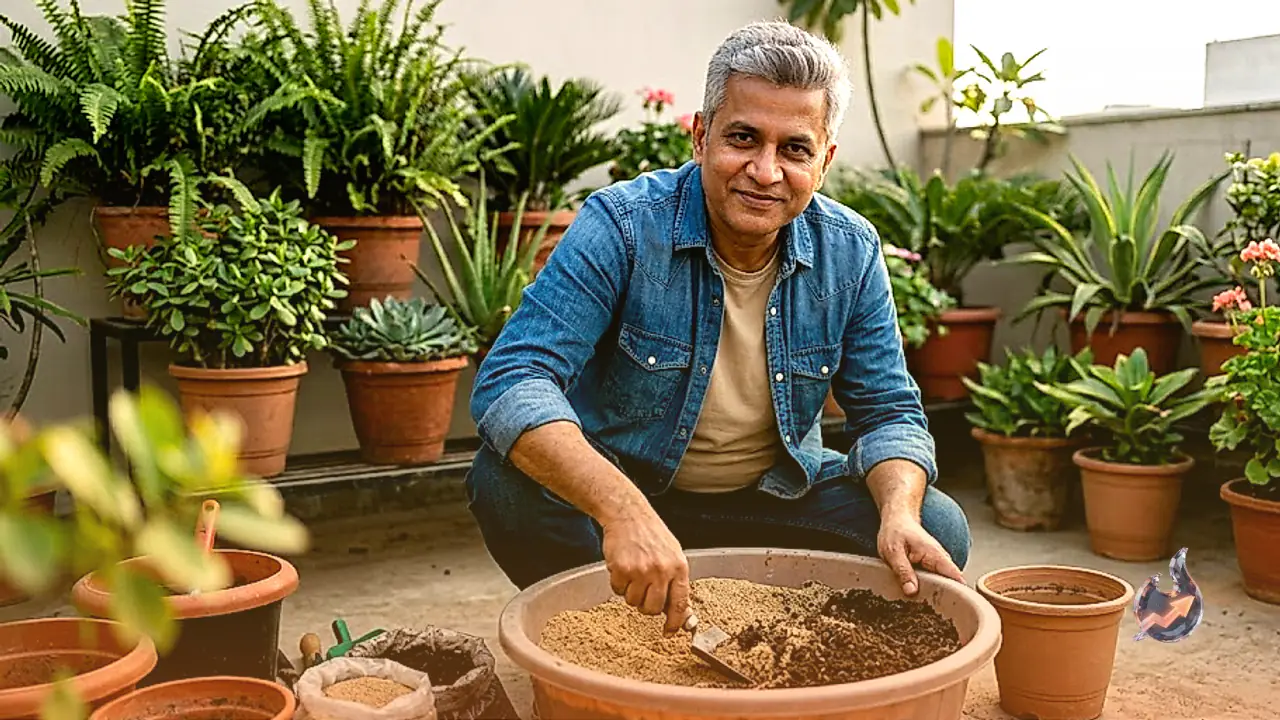




















Maintaining rooftop gardens can be a challenge, especially when plants start showing signs of decay. Rakesh Kumar, who has successfully grown over 150 plants on his rooftop including varieties like adeniums, hibiscus, and cacti, has mastered the art of urban gardening. Drawing from his 20 years of hands-on experience, he shares practical tips that can save beginners a lot of trouble and protect their hard work from going to waste.
The biggest danger to your plants
According to Rakesh Kumar, the single most destructive element for potted plants is prolonged water stagnation around the roots. When water stays trapped in the root system for too long, the roots begin to rot. Once the roots are damaged, the plant naturally starts withering and eventually dies. Therefore, preventing waterlogging in the root zone is the absolute key to keeping plants alive and thriving.
Turning discarded construction sand into a gardening asset
During building construction or wall plastering, workers use fine sand that is passed through a sieve to filter out coarser particles. Most people throw away the leftover coarse residue, considering it useless waste. However, Rakesh Kumar points out that this discarded sand can be repurposed very effectively to boost plant growth and improve overall soil health in containers.
Why heavy soil stunts plant growth
Getting the soil mixture right is crucial when repotting plants. Rakesh Kumar recommends preparing a potting mix consisting of 90 percent sand and just 10 percent vermicompost and normal soil. Planting in this specific ratio promotes healthy development. The reason is that when plants are grown in mostly heavy soil, adding fertilizers over time makes the soil dense and rock-hard.
How sand protects roots and aids expansion
When potting soil becomes overly compacted, plant growth stalls entirely. Hard soil prevents roots from branching out and stops stems from developing properly, which harms the plant. Sand, on the other hand, never packs down tightly. By using sand as the primary medium, roots get the loose texture they need to spread out freely, ensuring they remain well-aerated and completely safe from root rot.


