























The rainy season is widely considered the best period for home gardening experiments and propagating new saplings. If you wish to grow a lemon tree at home, you do not need to buy expensive saplings from commercial nurseries. According to District Horticulture Officer Dr Puneet Kumar Pathak, the natural humidity present during the monsoon allows home gardeners to multiply healthy lemon plants completely free of cost using air layering and stem cutting techniques. These methods are easy to execute and yield remarkably high success rates.
Step-by-Step Method for Air Layering Lemon Branches
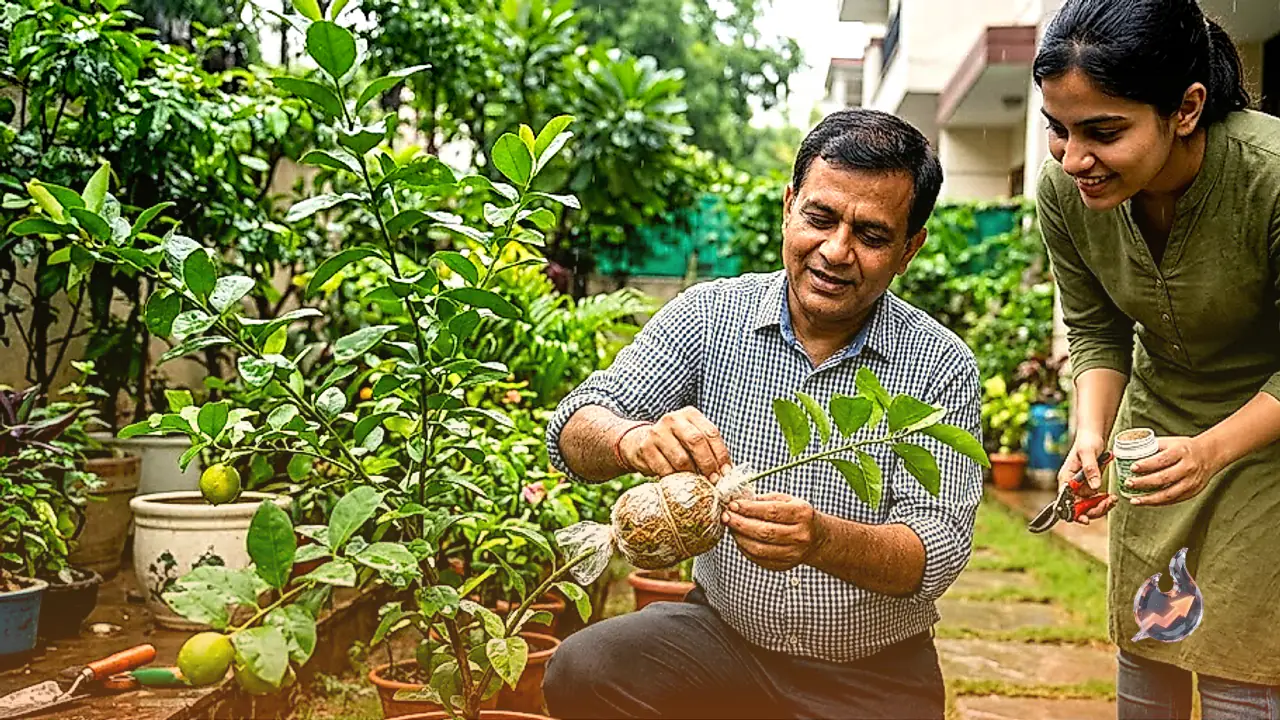
Air layering is one of the most reliable ways to create a strong new sapling from an existing tree. To begin, select a healthy branch that is roughly as thick as a pencil from a mature lemon plant. Carefully ring-bark the branch by peeling away a one-inch strip of outer bark in a circular shape. Ensure the inner wood remains undamaged. Next, apply a layer of moist cocopeat or rich soil directly over the peeled area and cover it tightly with a clear plastic sheet.
Secure both ends of the plastic wrap firmly using string so that neither outside air nor water can penetrate the seal. Due to the damp monsoon conditions, visible white roots will begin to develop inside the plastic sleeve within 25 to 30 days. Once a dense root network forms, cut the branch just below the rooted section from the main tree. The newly formed sapling can then be potted or planted directly in garden soil.
Propagating Lemon Trees Using Stem Cuttings
Stem cuttings offer another straightforward approach to propagating lemon plants during the monsoon. Select a sturdy, mature branch and cut a piece that is 6 to 8 inches long. Strip off the leaves from the bottom section and make a clean, slanting cut at the base of the stem. If available, apply rooting hormone to the base. Alternatively, fresh aloe vera gel can be used as a effective natural rooting agent.
Insert the prepared stem cutting about 2 to 3 inches deep into a pot filled with an equal blend of sand and soil. Keep the growing medium slightly moist and place the pot in a shaded spot away from direct intense sunlight. Thanks to the moisture-laden atmospheric conditions of the rainy season, new leaves and shoots will start appearing alongside fresh roots within 20 to 25 days.
Advantages of Vegetative Propagation Over Seed Planting
Plants grown from lemon seeds take a lengthy 4 to 5 years before they produce their first harvest of fruits. In contrast, saplings prepared using air layering or stem cuttings taken from a mature plant start bearing fruits in as little as 1 to 2 years. Furthermore, plants propagated vegetatively are genetically identical clones of the parent tree. If your original tree yields large and juicy lemons, the new plant will mirror those exact high-quality traits without any deviation.
Why Monsoon Conditions Guarantee Higher Success Rates
High atmospheric humidity and steady moisture levels define the monsoon season, creating an optimal setting for plant cell division and fast root initiation. The risk of cuttings or layered branches drying out is minimal during this time, allowing the young plant to anchor itself firmly in the soil. Additionally, natural rainwater serves as a nutrient tonic for young plants, eliminating the need for frequent manual watering. Stable ambient temperatures ensure a success rate exceeding 90 percent, making this a cost-effective choice for gardening enthusiasts.