























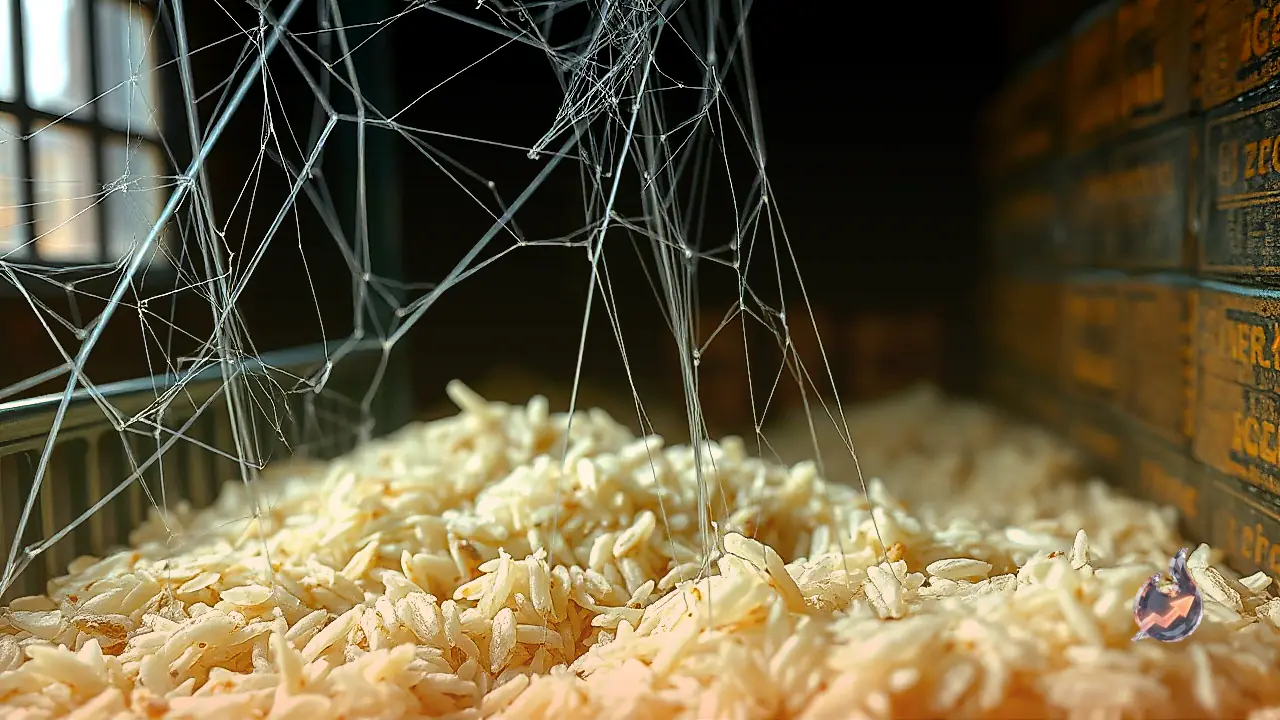

Discovering fine cobwebs or silky thread-like structures while scooping rice from a kitchen container is a clear signal that should never be ignored. Many households mistake these delicate strands for minor dust or harmless moisture damage, but they actually indicate an active pest infestation inside the grain bin. These thin threads are produced by the larvae of grain-inhabiting insects as they feed and move between the individual rice grains. Infestations tend to spike significantly during humid monsoon months when warm and moist conditions accelerate insect reproduction. Consuming infested grain poses noticeable health risks, making it vital for homemakers and cooks to identify the warning signs early and implement proper storage hygiene.
Why Fine Webbing Forms Inside Stored Rice
The primary culprit behind silk-like webbing in dry grain is the pantry moth, alongside other stored-product pests like grain weevils and beetles. When adult insects deposit microscopic eggs inside grain packages, the hatching larvae burrow into the rice for nourishment. As these larvae grow, they secrete fine silk threads that bind multiple grains together, resulting in visible clumps and cobweb structures. Environmental factors play a massive role in this process; storing rice in warm, damp, or poorly ventilated spaces creates an ideal breeding ground for these pests. Furthermore, infestation often begins before the product reaches your kitchen, as invisible eggs can easily exist in store-bought grain packets and hatch once exposed to favorable household temperatures.
How to Respond When You Spot Webbing in Grain
If an inspection reveals clear signs of webbing, live larvae, adult insects, unhatched eggs, foul odors, or an unusual sticky texture, the safest action is to discard the entire batch immediately. Attempting to salvage heavily infested rice by sifting, winnowing, or washing it repeatedly with water is insufficient. Microscopic waste, egg casings, and larval fragments often cling tightly to grain crevices and cannot be completely rinsed away. If you notice only very minor signs and wish to inspect the grain further, spread the rice thinly across a clean, dry tray. Should any visible pests or webbing appear upon close examination, food safety standards dictate throwing the grain away rather than cooking it.
Effective Prevention Strategies for Long-Term Storage
Protecting dry pantry items from pest damage requires proactive measures and consistent kitchen cleanliness
- Optimal Storage Conditions: Always keep rice in a cool, dry, and well-ventilated location. Store grains exclusively in sturdy, airtight containers to lock out ambient humidity and prevent external insects from entering.
- Rational Quantity Purchasing: Avoid stockpiling excessive quantities of grain for long periods. Purchasing smaller batches that match your household's actual monthly consumption minimizes the risk of prolonged storage infestation.
- Routine Pantry Inspections: Regularly check nearby staples such as wheat flour, lentils, semolina, and flattened rice. Pantry moths travel quickly between unsealed containers, meaning an undetected outbreak in one package can easily contaminate adjacent items.
- Immediate Isolation and Cleanup: If an infested container is discovered, immediately remove it from the pantry. Thoroughly wipe down and sanitize the shelf or cabinet where the container was stored to eliminate stray eggs or larvae.
Common Storage Pitfalls and What to Avoid
Well-meaning efforts to save infested grain often backfire due to common misconceptions. Sun-drying contaminated rice, washing it multiple times, or boiling it at high temperatures does not neutralize larval debris or potential toxins. Prioritizing food safety over saving a small quantity of grain is always the wiser choice. Once affected rice is removed, the container must be scrubbed thoroughly with soap and water and allowed to dry completely before any new stock is added.
Another frequent mistake is layering fresh rice directly on top of older stock in the same container. If the remaining older grain carries unseen pest eggs, the newly added rice will rapidly become infested as well. Always consume the existing supply completely, sanitize the bin, and ensure it is bone-dry before refilling it with fresh stock. Keeping storage containers away from direct heat sources and high humidity will keep your pantry safe and pest-free throughout the year.