























For enthusiasts of Adenium, widely recognized as the Desert Rose, the current monsoon season presents a perfect opportunity to witness significant growth in your garden. This period acts as a rejuvenation phase, where the combination of high humidity and natural nutrients in rainwater helps plants grow at an accelerated pace compared to other seasons.
The Impact of Monsoon on Desert Roses
Dr. Abhishek Pratap Singh, a senior scientist at the Krishi Vigyan Kendra in Madhopur, explains that Adenium plants often struggle and appear lifeless during intense summer heat. However, with the arrival of monsoon rains and the subsequent drop in temperature, these plants undergo a remarkable recovery. The rainwater is rich in dissolved nitrogen, which is vital for restoring the vibrant green color and health of the leaves.
Best Practices for Propagation
If you are looking to propagate new Adenium plants from seeds, the rainy season provides the ideal environmental conditions. However, success depends on meticulous care. The most critical factor is ensuring proper drainage to prevent waterlogging. Understanding soil acidity is equally important; Dr. Abhishek suggests that sandy, loose soil with a pH level between 6.0 and 6.5 is optimal for these plants to develop effectively.
Essential Maintenance During Heavy Rain
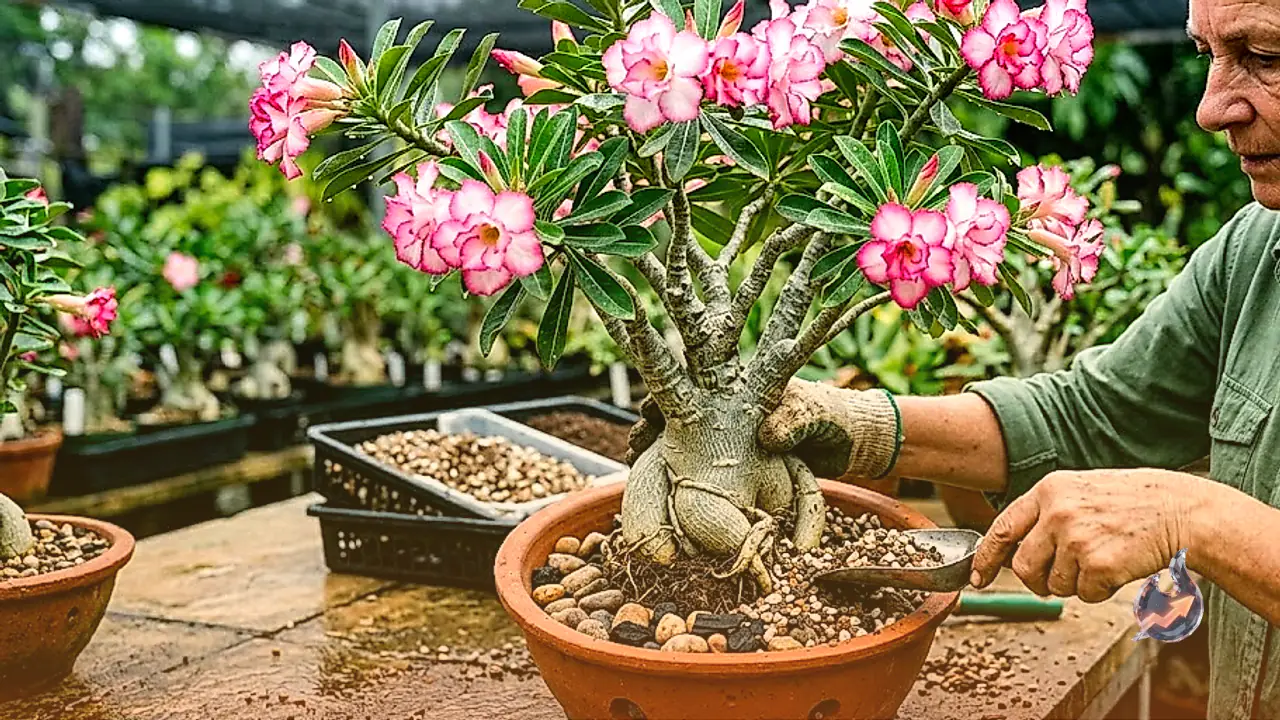
Because Adenium is a succulent species that naturally thrives with limited water, excessive moisture can lead to root and stem rot. When potting your plants, it is recommended to use a mixture containing 40 percent sand and 30 percent soil or coco peat. To protect your plants from fungal infections, regular application of fungicide is necessary. Furthermore, if you experience heavy or continuous rainfall, it is advisable to move the pots under a shed or sheltered area to shield them from oversaturation.