























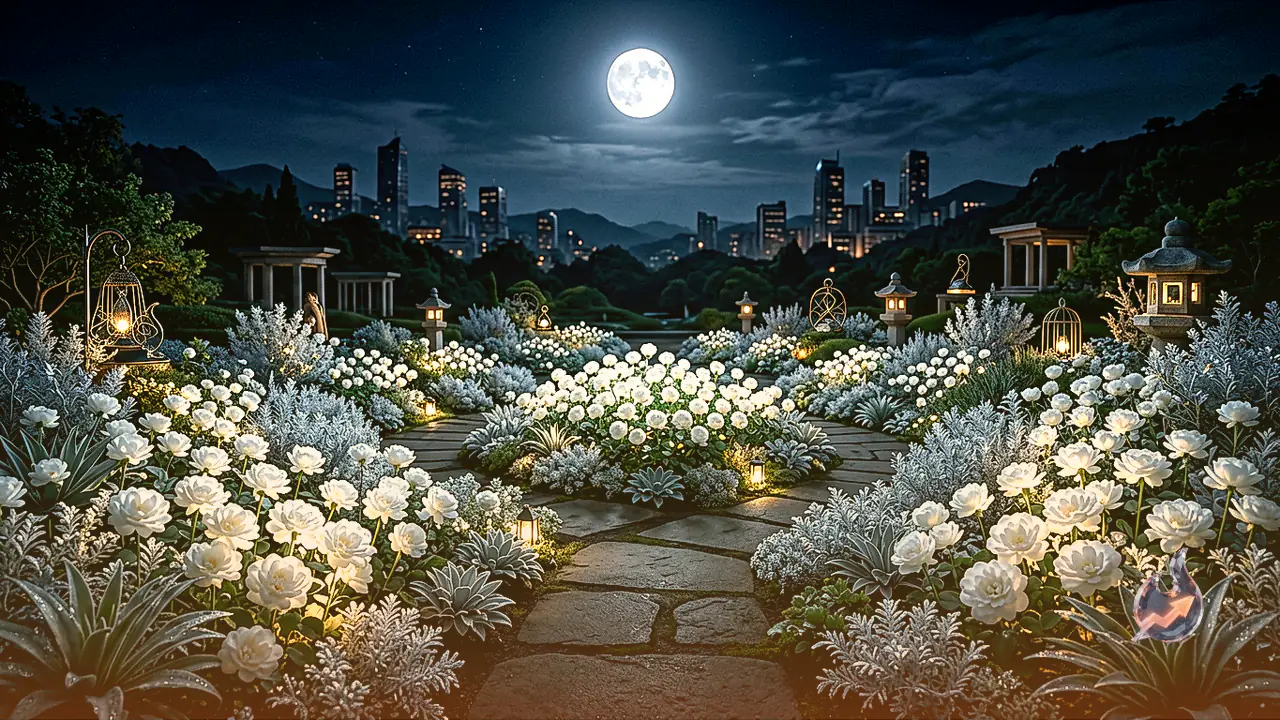

As dusk settles, standard gardens usually lose their charm and visibility, but with thoughtful plant selection, this quiet hour can become the most enchanting part of your home. Imagine soft moonlight filtering down, white blossoms glowing in the dim light, silver-toned leaves catching a faint sheen, and a gentle fragrance drifting past as you walk by. This is the essence of a moon garden, a specially curated outdoor space designed to look its absolute best during the nighttime hours.
Setting Up on Any Scale
Creating this serene nocturnal retreat does not require a sprawling lawn or a massive budget. It can easily be brought to life on a balcony, a rooftop terrace, a small garden bed, or even a modest courtyard. The secret lies in striking the right balance among colors, fragrances, and low-level lighting. While vibrant and bright colors command attention during daylight hours, the nighttime landscape relies on white, cream, pale yellow, and silvery hues to make a lasting visual impact.
Choosing the Right Flora
Building a successful nocturnal garden starts with selecting varieties that retain their visual appeal under minimal illumination. White flowering plants naturally form the core identity of such spaces, as they act like tiny reflectors for whatever natural light is available in the evening hours.
Enhancing the Air with Jasmine and Tuberose
Jasmine serves as a wonderful addition with its small white blossoms and the rich fragrance it releases as the evening progresses. Similarly, tuberose features tall spikes of white flowers that stand out sharply against deep green foliage. If space permits, the evening glory can also be introduced, with large white blooms opening up as the sun sets and climbing gracefully along trellises or supports. White lilies and rain lilies are equally great choices for compact flower beds or individual pots.
Silver Foliage for Added Contrast
Instead of relying solely on blossoms, incorporate plants with silvery leaves to elevate the aesthetic. The silvery foliage of dusty miller catches even the faintest glimmer of light and forms a striking contrast against darker greenery. Artemisia introduces a delicate texture to the arrangement, while silver falls dichondra works wonderfully in hanging planters, with its round, cascading silver leaves creating the illusion of a soft, glowing waterfall in the dark.
Placing Fragrance Near Seating Areas
A nighttime garden engages the sense of smell just as much as sight. Therefore, aromatic plants should be positioned close to places where family members gather or walk in the evening. For instance, placing a pot of jasmine right next to a seating bench allows you to enjoy its scent directly. Positioning tuberose near the entryway ensures you are greeted by its fragrance every time you come home, while fragrant climbing vines near windows can make the entire living space feel immersed in nature.
Magical Touches Through Water and Subtle Light
Elaborate decorations are entirely unnecessary for this theme. A simple shallow bowl of water, a stone basin, or a compact water feature is often enough. On a clear night, the reflection of the moon on the water surface adds a touch of magic. Balcony dwellers can easily replicate this look using a simple ceramic dish. When it comes to illumination, the golden rule is less is more. Placing tiny solar lights or thin string lights subtly among the foliage, hidden from direct view, ensures the lighting feels entirely natural.
Embracing Shadows and Darkness
An essential element of a moon garden is the strategic use of darkness. If every single corner is flooded with bright artificial light, the subtle beauty of the moonlight and pale flowers gets washed out. Deliberately leaving certain sections in gentle shadow allows the white blooms, silver leaves, and carefully placed accent lights to truly stand out.