























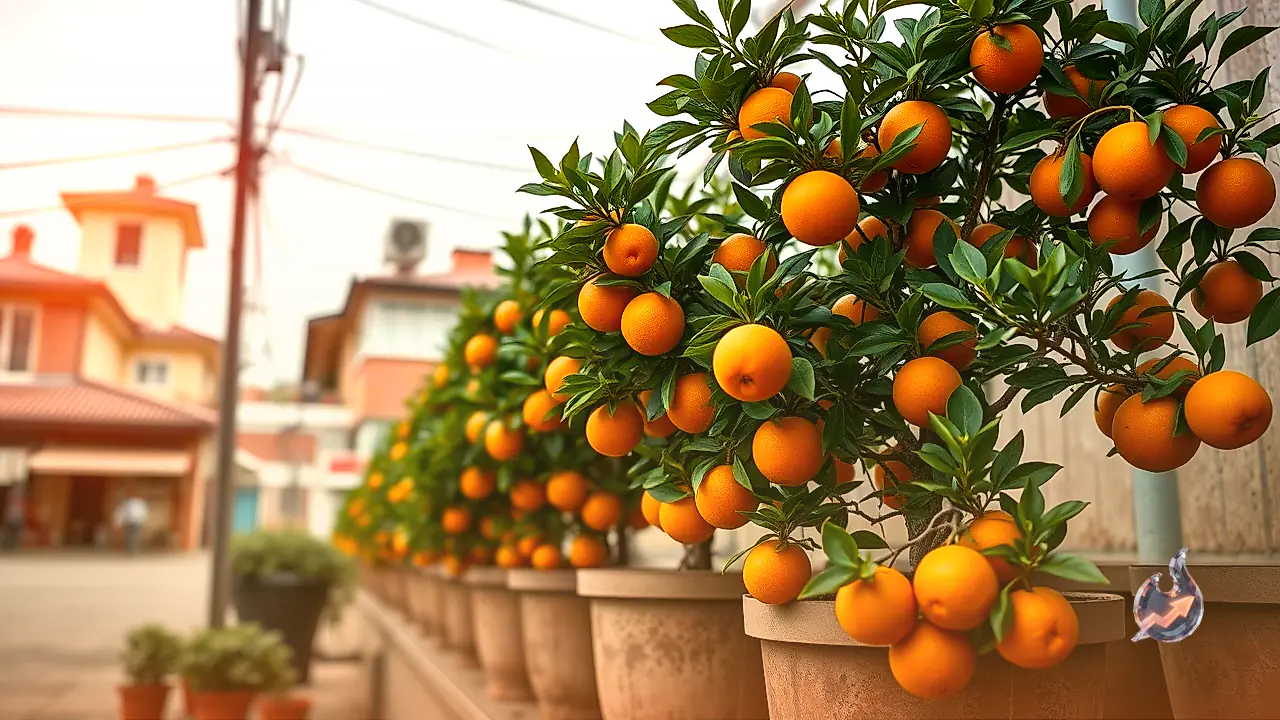

An orange plant not only enhances the beauty of a balcony but also provides fresh, sweet-and-sour fruit right at home. Oranges are packed with vitamin C, potassium, and antioxidants, and their juice is both delicious and healthy. Growing and maintaining this plant in a pot is quite easy once you know the correct methods. You can plant an orange tree twice a year, either during the monsoon season from July to August-September or in the spring season from February to March. If you want to grow an orange plant in a pot at home, it is best to bring a grafted plant directly from a nursery. Knowing the right variety, soil preparation, and fertilization techniques is essential for success.
Choosing the Right Variety and Growth Season
When planning to grow an orange plant at home, avoid starting from seeds and instead bring a direct sapling from a nursery. The climate of Madhya Pradesh and Maharashtra is well-suited for orange cultivation, and if proper varieties are not selected elsewhere, the fruit may not turn out sweet. You can choose four specific varieties that thrive even outside Madhya Pradesh and Maharashtra without producing sour fruit, including Mandarin Orange, Chinese Ram Ranjan variety, Darjeeling Giant Orange, Bhutanese Orange or Chatki Orange, and Vietnam Malta. These plants are typically available in nurseries priced between 100 rupees and 500 rupees. They should be planted in pots that are at least 16 inches in size. While potting the nursery plant, pay special attention to the root ball, which consists of the roots right beneath the stem and the attached soil; do not remove this soil. If you still prefer growing from seeds, you can use Satgudi, Newcells, or Washington varieties.
Preparing the Ideal Soil Mix
After bringing the orange plant home from the nursery, keep it alongside your other plants for a day or two so it can adjust to the new surroundings. Next, prepare the soil by combining 40 percent garden soil, 30 percent sand, cocopeat, or rice husk, and 30 percent decomposed cow dung manure or vermicompost. Mix in a little fungicide, along with 200 grams of neem cake, and 200 grams of marble stone dust or calcium powder. Since citrus plants should not be given heavy fertilizer for the first month, mix in 10 grams of humic acid granules and 10 grams of seaweed granules. Put this prepared soil mixture into a large grow bag or drum, placing 30 percent soil at the bottom, setting the plant, filling up the remaining soil, and watering it thoroughly afterwards.
Orange plants love sunlight and should receive as much direct sun as possible. The soil should not be too loose and crumbly; it needs to have a firm texture, and you should avoid tilling or loosening the soil in the pot for the first month. After 20 to 25 days, you can till the soil and add any organic fertilizer, such as dry cow dung, vermicompost, kitchen waste compost, or mustard cake. Remember to use mustard cake strictly during the winter season.
Pest Management and Fruit Care
A common issue with potted orange plants is the failure to bloom, and they are also prone to heavy pest attacks such as mites, aphids, and black or white flies on the leaves. To protect against these, boil neem leaves with a little detergent to make a solution and spray it over the plant. You can also spray four-day-old buttermilk on the plant, and completely avoid chemical fertilizers. If the flowers are dropping without turning into fruit, the primary reason is usually an incomplete pollination process, which can be remedied by growing flowering plants nearby. Excessive watering can also cause flower drop, so water the plant only when the top one inch of the soil feels dry. If you want an abundance of flowers, dissolve borax powder in water and spray it.
As flowers begin to transform into fruits, increase the watering frequency and apply cow dung manure at monthly intervals. You can also add lime water to the pot or use organic biozymes. Another common problem is fruit decay caused by fruit flies, which lay their larvae inside the fruits and ruin them. To prevent this, purchase fruit fly traps or sticky traps from the market and place them near the plant. Immediately remove any dried-up branches, as they act as breeding grounds for diseases. If your oranges or kinnows taste too sour, dissolve two tablespoons of Epsom salt in three liters of water and pour it into the pot. By following these careful maintenance steps, you can achieve a bumper harvest from your potted orange plant.