























Growing fresh, organic fruits at home on a balcony, terrace, or backyard garden is a rewarding experience for every plant enthusiast. Alongside popular Indian fruit trees such as mango, guava, and lemon, the pomegranate is widely cherished for its sweet taste and exceptional nutritional properties. With proper care and guidance, a pomegranate plant can thrive even in a moderate-sized container and produce abundant clusters of fruit. If you plan to introduce a pomegranate plant to your home garden, the ideal planting periods are during the monsoon season between July and September, or in early spring during February and March. The ambient temperatures during these months encourage rapid root establishment and healthy foliage. However, home gardeners frequently encounter challenges such as premature flower drop or stunted plant growth. From choosing the correct variety to crafting nutrient-dense potting soil and natural pollination sprays, here is a detailed breakdown of everything required to achieve a bountiful pomegranate harvest at home.
Selecting the Right Variety and Container Setup
The foundation of successful container gardening begins with selecting the proper plant specimen. Never attempt to grow a pomegranate plant from seeds, as seed-grown plants require years to mature and offer no guarantee of producing sweet or healthy fruit. Instead, always purchase a high-quality grafted plant from a reputable nursery. Grafted plants remain dwarf to medium in size while initiating heavy fruit production early in their lifecycle. For home containers, top-performing varieties include Solapur Lal, Super Bhagwa, Bhagwa Sinduri, Kandhari, and Ganesh. Pomegranates feature an extensive root system, so choose a pot or heavy-duty grow bag with a minimum diameter of 16 inches. Ensure that the container has 2 to 3 functional drainage holes at the base to allow excess irrigation water to escape freely, thereby protecting the root structure from waterlogging and rot.
Formulating Nutritious Potting Soil
A thriving pomegranate tree requires soil rich in organic matter and essential micro-nutrients. Prepare a balanced growing medium by combining 50% regular garden soil, 30% well-rotted cow dung manure or vermicompost, and 20% coarse river sand. To ensure a steady supply of essential Nitrogen, Phosphorus, and Potassium (NPK), fortify the soil mixture with specific natural additives. Mix in 300 grams of neem cake powder, 200 grams of mustard cake powder, 500 grams of marble stone dust or calcium powder, and a few spoons of Trichoderma Sanjeevani. Trichoderma acts as a beneficial bio-fungicide that shields vulnerable root systems against soil-borne pathogens. Blend all components thoroughly, fill your container, position the grafted plant firmly, and water deeply until moisture drains from the bottom holes.
Pruning Techniques and Ongoing Nutrition
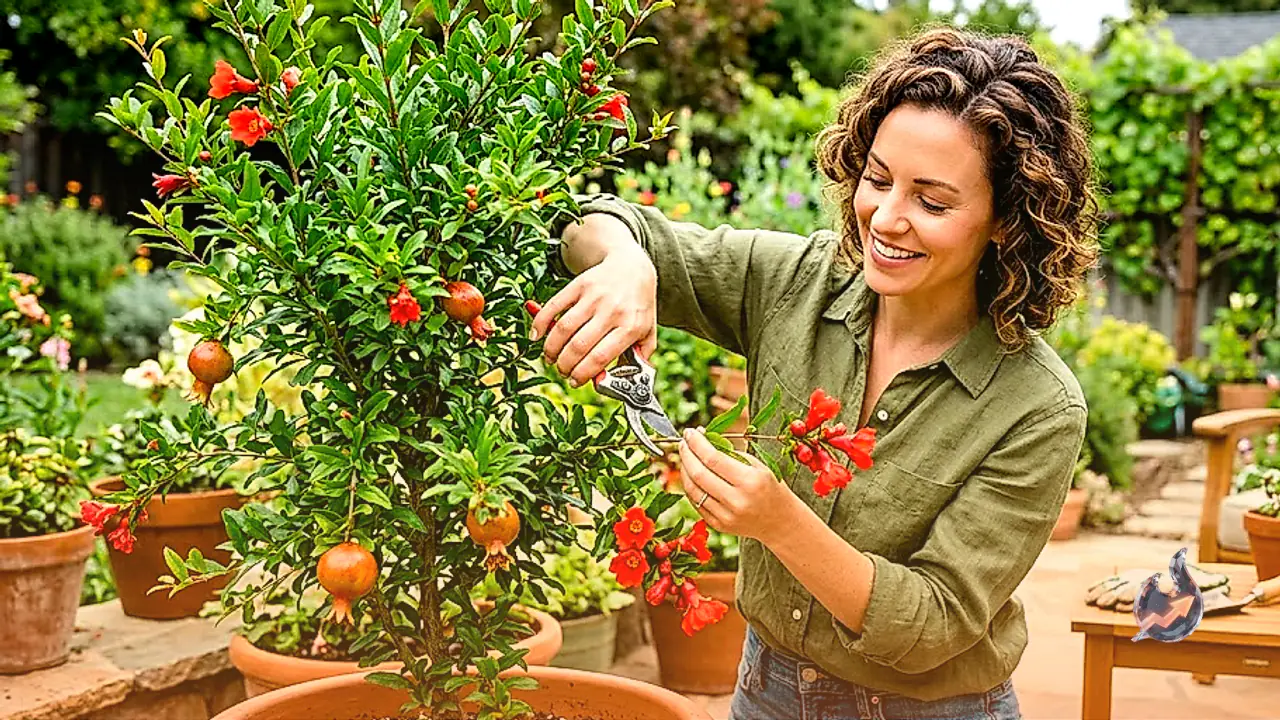
To keep container pomegranates productive, perform regular light hoeing of the topsoil and supply organic feed every month. Grafted plants grow vigorously, but they frequently develop unwanted suckers or lateral shoots along the lower section of the main trunk. Prune away these bottom branches promptly. A pomegranate bush should not be allowed to grow excessively dense or chaotic at the base, as lower foliage consumes valuable energy that would otherwise feed developing fruits. Promoting a strong, branched canopy at the top section ensures maximum flower formation, which translates directly into higher fruit setting. Pomegranates have a particularly high requirement for iron and calcium. Apply organic iron, neem cake, and stone dust twice a year, or use a specialized commercial fruiting plant mixture containing zinc, iron, and phosphorus. For a large pot, applying 1 kilogram of balanced organic manure per year supports robust overall growth.
Resolving Flower Drop and Boosting Pollination with Organic Sprays
The most common issue reported by container gardeners is the sudden dropping of flowers. Pomegranate trees naturally produce three distinct types of blooms: male flowers, female flowers, and hermaphrodite (bisexual) flowers. Male flowers serve solely to supply pollen and naturally shed after opening without forming fruit; only female and hermaphrodite blooms set into pomegranates. Furthermore, inadequate pollination often leads to unfertilized female blooms dropping prematurely. If your balcony lacks companion flowering plants, pollinators like bees and butterflies may not visit regularly. You can easily solve this by formulating a fermented organic pollination spray. Combine 50 grams of jaggery, 50 mL of fresh curd, 5 grams of cinnamon powder, and 2 mL of natural honey in 5 liters of clean water. Allow the mixture to ferment in a shaded spot for 4 to 5 days. Strain the solution thoroughly and spray it onto the plant leaves and flowers. This sweet, nutrient-rich solution draws beneficial pollinators and speeds up the pollination process dramatically.
Spring Feeding Routine for February and March
As spring arrives during February and March, the pomegranate tree enters an active growth phase characterized by fresh flushes of leaves and buds. To support this growth spurt and maximize fruit set, apply a specialized nutrient blend. Begin by thoroughly hoeing the container soil to loosen it, and let it aerate under sunlight for 1 to 2 days. Then prepare a custom fertilizer blend consisting of 100 grams of mustard cake powder, 50 grams of biozyme or seaweed fertilizer granules, 50 grams of neem cake powder, and 50 grams of calcium nitrate. Distribute this mixture evenly around the soil perimeter, cover with a thin top layer of soil, and irrigate thoroughly. This spring feeding equips the plant with energy to sustain heavy fruiting throughout the season.
Boron Supplementation and Root Zone Health
Boron deficiency is a primary cause of fruit cracking, small fruit size, and flower drop in pomegranates. To prevent these issues and enhance fruit size, apply approximately 10 grams of Suhaga (Borax) fertilizer directly around the root zone. Alternatively, prepare a foliar spray by dissolving 0.5 grams of borax powder per 1 liter of water and misting it across the foliage. To maintain complete root health, incorporate 2 to 3 teaspoons of Trichoderma Sanjeevani, 1 handful of Nematofree, 2 to 3 handfuls of organic soil carbon, and a balanced fruiting mix into the pot soil. This integrated feeding strategy strengthens root architecture, improves nutrient absorption, prevents blossom drop, and ensures a heavy harvest of mature pomegranates.