























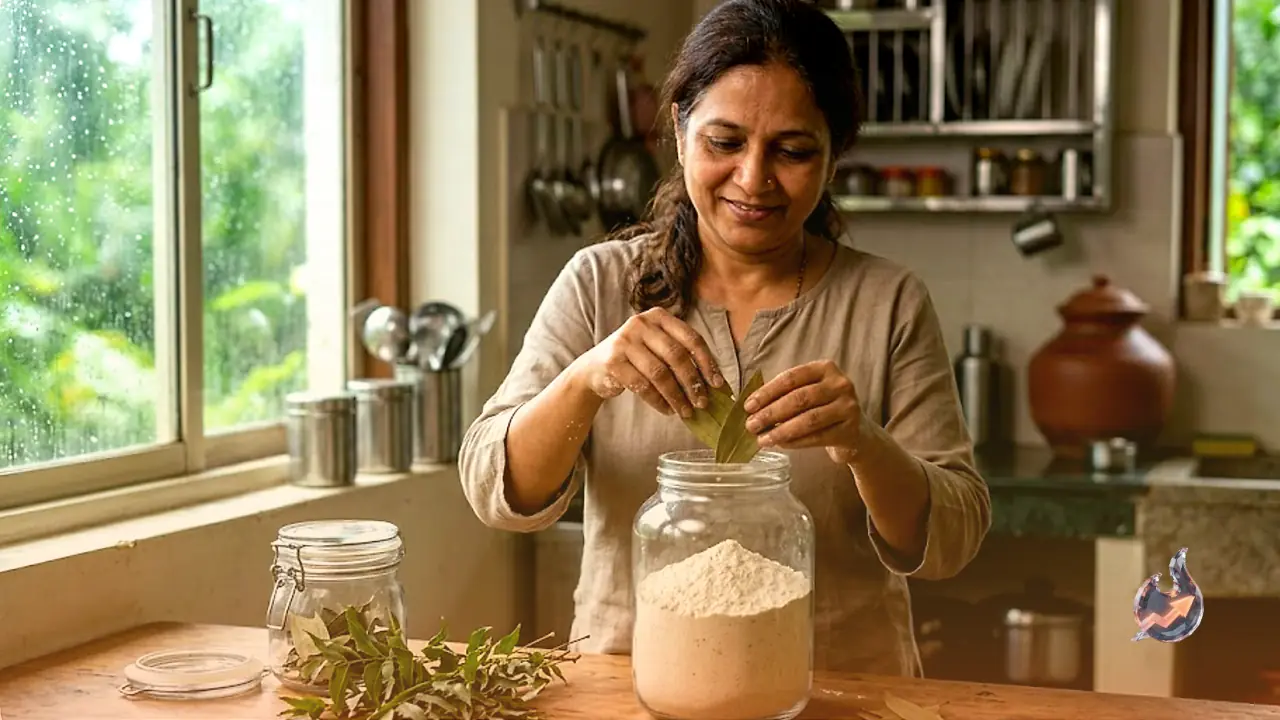

As humidity rises during the monsoon and rainy season, wheat flour stored in the kitchen tends to spoil faster, developing weevils or small insects. If the problem is ignored for too long, an entire container of flour can end up unusable and has to be thrown away. The good news is that a handful of simple, inexpensive tricks using things already found in most kitchens can keep flour safe for months even in damp weather.
Start with an airtight container
The single most important step in protecting flour is storing it in an airtight container. When flour is left in an open packet or a container with a loose lid, outside air and moisture seep in easily, and that moisture is the main reason weevils start to appear. Steel, glass or good quality plastic containers with lids that seal tightly should be used so the flour stays in good condition for a longer period.
Bay leaves and neem leaves offer natural protection
Bay leaves, a common kitchen ingredient, are surprisingly effective at keeping flour safe. Simply dropping 3 to 4 bay leaves into the flour container makes a noticeable difference, since their strong, sharp fragrance keeps weevils and other small insects away from the flour. Dried neem leaves work just as well, thanks to the natural antibacterial and insect repelling properties found in neem. Placing a few dried neem leaves in the container significantly lowers the chances of weevils and insects developing, helping the flour stay protected for longer.
Dry red chillies and cloves also help
Some everyday kitchen spices can be just as useful. Adding 2 to 3 dry red chillies or 4 to 5 cloves to the flour container works well, since their strong smell keeps insects away from the flour. Importantly, using them in this small quantity does not noticeably affect the taste of the flour, making this an easy and safe method to rely on.
Sun the flour if it feels even slightly damp
If the flour starts to feel a little damp, it should be spread out in the sun for some time, since sunlight completely removes any leftover moisture and lowers the risk of weevils developing. During the monsoon months in particular, giving the flour a short spell of sun once every 15 to 20 days is considered quite beneficial, as it prevents the flour from spoiling over time.
Storing small packets in the fridge is another option
Dividing a large stock of flour into small packets and storing them in the refrigerator is another effective way to keep it fresh for longer while sharply reducing the chances of weevils setting in. By following these simple household tricks, wheat flour can be kept completely safe, fresh and free of weevils throughout the rainy season, saving both the flour itself and the need to buy fresh stock again and again.