






















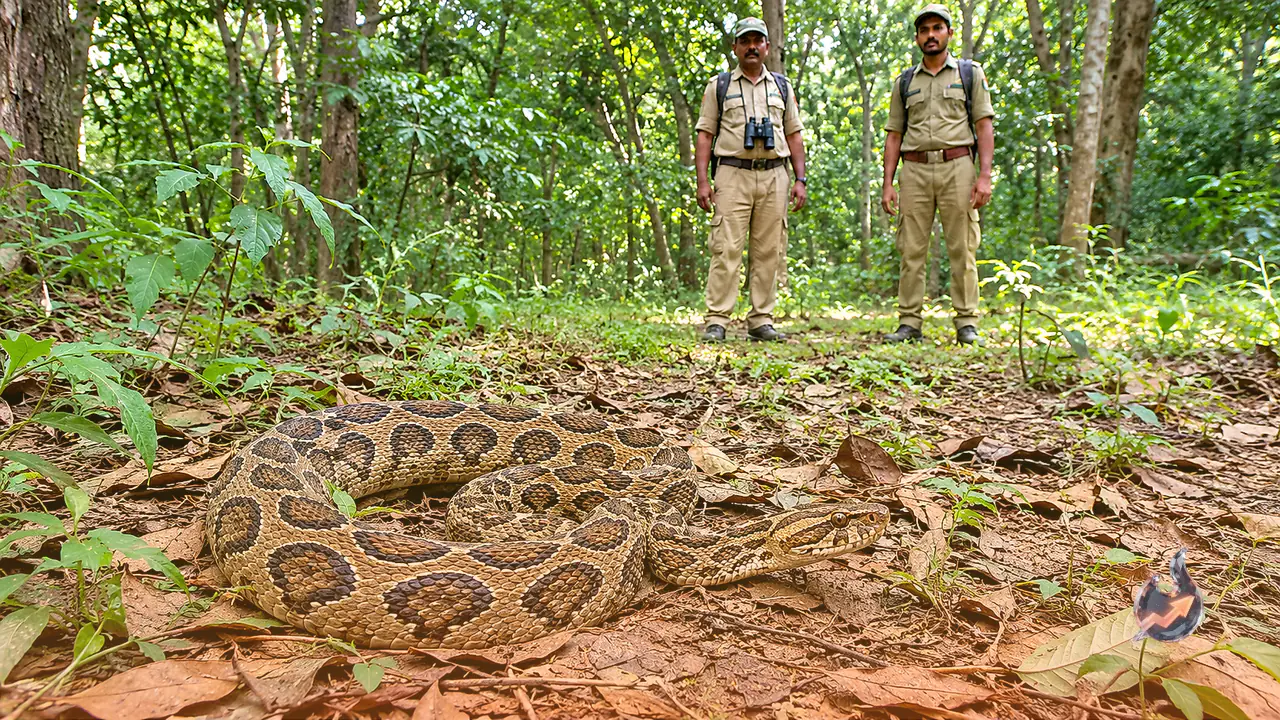

The dense forests of Valmiki Tiger Reserve are home to 45 different species of snakes. While each has unique traits, one particular reptile stands out due to its extreme rarity and lethal venom. Experts identify this snake as the Russell's Viper, which is also commonly referred to as Suskar in Bihar.
Ranked Among India's Big Four Venomous Snakes
Wildlife expert Abhishek, who has worked in the field for decades, explains that the Russell's Viper is one of India's four most venomous snakes collectively known as the Big Four. These specific serpents are considered responsible for the highest number of snakebites and subsequent fatalities across the country. The Big Four list includes the Spectacled Cobra, Common Krait, Saw-scaled Viper, and Russell's Viper.
Differences in Neurotoxic and Hemotoxic Venoms
The venom profiles among these four species vary significantly. While the Spectacled Cobra and Common Krait carry neurotoxic venom, the Saw-scaled Viper and Russell's Viper are equipped with hemotoxic venom. When neurotoxins enter the bloodstream, the victim's nervous system begins to shut down rapidly, resulting in certain death if timely medical intervention is not provided.
How Hemotoxic Venom Destroys the Body
In contrast, when hemotoxic venom enters the bloodstream, the essential proteins responsible for blood clotting are destroyed or severely impaired. As a result, the blood either thins out excessively or solidifies like jelly inside the body. The bite area experiences excruciating pain, and within moments, the entire limb swells up and turns blue. Without prompt medical treatment, the victim suffers an agonizing and painful death.