























Heavy cookware such as pressure cookers, pans, gridles, and large pots form the backbone of daily meal preparation in any home, yet managing them within compact kitchen spaces remains a constant challenge. When these bulky items are piled haphazardly inside cabinets, retrieving a specific piece becomes difficult and leads to surface scratches and general disorganization. This clutter not only slows down daily cooking routines but also leaves the kitchen looking messy. By incorporating systematic organization strategies, making full use of vertical areas, and customizing storage zones, homeowners can easily turn a cramped kitchen into a streamlined and highly functional workspace.
Nest Cookware by Size with Protective Layers
One of the most effective methods to reclaim shelf space is nesting pots, pans, and cookers inside one another according to their dimensions. Placing a small cooker inside a medium one, which then fits into a larger pot, allows multiple pieces to occupy the footprint of just a single item. However, safeguarding vessel surfaces during nesting is essential. Inserting paper towels, felt pads, or thin cloth strips between the stacked items prevents friction scratches, protects delicate non-stick coatings, and keeps the cookware clean and ready for immediate use.
Designate Dedicated Cabinets and Store Lids Vertically
Given their substantial weight and volume, pressure cookers should never be buried under other heavy kitchen utensils. Allocate a dedicated lower shelf or cabinet section specifically for cookers. Smaller cookers can be nested neatly within larger units. Since handles and knobs on lids consume significant overhead room, detach lids and store them upright along cabinet sides or within separate organizers. Keeping lids independent of the main pots preserves valuable interior cabinet height for other essentials.
Maximize Unused Wall Space with Hooks and Rails
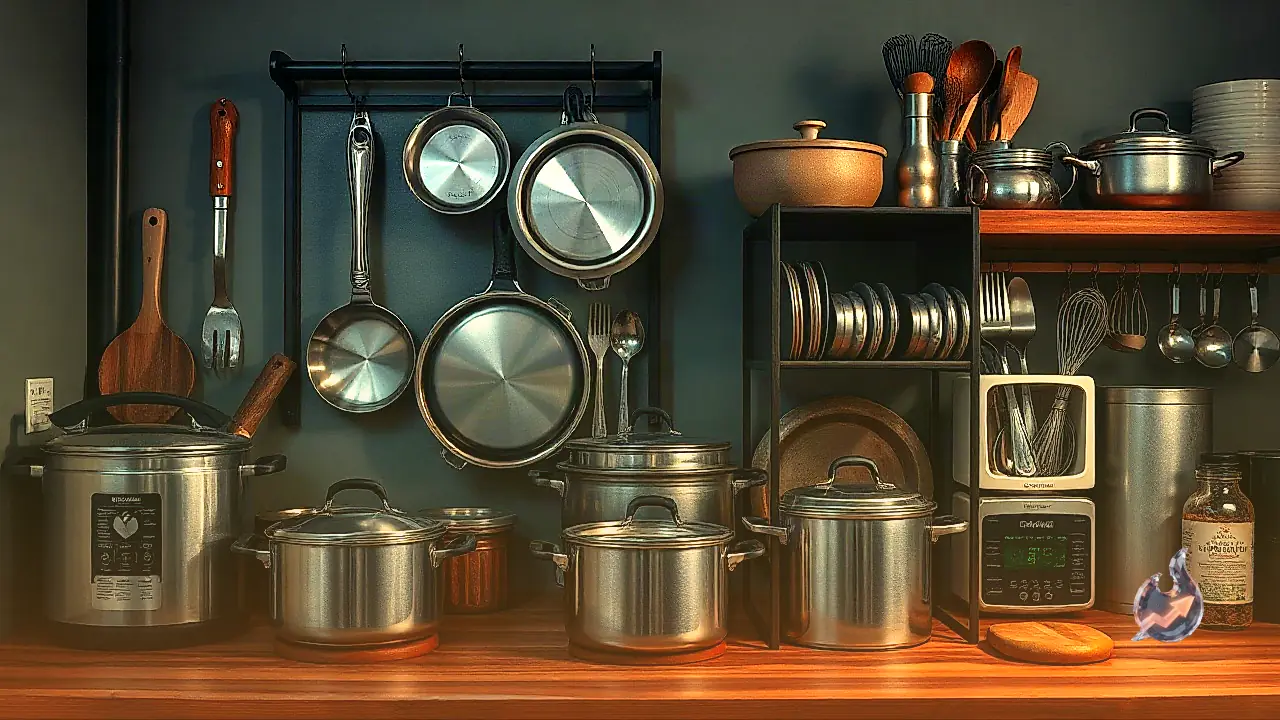
When storage cabinets and counter surfaces are fully filled, turning to empty wall space provides an immediate storage solution. Mounting durable metal hooks, wall-mounted rails, or pegboards on open kitchen walls allows lightweight cookers, saucepans, skillets, and ladles to hang neatly. Hanging cookware keeps the main countertops completely clear for food preparation while ensuring frequently used tools remain easily accessible during active cooking.
Implement Vertical Dividers for Flat Pans and Griddles
Stacking flat items like griddles, frying pans, and baking trays horizontally makes extracting the bottom vessel a tedious chore. Installing vertical wire dividers or slotted dividers inside shelves or deep drawers solves this problem. Storing pans upright like books on a shelf gives total visibility of every item. Cooking enthusiasts can effortlessly slide out the exact pan needed without disturbing neighboring items or disturbing the overall cabinet arrangement.
Utilize Dead Cabinet Corners with Rotating Trays
Corner cabinets frequently become underutilized spaces because reaching into their deep recesses is inconvenient. Installing rotating turntables, lazy Susans, or pull-out corner hardware effectively resolves this issue. A simple turn brings stored items from the back directly to the front. These corner units are ideal for storing smaller pots, spice containers, cooking oils, or secondary kitchen gadgets, converting every forgotten corner into productive storage space.
Zone Cookware Based on Frequency of Use
Not every pot or pan is required for daily cooking. Large stockpots, specialized festive vessels, and party serving dishes used only on special occasions should be stored separately from everyday items. Place these secondary utensils on high cabinet shelves or secondary storage units. Everyday items, such as daily pressure cookers and breakfast pans, should remain on accessible eye-level or waist-level shelves to maintain maximum efficiency in daily chores.
Attach Dedicated Lid Racks to Cabinet Doors
Pot and pan lids often cause cabinet clutter due to their awkward shapes and protruding handles. Utilizing the inside surfaces of cabinet doors offers an excellent storage fix. Installing slim wire frames, plastic racks, or adhesive hooks directly onto cabinet doors creates dedicated slots to hold lids upright. This setup keeps lids secured, prevents them from rattling inside main shelves, and makes finding the right lid instant and effortless.