





















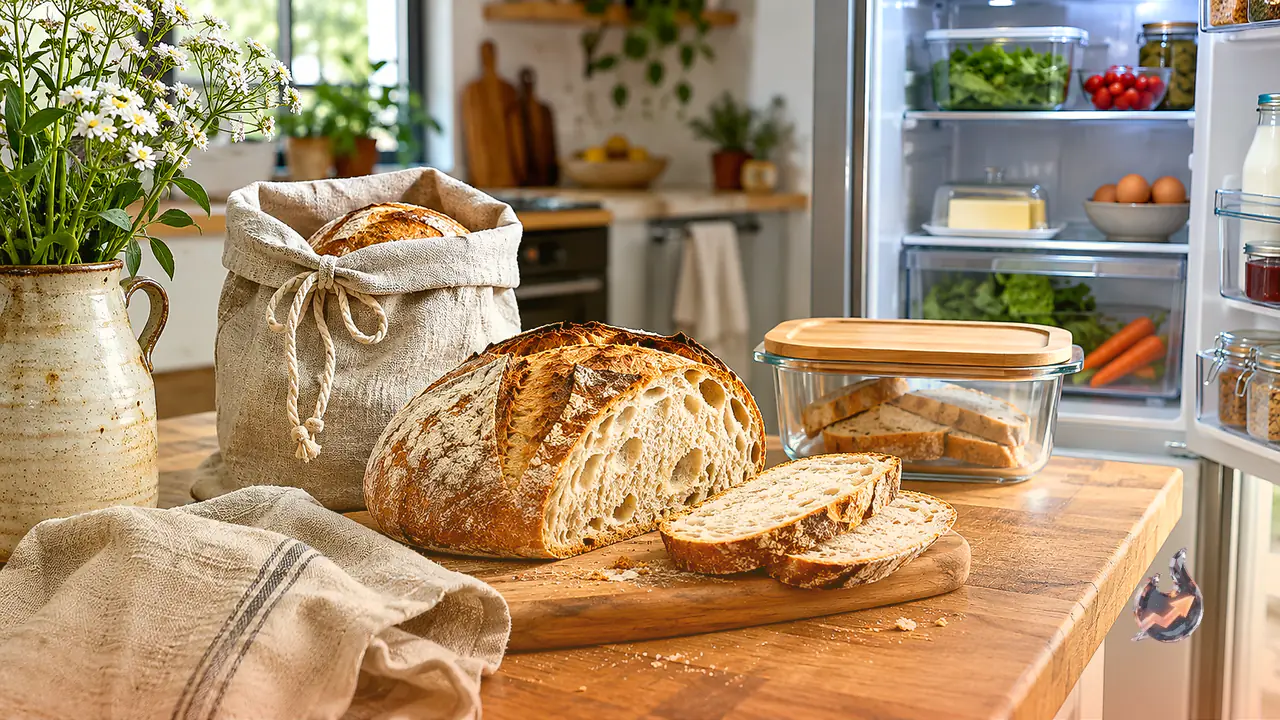

Bread remains a staple across households, serving as a quick morning breakfast option and a convenient evening snack. Upon bringing fresh loaves home from the store, many people instinctively place them straight into the refrigerator under the assumption that low temperatures prolong shelf life. However, this common storage habit often does more harm than good depending on the type of bread. Freshly baked artisan loaves and homemade varieties lose their tenderness remarkably fast inside a fridge, turning dry, rigid, and crumbly. Understanding where and how to store bread properly is essential for preserving moisture, protecting texture, and preventing premature waste.
The Science Behind Why Refrigerators Accelerate Staling
Fresh bread sourced from local bakeries or prepared at home should not be stored in standard refrigerator compartments. The chilling temperature inside a refrigerator actively speeds up the retrogradation process, which is the scientific mechanism responsible for staling. Cold temperatures force the gelatinized starch molecules inside the crumb to recrystallize and harden rapidly. As this shift occurs, the moisture moves away from the crumb, stripping the loaf of its softness. The end result is a slice that feels brittle, dry, and distinctly stale long before its natural expiration.
Circumstances Where Chilling Becomes Necessary
While room-temperature storage is generally ideal for fresh bread, specific situations warrant placing loaves into the refrigerator
- High Environmental Humidity: In excessively humid conditions, moisture in the air creates an ideal breeding ground for mold spores. Under such climate conditions, placing bread inside the refrigerator serves as a protective barrier against mold development.
- Commercial Preservative-Rich Loaves: Mass-produced packaged sandwich bread commonly found on supermarket shelves contains added preservatives. These stabilizing agents help the slices withstand cold temperatures far better than preservative-free artisanal baked goods without suffering significant textural breakdown.
Effective Methods for Room Temperature Storage
When keeping bread on the counter, select a spot inside the kitchen that stays cool, dry, and away from direct sunlight. Windowsills and areas adjacent to cooking ranges must be avoided, as heat and temperature fluctuations compromise quality. A dedicated bread box provides optimal airflow while shielding the loaf from drying out. Another practical holding space is an unpowered microwave oven, provided the bread remains tightly wrapped. Allowing air to circulate directly around the crumb saps moisture and causes slices to desiccate within hours.
Shelf Life Expectations and the Correct Way to Freeze
Artisanal bakery bread is best consumed within 2 to 3 days of purchase, during which flavor and structural integrity remain at their peak. Beyond this window, noticeable declines in taste and crumb texture set in. If a loaf cannot be finished within that timeframe, freezing is the single most reliable preservation method.
Freezing effectively halts the staling process, allowing bread to remain usable for up to three months without substantial deterioration. To prepare bread for the freezer, wrap it securely in plastic wrap, add an outer protective layer of aluminum foil, and seal everything within a freezer-safe bag. When ready to consume, remove the portion and allow it to thaw at room temperature over a few hours. Alternatively, place the thawed or frozen slices into an oven preheated to 180 degrees Celsius for a few minutes to restore warmth, crispness, and fresh-baked aroma.