























Live: Death toll hits 1,243 in Nepal-Tibet deluge as PM Shah points to climate crisis; India sends relief teamLive
3 Sept 2026, 12:41 pm (1 day ago)· 2

Live: Death toll hits 1,243 in Nepal-Tibet deluge as PM Shah points to climate crisis; India sends relief team

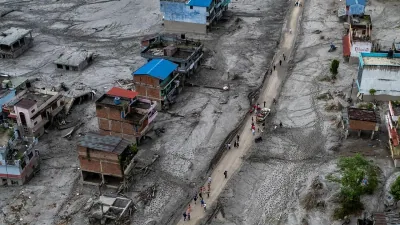
Devastating flash floods along the Nepal-Tibet border have claimed over 1,200 lives, stranding thousands and triggering widespread relief efforts. While India has dispatched medical supplies and rescue personnel, authorities in Nepal are moving to rebuild critical infrastructure and early-warning systems amidst ongoing search operations.

Ten local pilgrims from Dombivli in Maharashtra's Thane district remain untraceable a week after massive flash floods struck the Nepal-China border region, destroying communication lines and checkpoints, and leaving their families in deep distress.

While two tourists, Prakash Shantaram Mane and his wife Pratibha, have successfully returned home, the other ten devotees who went on the Kailash Mansaroar Yatra have been missing since August 26 following floods near the Timure Chinese immigration checkpoint. With communication in the affected border zones cut off for a week, distressed relatives have appealed to authorities for immediate intervention.

Also read

Meanwhile, India delivered more than five tons of essential medicines in its fifth batch of humanitarian aid to flood-hit Nepal on Wednesday, September 2, accompanied by an 11-member rescue team.

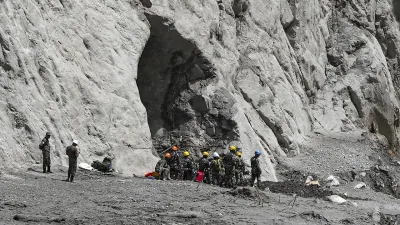
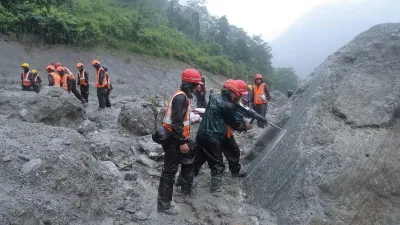
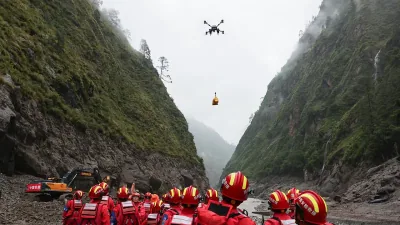
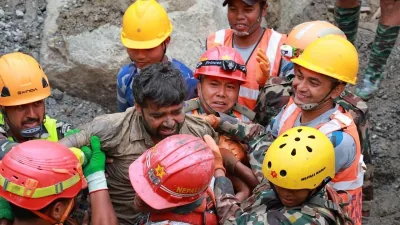
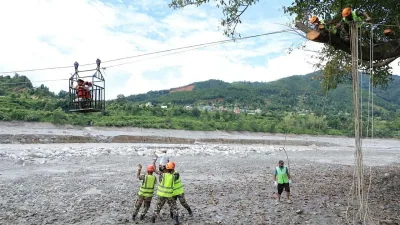
According to Nepalese authorities, the death toll from the flash floods has risen to 1,243 after rescue personnel recovered more bodies from the affected zones. While rescue teams have evacuated over 12,000 people to safety, roughly 4,000 individuals remain unaccounted for amid widespread search operations. The Ministry of External Affairs stated that an Indian Air Force flight carrying approximately 5.5 tons of medical supplies arrived in Kathmandu, containing antibiotics, painkillers, surgical items, and other essentials.

Environmentalist Sunita Narain stated on Wednesday that the disaster in Nepal is the direct result of decades of engineering mindsets assuming that rivers and mountains can be manipulated at will. Speaking at an international conference on sustainability education organized by the Mobius Foundation, the Director General of the Delhi-based Centre for Science and Environment noted that hydropower projects are continually built in the Himalayan region and what we witness today is nature striking back.

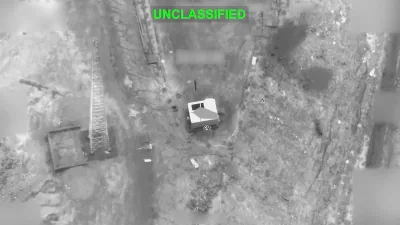
One week after destructive floods washed away roads, China has fully reopened the sole route to the Gyirong border point on the Nepalese side, allowing heavy machinery to reach the main disaster site for the first time. Due to severe damage to the G216 national highway, China had previously been forced to supply logistics and equipment via air or deploy rescue teams on foot across the mountains. According to Chinese state broadcaster CCTV, heavy machinery and search-enhancing equipment have now arrived where a Chinese border inspection complex once stood.

Nepal is planning to rebuild a landslide early warning system near its Chinese border following the glacial flood that caused over 1,000 deaths a week ago. According to two government sources who spoke to Reuters, the equipment will feature cameras, satellite links, and seismic sensors. The gear is being installed in Timure, a settlement in Nepal's Rasuwa district near the river system where a glacier breach sent a massive torrent of mud, water, and debris surging through the mountains.

In Bihar, continuous heavy rainfall over the past 24 hours has pushed major rivers above danger levels, placing the administration on high alert. All 69 gates of the Indrapuri barrage on the Sone River in Rohtas district have been opened to accelerate water discharge and manage potential flood conditions. According to the Water Resources Department, rivers including the Kosi, Gandak, Burhi Gandak, Ganga, and Punpun are flowing above danger marks at various locations.

A co-author of a major UN scientific assessment published on Wednesday warned that climate change is accelerating glacier melt and exacerbating the risk of catastrophic flooding in the Himalayas. Karl-Friedrich Schlössner, a climate scientist at Austria's IIASA research institute, told AFP that humanity must curb global temperature rises to combat the increasing frequency of extreme weather events.

Additionally, Nepalese Foreign Ministry spokesperson Lok Bahadur Chhetri confirmed that nearly 100 Nepalese citizens are missing following the flash floods along the Nepal-Tibet border. Approximately 3,000 Nepalese nationals had travelled to Tibet for trade and religious purposes, with over 2,500 having returned safely through the Hilsa and Tatopani border points. Around 1,500 Nepalese citizens remain stranded at the Kerung border point, and officials from both nations are discussing measures to bring them back safely.
ENDED

Closed

  1. Nearly 100 Nepalese citizens untraceable in Tibet after border flash floods

    Roughly 100 Nepalese citizens remain untraced after catastrophic flash floods hit the Nepal-Tibet frontier, according to Nepal's Foreign Ministry spokesperson Lok Bahadur Chhetri. Nearly 3,000 citizens of Nepal had traveled to Tibet for business and religious pilgrimages when they became stranded. Over 2,500 of them have successfully made it back home via the Tatopani and Hilsa land crossings, with a portion returning by air routes, Chhetri stated. Approximately 1,500 Nepalese are currently stranded at Tibet's Kerung border crossing. Discussions between officials from both nations are actively underway to plan their safe repatriation to Nepal, the spokesperson added.
  2. Nepal moving to reconstruct early-warning grid along Chinese frontier following catastrophic deluge

    Following a glacial deluge that claimed over 1,000 lives a week ago, Nepal intends to re-establish an early-detection landslide alert network equipped with cameras, seismic sensors, and satellite connectivity along a section of its frontier with China, two government officials disclosed. This monitoring apparatus will be positioned at Timure, a boundary hamlet in Nepal's Rasuwa district situated along the river valley where a collapsing glacier released a massive surge of mud, rocks, and water through the alpine terrain. This specific frontier segment ranks among the most strategic areas along Nepal's boundary with Tibet, representing a high-altitude zone continuously monitored by Beijing, New Delhi, and Kathmandu.
  3. Glacial melting poses an 'urgent' climate threat, warns co-author of UN assessment

    Glacial retreat is being speeded up by global warming, amplifying the likelihood of catastrophic incidents such as Himalayan flash flooding, stated a co-author of a significant UN scientific publication released on Wednesday (September 2). A fresh document from the UN Environment Programme highlighted that exceeding the 1.5C target for global warming is inevitable, warning of severe repercussions even if worldwide temperatures are eventually reduced later on. Carl-Friedrich Schleussner, a climate researcher at Austria's IIASA institute who co-authored the report, informed AFP that society must curb planetary warming to address the escalating frequency of weather disasters.
  4. Bihar put on high alert due to swelling rivers; all 69 Sone Barrage gates unlocked

    Heavy and continuous rainfall across various districts of Bihar over the last 24 hours has driven up water marks in major rivers, keeping administration officials on high alert on Wednesday. To allow smooth water discharge and manage potential flooding, all 69 floodgates of the Sone Barrage located at Indrapuri in Rohtas district were lifted, officials stated. The Bihar Water Resources Department (WRD) confirmed in its recent update that key rivers including the Kosi, Gandak, Burhi Gandak, Ganga, and Punpun have crossed danger thresholds at multiple spots, with other locations nearing warning marks.
  5. Nepal planning to re-establish landslide monitoring station along China border following deadly floods

    Following a glacial outburst that claimed more than 1,000 lives a week ago, Nepal is preparing to restore an early-warning mechanism for landslides along a section of its frontier with China by deploying cameras, satellite systems, and seismic detectors, two government insiders informed Reuters. The machinery will be placed in Timure, a frontier locality within Nepal's Rasuwa region along the same river line where a collapsing mass of glacial ice generated a massive torrent of rock, mud, and water through mountain valleys. Kathmandu has yet to officially declare these measures, and both officials requested anonymity as they were not cleared to share details publicly.
  6. China clears main road link to Tibet deluge area as key highway reopens

    A week after catastrophic floodwaters destroyed portions of the sole highway leading to the Gyirong border crossing with Nepal, China has completely reopened the route, enabling heavy earthmoving equipment to access the primary disaster site for the first time. Due to severe damage along National Highway G216, Chinese authorities had previously relied on air-drops to deliver supplies and machinery to emergency workers, with several rescue teams trekking across rugged mountain paths to reach the region. Numerous heavy excavators and equipment aimed at bolstering search efforts have now reached the site where a Chinese immigration and inspection post previously stood, according to Chinese broadcaster CCTV.
  7. Nepal tragedy stems from relentless construction across Himalayan belt, asserts environmental expert

    The tragic flash floods in Nepal stem directly from decades of an engineering approach that wrongly believed mountains and rivers could be re-engineered without limits, environmental expert Sunita Narain stated on Wednesday (September 2). Narain, who leads Delhi-based think tank Centre for Science and Environment (CSE), pointed out that hydroelectric facilities are being constructed continuously across Himalayan rivers, warning that 'what is unfolding now is nature's backlash.' She made these remarks during the opening address at the 8th International Conference on Sustainability Education, hosted by the Mobius Foundation. She further noted that CSE's study of India Meteorological Department records reveals that India experiences an extreme weather calamity almost daily.
  8. India dispatches additional relief material to Nepal; 166 Indian citizens evacuated to date

    India dispatched a fifth consignment featuring more than five tonnes of critical medical supplies along with an 11-person rescue unit to flood-hit Nepal on Wednesday (September 2). Nepal's official count of fatalities from the previous week's flash floods surpassed 1,000 following the retrieval of more victims from devastated locations, according to officials in Kathmandu. Although rescue squads have brought over 12,000 citizens to safety, nearly 4,000 people are still unaccounted for while search operations proceed. 'An Indian Air Force plane transporting humanitarian aid arrived in Kathmandu today, marking the fifth such flight. The shipment included roughly 5.5 tonnes of medical provisions, encompassing painkillers, antibiotics, surgical instruments, and critical drugs,' stated the Ministry of External Affairs (MEA).
  9. Ten pilgrims from Thane missing following Nepal flash floods as anxious families hold out hope

    A painful wait has spiraled into distress for families in Maharashtra's Thane district, where 10 local pilgrims remain unaccounted for a week after violent flash floods hit the Nepal-China border, destroying transit stations and cutting off connectivity. While two travelers managed to return safely, the remaining 10 pilgrims undertaking the Kailash Mansarovar Yatra went missing when floodwaters swept past the Timure Chinese border post on August 26, knocking out telecommunication systems. So far, only Dombivli residents Prakash Shantaram Mane and his spouse Pratibha have arrived back home without harm. With communication down for over a week across the disaster zone, grieving family members have urged government authorities to intervene immediately to track their missing relatives.

Questions & Answers

What is the total death toll from the Nepal-Tibet floods?
According to Nepalese authorities, the death toll from the floods has risen to 1,243.
How many pilgrims from Thane remain missing?
Ten pilgrims from the Dombivli area of Thane district who went on the Kailash Mansarovar Yatra remain missing.
What relief assistance has India sent to Nepal?
India dispatched its fifth tranche containing over five tons of essential medicines along with an 11-member rescue team on September 2.
What did Sunita Narain identify as the cause of the disaster?
She stated that the disaster is the result of decades of unbridled infrastructure development and hydropower projects in the Himalayas.
Which barrage in Bihar had all its 69 gates opened?
All 69 gates of the Indrapuri barrage on the Sone River in Rohtas district were opened to manage rising water levels.
How many Nepalese citizens were stranded in Tibet?
Approximately 3,000 Nepalese nationals travelling for trade and religious purposes were stranded in Tibet.
How many citizens remain stranded at the Kerung border?
Roughly 1,500 Nepalese citizens are still stranded at the Kerung border point as officials coordinate their return.
What warning systems is Nepal planning to rebuild near the Chinese border?
Nepal is planning to install a landslide early warning system featuring cameras, satellite links, and seismic sensors in Timure.

Comments 0

No comments yet — be the first.

Citizen journalism

Become a TrendKia journalist

Voice of the people

Share news, photos and videos from your area with TrendKia and let your voice reach the nation. Every citizen a journalist.

Join now
CH 01 LIVE
TrendKia TV ON AIR