
















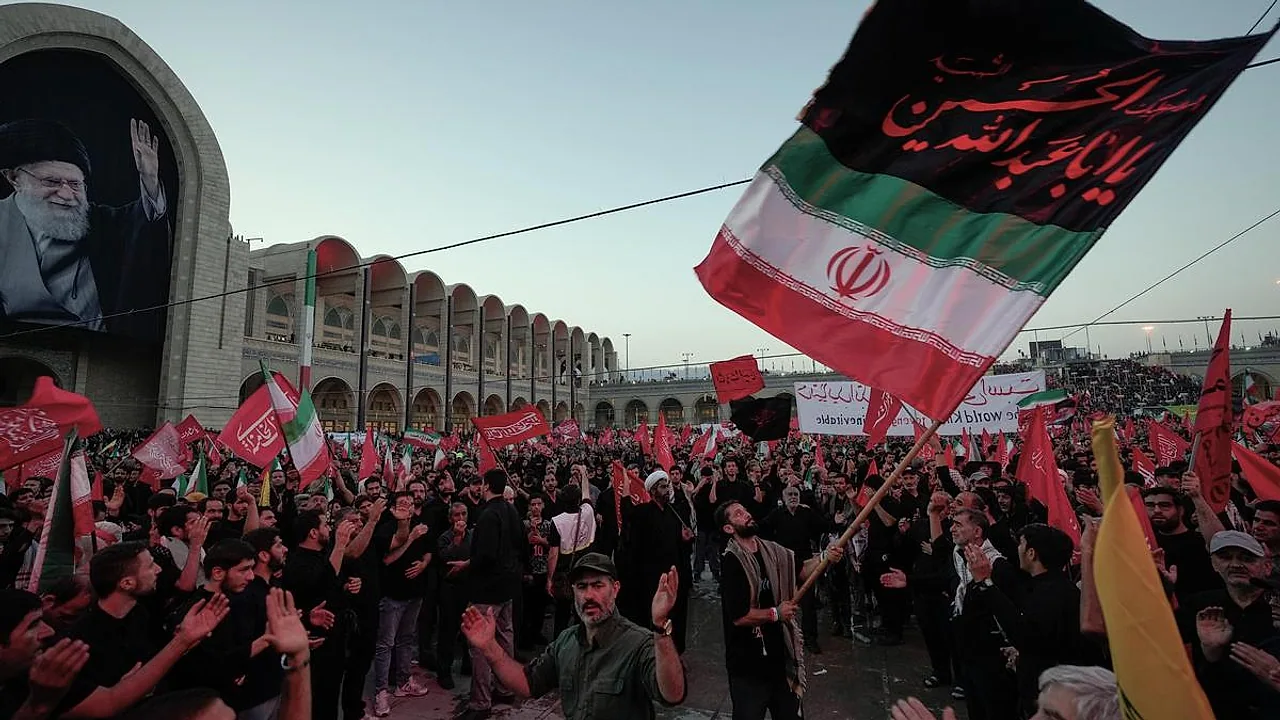

The funeral procession for the late Iranian Supreme Leader Ayatollah Ali Khamenei began in Tehran on Monday, drawing vast crowds of mourners to the capital. Authorities are working to ensure the event remains orderly, avoiding the chaos that marked previous high-profile funerals. Organizers stated that after the body laid in state at the Grand Mossalla religious complex for two days, the procession departed at 6:00 a.m. (0230 GMT) and is expected to traverse the city over the course of 10 to 12 hours.
Public Tributes and Displays
On Sunday, thousands visited the Grand Mossalla to pay their respects to Khamenei and four family members killed in Israeli airstrikes on February 28, based on U.S. intelligence. The caskets, draped in the Iranian national flag, have been loaded onto a truck to be transported toward Mehrabad International Airport. For the Iranian leadership, this massive display of public mourning serves as a show of force and unity amid five weeks of intense conflict with Israel and the United States.
Atmosphere of Protest and Mourning
The scene surrounding the funeral processions resembled a festival, with hundreds of stalls playing electronic music and distributing free food and drinks. This vibrant, noisy atmosphere stood in stark contrast to the solemnity inside the Grand Mossalla. Stalls featured photos of 'martyrs' of the Islamic Republic rather than menus or prices. The soundtrack for the event mixed religious hymns praising Imam Hussein with recorded speeches by Khamenei.
Anti-Western Sentiment
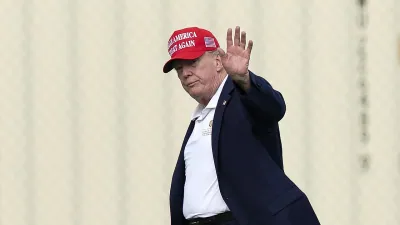
As the procession passed under a bridge, crowds vented their fury at U.S. President Donald Trump, throwing stones at banners depicting him with a target over his head. Signs reading 'America killed our father' were prominent, and protesters burned American and British flags. Women in black chadors held red signs reading 'KILL TRUMP.' Others carried posters featuring Donald Trump, Vice President J.D. Vance, Defense Secretary Pete Hegseth, and Israeli Prime Minister Benjamin Netanyahu, all under the caption 'There will be blood.'
Regional Tensions and Lebanon
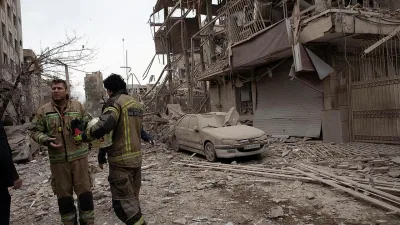
Israeli Prime Minister Benjamin Netanyahu recently claimed that several Christian villages in southern Lebanon have requested to join Israel to escape Hezbollah militants. Lebanon entered the wider regional conflict on March 2, following Hezbollah's rocket fire in retaliation for the death of Iran's Supreme Leader. In a separate incident, an Israeli drone strike in Nabatieh al-Fawqa killed four people, including a school principal and his family. Meanwhile, in coastal cities like Tyre, life is cautiously returning to normal, though many residents remain prepared for renewed violence.
Trump's Ultimatum
U.S. President Donald Trump reiterated his hardline stance on Sunday, telling reporters in the Oval Office that Iran must either reach an agreement or face total destruction. While stating a preference for a deal to avoid widespread casualties, he warned that the U.S. could destroy Iran's infrastructure, including bridges and energy supplies, within an hour. As the funeral continues, all eyes remain on Mujtaba Khamenei, the Supreme Leader's son and successor, who has yet to make a public appearance since the transition of power.