






















Live: Tensions flare between US and Iran as former Supreme Leader Khamenei is laid to restLive
10 Jul 2026, 3:01 pm (45 days ago)· 2

Live: Tensions flare between US and Iran as former Supreme Leader Khamenei is laid to rest

The U.S. and Iran have exchanged military strikes this week, and conflicting signals are now emerging over whether the two sides are even in dialogue. President Trump says talks are pressing forward, but Iran's government denies ever seeking negotiations. Meanwhile, Washington is demanding Tehran publicly guarantee open passage through the Strait of Hormuz.

Technical-level talks between the US and Iran remain active. On Thursday, July 9, 2026, a US official confirmed that Washington continues to be committed to reaching a resolution with Iran, with technical communication currently ongoing between the two nations.

Simultaneously, Israel has shared intelligence with the United States regarding a new and specific plot by Iran aimed at assassinating Donald Trump. Reports from US media outlets indicate that this warning provided by Israel this week is distinct and relates to a particular scheme, adding another layer of complexity to the already strained relations.

Also read

Funeral of Former Supreme Leader Khamenei

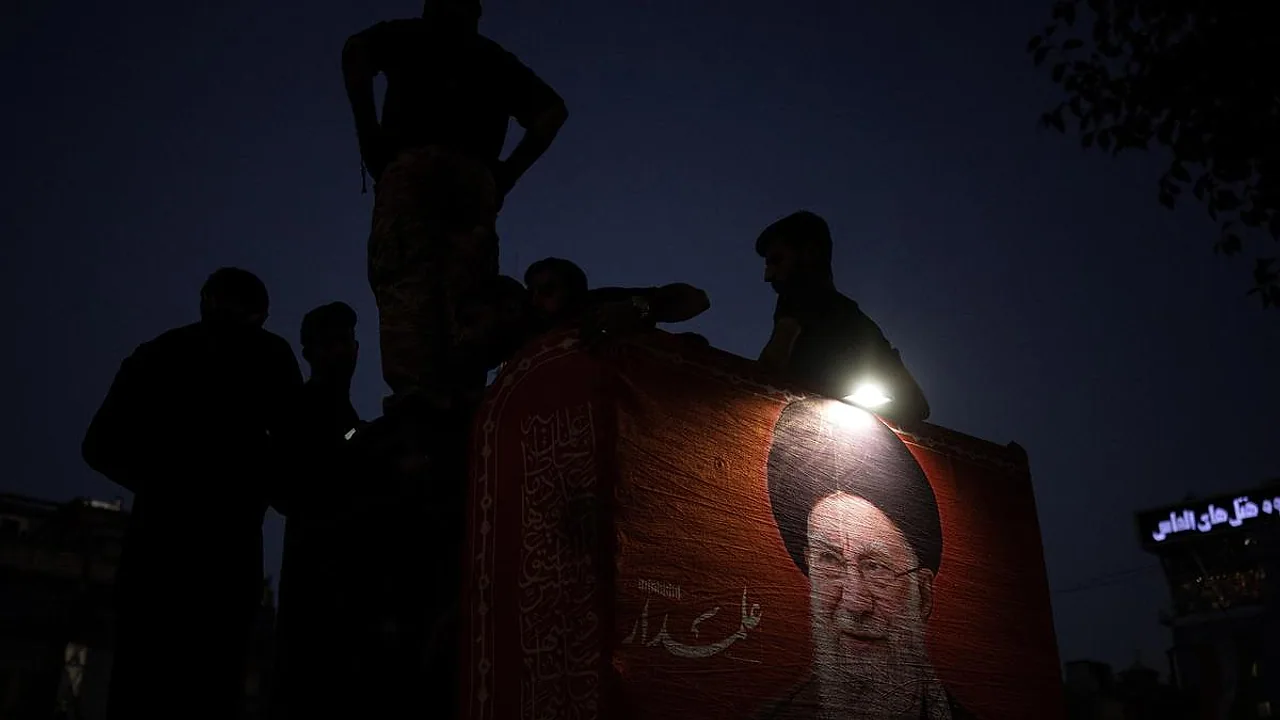
On Friday, July 10, 2026, Iran laid its former Supreme Leader, Ali Khamenei, to rest in his hometown of Mashhad. This burial took place more than four months after he was killed in an airstrike. The ceremony occurred against a backdrop of renewed military clashes over the past two days between the US and Iran, heightening fears of an imminent full-scale war.

Khamenei's coffin, draped in the national flag, was carried into the Imam Reza shrine in Mashhad. While a large crowd gathered outside to pray, his son and successor, Mojtaba Khamenei, did not make a public appearance during the event.

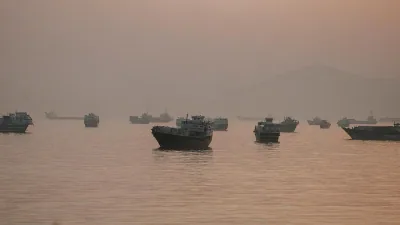
Shipping Activity in the Strait of Hormuz

Despite the resurgence of conflict in Western Asia, data tracking shows that several Liquefied Natural Gas (LNG) tankers have begun transiting the Strait of Hormuz. Japan reported that 22 vessels linked to the country have departed the Gulf region since Tuesday. According to data from Kpler and LSEG, at least five ballast (empty) LNG tankers have entered the strait, including the GasLog-controlled 'GasLog Shanghai' and the QatarEnergy-linked vessels 'Al Samriya', 'Al Dafna', 'Al Gattara', and 'Al Rayyan'.

Impact on Oil Markets and IEA Forecasts

The International Energy Agency (IEA) stated on Friday, July 10, 2026, that the recent escalation in conflict could jeopardize its projections for oil surpluses in 2027. Although June saw a modest recovery in global supply following the reopening of the Strait of Hormuz, the volatility initiated on July 7-8 threatens to undo those gains. At the peak of the recent disruption, approximately 14 million barrels of crude oil per day were blocked from moving through the vital waterway.

Legal Battles and Helium Export Restrictions

The Thai Labor Court has accepted a petition filed by three Thai sailors seeking compensation following a deadly attack on their cargo ship in the Strait of Hormuz last March. Their lawyer, Kunpat Singhatong, stated that the sailors are suffering from Post-Traumatic Stress Disorder (PTSD) and are unlikely to return to maritime work. Meanwhile, China announced an immediate temporary ban on helium exports on July 10, 2026, citing the risk of military conflict in Western Asia, which poses a threat to the semiconductor industry that relies on the gas for thermal management in chip production.

Diplomatic Initiatives and Regional Developments

Qatari negotiators have arrived in Tehran to reduce tensions in coordination with Washington, aiming to implement the US-Iran memorandum of understanding. Russia's state-owned nuclear firm, Rosatom, has begun returning staff to the Bushehr nuclear power plant. Egypt and Qatar have jointly called for a return to diplomatic dialogue. While Donald Trump claimed that Washington and Tehran have agreed to keep lines of communication open, Iranian Foreign Ministry spokesperson Esmail Baghaei denied that Tehran initiated any such talks. Additionally, a drone strike in southern Lebanon killed a youth in Nabatieh, underscoring the fragile nature of the regional ceasefire.

ENDED

Closed

  1. Israeli drone strike kills young motorcyclist in southern Lebanon

    Lebanon's state-run National News Agency reported Friday that an Israeli drone strike killed a young man from the city of Nabatieh. The victim was on a motorcycle in Kfar Rumman, near Nabatieh, when he was targeted in what the agency described as an enemy drone raid. The attack occurred despite a ceasefire being in place in the Israel-Hezbollah conflict. The agency also reported that further strikes in the same area wounded at least one additional person.
  2. Iran denies seeking U.S. talks after Trump claims dialogue will continue

    Iran on Friday pushed back against President Donald Trump's assertion that Washington and Tehran had reached an understanding to keep talking despite the recent surge in hostilities between the two sides. Foreign Ministry spokesperson Esmaeil Baghaei clarified that Iran had never sought direct negotiations with the U.S. According to Iranian state television, Tehran had only agreed to receive a visit from Qatar's mediator — nothing further than that.
  3. U.S. demands Iran publicly commit to halting Hormuz strait attacks and opening all shipping lanes

    Senior American officials said Friday that Washington is pressing Iran to issue a public declaration committing to an end to attacks on ships in the Strait of Hormuz, and pledging that every lane of the waterway will remain open to navigation with no tolls levied. Iran has flatly refused to relinquish its grip over the strait, the pivotal chokepoint through which roughly one-fifth of the world's oil supplies ordinarily flow. The officials noted that exchanges between the two nations had moved in a constructive direction in recent days. They conveyed these points to a small pool of journalists during a conference call.
  4. Egypt and Qatar push for revival of U.S.-Iran diplomatic talks, says Cairo

    The foreign ministers of Egypt and Qatar have jointly called on Washington and Tehran to revive diplomatic engagement, even as President Donald Trump confirmed that the United States had agreed to keep talking with Iran while making clear once again that the ceasefire between the two nations has come to an end. Egypt's Foreign Minister Badr Abdelatty held a phone conversation with Qatari Prime Minister and Foreign Minister Sheikh Mohammed bin Abdulrahman Al Thani, after which Egypt's foreign ministry put out a statement saying both officials had urged every party to place diplomacy and constructive dialogue above confrontation, and to come back to the negotiating table. Source: AFP
  5. Russia begins phased return of workers to Iran's Bushehr nuclear plant, Rosatom chief confirms

    Russian state nuclear energy company Rosatom has confirmed that an initial batch of six personnel has made its way back to Iran's Bushehr nuclear power plant, with Russia's RIA news agency citing the firm's CEO Alexei Likhachev. Rosatom, which is overseeing construction of two additional reactor units at Bushehr, was compelled to pull out hundreds of its staff after the United States and Israel launched military operations against Iran on February 28.
  6. Qatari envoys hold talks in Tehran to cool U.S.-Iran standoff, source says discussions coordinated with Washington

    A Qatari diplomatic delegation has traveled to Iran to hold discussions with Iranian officials, aiming to reduce tensions and lay the groundwork for broader negotiations to resume, a source familiar with the matter told Reuters. The source noted that the effort is being carried out in close coordination with the United States. According to the source, the talks are centered on moving forward with the implementation of the U.S.-Iran memorandum of understanding and resolving the disputes that have driven the latest escalation between Washington and Tehran — chief among them the disagreement over freedom of navigation in the Strait of Hormuz.
  7. China slaps immediate temporary ban on helium exports as West Asia conflict fears resurface

    China declared an immediate, temporary prohibition on helium exports on Friday, July 10, 2026, as a fresh outbreak of fighting in West Asia raises the spectre of new shortfalls in the gas that semiconductor manufacturers depend on. Earlier this year, the U.S. and Israeli military campaign against Iran triggered a worldwide helium shortage that disrupted companies across the globe — including in China, where the AI industry has grown heavily dependent on domestically produced chips for both training and running AI models. Helium is indispensable for thermal control during semiconductor fabrication. The export restriction is the latest instance of Beijing curbing outbound shipments of strategically vital materials to protect domestic availability. China's Commerce Ministry formally enacted the ban on July 10, 2026.
  8. Thai Labour Court admits compensation suit filed by sailors hurt in Strait of Hormuz ship attack

    Thailand's Labour Court on Friday, July 10, 2026, agreed to hear a case filed by three Thai mariners seeking financial redress after a fatal assault on their cargo vessel while it was transiting the Strait of Hormuz in March, during the U.S.-Israeli military campaign against Iran, their attorney confirmed. The petition, which Reuters reviewed, demands no less than 1 million baht (approximately $30,000) per sailor from companies and agencies tied to vessel owner Precious Shipping and the ship's captain. Lawyer Kunpat Singhathong told journalists that the three men hold their employers accountable for knowingly dispatching them into a war zone, placing their lives in danger and leaving them permanently unable to work. "All three have received a diagnosis of post-traumatic stress disorder and are not expected to return to work as sailors," he said, though he withheld their medical records from public view. Kunpat added that the sailors have so far been paid two months' wages along with reimbursement for personal belongings they lost.
  9. Rising US-Iran tensions may jeopardize 2027 oil surplus projections, reports IEA

    The International Energy Agency stated on Friday (July 10, 2026) that the latest spike in clashes between Washington and Tehran could disrupt its predictions of a major oil market surplus for next year. This comes despite a surge in worldwide supply in June following the reopening of the Strait of Hormuz, which nevertheless remained below levels seen before the conflict began. International energy markets experienced some relief during the previous month after a peace accord between Washington and Tehran allowed the crucial channel to reopen. Previously, the blockading of this waterway had cut off up to 14 million barrels of daily crude shipments at the height of the most severe oil supply emergency ever recorded. According to the agency, however, the renewed hostilities on July 7 and 8 have obscured future prospects and could dismantle expectations of a market surplus in the coming year, as reported by Reuters.
  10. Increased LNG and Japanese-connected vessels navigate through Strait of Hormuz

    Despite fresh hostilities breaking out in West Asia, vessel-monitoring statistics indicate that more liquefied natural gas tankers have recently restarted their journeys through the Strait of Hormuz. Additionally, Tokyo announced that 22 ships with links to Japan have departed the Gulf region since Tuesday. As a crucial corridor for global petroleum and LNG transport, the Strait of Hormuz has drawn intense scrutiny from maritime firms and national authorities. This follows Iranian assaults on merchant ships this week and subsequent retaliatory actions by the US against Iran, both of which severely limited transit through the channel. Nevertheless, tracking information from Kpler and LSEG reveals that at least five empty (ballast) LNG transport vessels have successfully negotiated the strait over the past few days. Among these ships are the Greek shipping firm GasLog's vessel, GasLog Shanghai, alongside several carriers tied to QatarEnergy, namely Al Samriya, Al Dafna, Al Gattara, and Al Rayyan, according to Reuters.
  11. Former Iranian Supreme Leader Ali Khamenei interred in Mashhad

    On Friday (July 10, 2026), Iran laid former Supreme Leader Ali Khamenei to rest, more than four months after he was killed in an aerial attack. The burial coincided with a consecutive two-day exchange of strikes between American and Iranian forces, which has escalated anxieties about a descent into a full-scale war. Draped in the national flag, Khamenei's casket was lifted and brought inside the Imam Reza shrine located in Mashhad, his eastern Iranian birthplace. Outside, vast crowds of mourners assembled to hear the funeral prayers, though his son and heir, Mojtaba Khamenei, made no public appearance. The final rites for Iran's former leader Ali Khamenei took place in Mashhad amid a backdrop of rising hostilities and ongoing military exchanges between Washington and Tehran.
  12. From revolution to revival: Iran’s opportunistic masterstroke

    The truce is unraveling as all diplomatic restraints were cast aside when Washington and Tehran exchanged military blows once more on July 8. The clash centered around the secure transit of merchant vessels through the Strait of Hormuz. Nonetheless, looking past this sudden confrontation, the latest images emerging from Iran are quite remarkable. Tehran is experiencing a revival and appears highly determined to capitalize on the geopolitical openings presented by its conflict with Washington and Israel.
  13. Analysis: Is the accord between Washington and Tehran on the brink of collapse?

    Anxieties are mounting as the deal between the United States and Iran encounters serious hurdles amid ongoing armed confrontations and territorial disputes across the area.
  14. Israeli intelligence revealed 'fresh' Iranian conspiracy targeting Trump, reports say

    American media outlets reported on Thursday (July 9, 2026) that Israel provided intelligence to US officials this week regarding a new and detailed Iranian plot to assassinate Donald Trump. These disclosures coincide with escalated US and Iranian military strikes that have raised concerns about a wider conflict. This also follows Trump's unusual decision to travel from Türkiye on an older aircraft following the NATO summit. While Washington has consistently tracked various intelligence hints regarding potential threats to Trump, CNN quoted anonymous sources stating that the alert from Israel was distinct and related to a highly targeted plot. Similarly, The Wall Street Journal referenced anonymous informants noting that the shared intelligence described a recently formulated scheme, as reported by AFP.
  15. US representative confirms technical dialogue with Tehran remains active

    An American government representative remarked on Thursday (July 9, 2026) that Washington remains dedicated to seeking a peaceful agreement with Tehran, and that technical-level discussions are ongoing, according to Reuters.

Questions & Answers

When was Ali Khamenei buried?
Former Iranian Supreme Leader Ali Khamenei was buried in Mashhad on Friday, July 10, 2026.
What is the status of US-Iran negotiations?
According to a US official, technical-level talks are currently ongoing between the two countries to reach a resolution.
What is the situation with ships in the Strait of Hormuz?
Despite the tensions, the transit of LNG tankers has resumed, and several vessels have begun navigating through the strait.
What claim did Israel make regarding Donald Trump?
Israel shared intelligence with the US detailing a new and specific Iranian plot aimed at the assassination of Donald Trump.

Comments 0

No comments yet — be the first.

Citizen journalism

Become a TrendKia journalist

Voice of the people

Share news, photos and videos from your area with TrendKia and let your voice reach the nation. Every citizen a journalist.

Join now
CH 01 LIVE
TrendKia TV ON AIR