




















Live: Khamenei Funeral Rites Begin — Millions Head to Tehran as Iran Signals Trade ResetLive
4 Jul 2026, 7:47 am (45 days ago)· 4

Live: Khamenei Funeral Rites Begin — Millions Head to Tehran as Iran Signals Trade Reset

Funeral ceremonies for Iran's Supreme Leader Ayatollah Khamenei are under way at Tehran's Grand Mosalla, where his coffin has been placed in a glass case for public viewing before vast crowds. Separately, U.S. President Donald Trump has spoken about his dynamic with Israeli Prime Minister Benjamin Netanyahu and the prospect of a White House visit in the coming days.

A massive influx of mourners has descended upon the Iranian capital of Tehran to pay their final respects to the late Supreme Leader of Iran, Ayatollah Ali Khamenei. As the extensive, multi-day funeral ceremonies begin, the Islamic Republic is utilizing this moment of transition as a significant demonstration of national solidarity and strategic resilience to its international and regional adversaries. Iranian authorities have estimated that between 15 million and 20 million people could gather in Tehran alone during the three days of public tribute. This historic farewell honors a leader who held the reins of the nation for approximately three and a half decades, shaping its contemporary identity and strategic path.

A total of six days of national mourning has been declared across Iran to honor the memory of Ali Khamenei. He had occupied the country's highest office since 1989 and was assassinated at the age of 86 on February 28, during the opening phase of a joint military operation conducted by the United States and Israel. In the wake of this dramatic event, the regional political and military landscape has grown increasingly volatile, making his funeral a highly charged symbol of national sovereignty and resistance.

Also read

Parliament Speaker Qalibaf's Diplomatic Signal to Washington

Amid these monumental domestic developments, Iranian Parliament Speaker Mohammad Baqer Qalibaf has signaled a potential shift in the country's economic and diplomatic strategy. During a bilateral meeting with his counterpart, the Parliament Speaker of Uzbekistan, Qalibaf stated that the United States must come to terms with the new strategic realities that have emerged following the recent armed conflict involving Iran, Israel, and the US. He noted that the post-war environment has forced Washington to acknowledge the current geopolitical status quo, suggesting that the overall situation has improved compared to previous months.

Mohammad Baqer Qalibaf emphasized that this altered environment could open the door for a significant expansion of commercial and trade relations. He expressed optimism that these changes might lay the groundwork for the eventual lifting of international sanctions against Iran. Furthermore, he noted that the current regional dynamics could unlock fresh avenues for commercial transit and economic cooperation. Specifically, he pointed to the joint management of the Persian Gulf and the Strait of Hormuz by Iran and Oman, asserting that a reduction in US interference in the region would create superior opportunities for regional maritime trade.

The Scale of the Funeral at the Grand Mosalla

Even before the official start of the mourning ceremonies, thousands of citizens began filling the sprawling Grand Mosalla complex in Tehran. The massive central courtyard of the venue was quickly packed to capacity, prompting municipal authorities to impose extensive traffic diversions and closures across the capital. Many mourners walked several kilometers to reach the site due to the transport gridlock. On Friday, July 3, 2026, the public gathered alongside high-ranking domestic officials and prominent international delegates who arrived in Tehran to pay their respects before the late leader's casket.

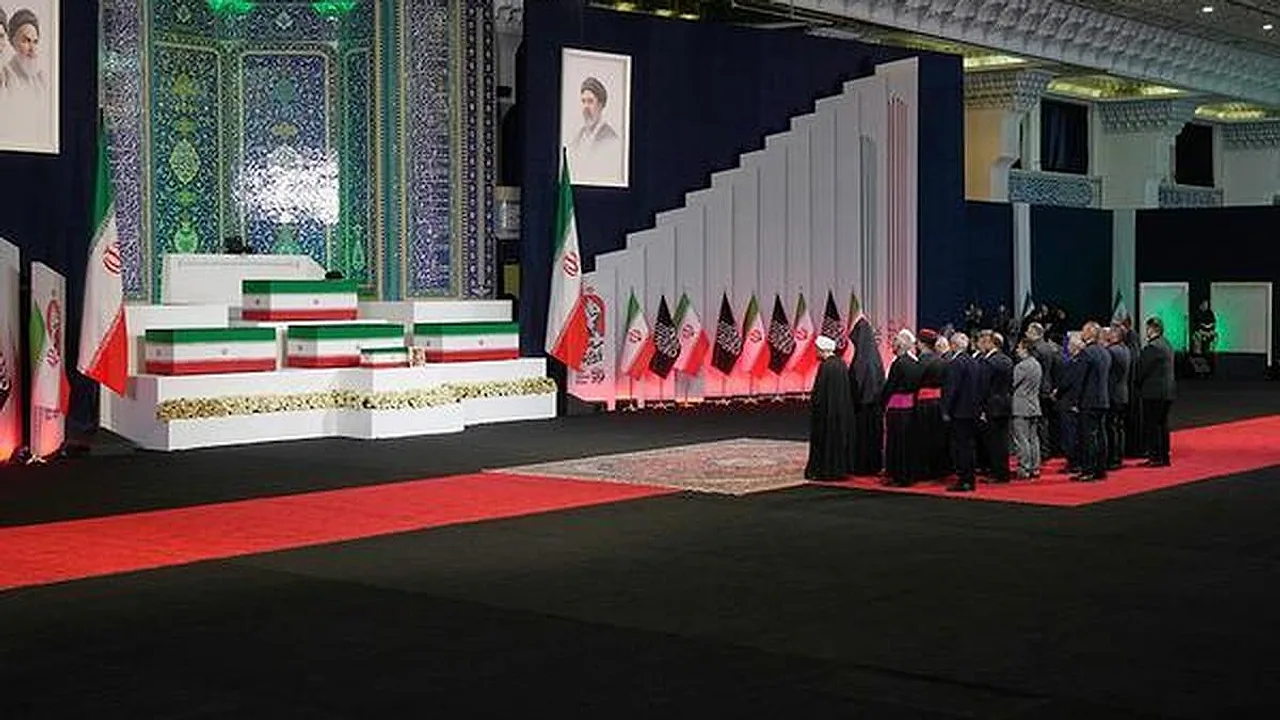
The coffin containing Ali Khamenei's remains was draped in the national flag of the Islamic Republic, with his characteristic black turban placed prominently on top. On Saturday, July 4, the official funeral commenced with the playing of the national anthem, traditional Islamic elegies, and recitations from the Quran. The Supreme Leader's casket was positioned on a massive black stage designed to mirror the Kaaba, the sacred structure at the center of Islam's holiest site in Mecca. Alongside his coffin were those of four deceased family members who perished in the same period. The packed crowds at the Imam Khomeini Grand Mosalla waved Iranian flags and carried portraits of the deceased leader, creating an atmosphere of intense collective mourning.

The Shifting Post-1945 Global Order

Since the end of World War II in 1945, the geopolitical dominance of the United States and Western Europe has been treated as a foundational element of international relations. This unilateral order was sustained by their immense military capabilities, technological superiority, and economic leverage, remaining largely unchallenged for decades. However, the rapid economic and military ascent of China, combined with the growing assertiveness of various middle powers, has begun to erode the perception of absolute Western hegemony. For a conflict-weary nation like Iran, the systemic implications of this shift are profound, and global powers cannot overlook these evolving dynamics.

Tributes from Global Delegations

A continuous stream of foreign dignitaries and political figures has arrived in Tehran to offer condolences. Among them was a delegation from India, which included People's Democratic Party President Mehbooba Mufti. Speaking on her visit, she described being present in Tehran to convey solidarity as both heartbreaking and a profound honor. She remembered Ali Khamenei as a revered leader who possessed the rare courage to stand against dominant global pressures and champion the causes of the oppressed. During her trip, Mehbooba Mufti also visited Hussainiyah Jamaran, the historic site associated with the late leader's activities and eventual martyrdom.

Additionally, on Friday, July 3, 2026, Pakistan's Prime Minister Shehbaz Sharif led a high-level official delegation to Tehran. In an official statement released by his office, Sharif paid a rich tribute to the late Supreme Leader, highlighting his lifelong contribution to the Islamic world. He noted that Ayatollah Khamenei had guided the Iranian nation for decades with exceptional wisdom, intellect, and foresight. Sharif added in a social media message that the late leader's wisdom and his enduring impact on Iran and the wider region would be remembered by future generations.

Diplomatic Frameworks and Regional Mediation

Parallel to the mourning ceremonies, intense diplomatic maneuvering is taking place to address the broader regional crisis. Lebanese President Joseph Aoun made an appeal on Saturday, July 4, urging the United States to maintain its commitment to Lebanon. This plea follows a US-mediated framework designed to establish a permanent end to the conflict between Israel and Hezbollah. The agreement, brokered in Washington, outlines the disarmament of the Iran-backed group Hezbollah, a phased withdrawal of Israeli forces from southern Lebanon, and the deployment of the Lebanese Armed Forces to the area, beginning with two pilot zones. Hezbollah has rejected the proposal, citing the absence of a firm timeline for the Israeli military's withdrawal. Marking the 250th anniversary of the US Declaration of Independence, Aoun sent congratulations to President Donald Trump, requesting that Washington continue to stand by Lebanon's national institutions, military, and public.

Concurrently, Pakistani President Asif Ali Zardari has written a letter to US President Donald Trump. According to details released on Saturday, July 4, Zardari proposed a structured bilateral partnership focusing on key areas such as energy security, trade, investment, defense, and counter-terrorism. Sending his greetings on the 250th anniversary of American independence, Zardari expressed gratitude for Washington's trust in designating Pakistan as a potential mediator in ongoing discussions with Iran. He reiterated Pakistan's stance that any durable solution to the broader Middle East conflict can only be achieved through diplomatic dialogue, de-escalation, and sustained engagement.

Turkey's Warning on the US-Iran Consensus

Turkish President Recep Tayyip Erdogan has issued a stern warning regarding the fragile peace efforts in the region. Speaking in Istanbul alongside Pakistani Prime Minister Shehbaz Sharif during a joint press conference, Erdogan asserted that no peace initiative in the Middle East can succeed without the genuine backing and consensus of regional states. He stressed that Israel must not be permitted to sabotage the delicate understanding reached between the United States and Iran. Erdogan noted that Turkey is closely monitoring Israeli attempts to undermine this diplomatic consensus, warning that the current Israeli government must not be allowed to plunge the region back into a cycle of violence, gunpowder, and blood.

Hezbollah and Hamas Delegations Convene in Tehran

The funeral also served as a venue for high-level coordination among regional groups. Representatives from Hezbollah and Hamas traveled to Tehran, where they held official discussions with Iranian Foreign Minister Abbas Araghchi. The Lebanese group Hezbollah announced that its delegation, led by senior political figure and former minister Mohammad Faneesh, included high-ranking representatives and families of fighters who had been killed or injured in the conflict. Hamas confirmed that its delegation was headed by the chief of its political bureau, Mohammad Darwish, accompanied by other senior bureau members, including Basem Naim.

Trump's Disclosure Regarding Netanyahu and NATO

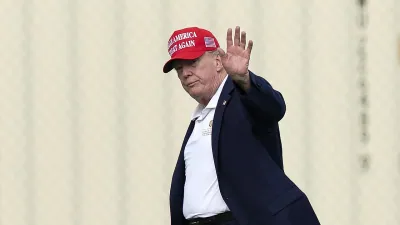
In a recent media interview, US President Donald Trump revealed that Israeli Prime Minister Benjamin Netanyahu has formally requested a meeting at the White House. According to Trump, this meeting could take place as early as next week, potentially following the conclusion of the upcoming NATO summit in Turkey. Commenting on their relationship, Trump asserted that they share an excellent rapport, remarking that Netanyahu knows who the boss is, in an apparent reference to himself. However, an Israeli official suggested that a meeting next week might be premature given Trump's travel schedule for the NATO summit on July 7 and 8, indicating that the meeting is more likely to occur the following week.

Strait of Hormuz Service Fees and South Lebanon Clashes

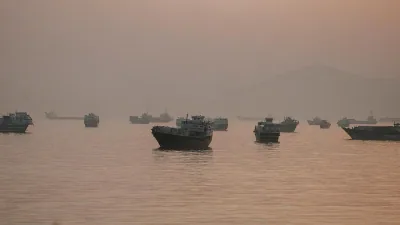
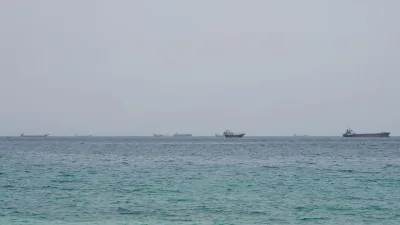
At the World Peace Forum held in Beijing, Iran's Ambassador to China, Abdolreza Rahmani Fazli, announced a significant maritime policy update on Saturday, July 4, 2026. He stated that Iran intends to introduce new service fees for commercial vessels navigating the strategic Strait of Hormuz. While Washington has strongly opposed this move, the Iranian diplomat assured that friendly countries would receive special discounts and exemptions. Fazli explained that Iran is collaborating closely with Oman to implement these new maritime arrangements. He justified the fees by noting that a substantial portion of the Strait of Hormuz lies within Iran's territorial waters, though he emphasized that these charges should be viewed as service fees rather than a traditional toll.

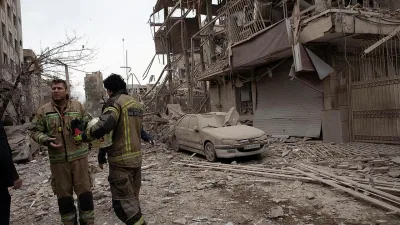
Meanwhile, military friction on the ground remains acute. The Israeli military announced on Saturday, July 4, 2026, that its forces had neutralized an armed fighter within its designated security zone in southern Lebanon. According to the military statement, soldiers spotted an armed militant operating near Majdal Zoun, opened fire, and subsequently confirmed his death during a sweep of the area. Conversely, local Lebanese media reports indicated that an Israeli helicopter conducted intensive operations over the outskirts of Majdal Zoun, launching five missiles toward the village. While there were no immediate reports of specific targets hit or casualties, the incident highlights the ongoing danger of escalation along the border.
ENDED

Closed

  1. Trump tells Axios that Netanyahu knows exactly 'who the boss is' between them

    U.S. President Donald Trump, speaking to Axios by phone on Saturday (July 4, 2026), said Israeli Prime Minister Benjamin Netanyahu could be heading to the White House as early as next week. Trump also took the opportunity to characterise the balance of power in his relationship with the Israeli leader. "We get along very well. He knows who the boss is," Trump told Axios, making plain that he was speaking about himself. An Israeli official, however, told the American outlet that next week may be too tight a window, noting that Trump himself will be travelling to Turkey for the NATO summit on July 7–8. "It might take place the week after," the official said.
  2. IDF claims elimination of armed operative in southern Lebanon security zone

    The Israeli military announced on Saturday (July 4, 2026) that its forces neutralized an armed combatant within the self-proclaimed security zone under its supervision in southern Lebanon. According to an official military statement, IDF personnel spotted an armed insurgent operating inside the designated Security Zone in the Majdal Zoun sector of southern Lebanon earlier on Saturday. The soldiers opened fire on the suspect and, following a meticulous search of the area, confirmed they had eliminated him. Meanwhile, Lebanon's state-run National News Agency (NNA) reported that an Israeli military helicopter carried out an extensive sweep near the outskirts of Majdal Zoun. The helicopter reportedly launched five missiles toward the village, though no specific targets were identified and no immediate casualties were reported.
  3. Iran's envoy says friendly nations to receive preferential treatment for Hormuz transit fees

    Tehran's envoy to China confirmed on Saturday (July 4, 2026) that new service fees would be levied on shipping vessels navigating the critical Strait of Hormuz. Although Washington has rejected the proposal, the diplomat assured that countries sharing friendly relations with Iran would receive preferential terms. Addressing the World Peace Forum in Beijing, Iranian Ambassador Abdolreza Rahmani Fazli stated that his nation is currently working in close coordination and partnership with Oman to establish updated guidelines for the crucial maritime passage. In translated remarks, the ambassador asserted that because the Strait of Hormuz constitutes part of Iran's territorial waters, they will absolutely collect service charges. However, he maintained that these payments should not be categorized as a transit toll.
  4. Trump Discloses Netanyahu Has Requested White House Meeting, Could Happen After Turkey NATO Summit

    US President Donald Trump told Axios in a Saturday interview that Israeli Prime Minister Benjamin Netanyahu had approached him with a request for a sit-down at the White House. Trump indicated the meeting could happen as soon as next week, likely following the close of the NATO summit taking place in Turkey. -Reuters
  5. Hezbollah and Hamas send delegations to Khamenei's funeral, meet Iran's foreign minister

    Delegations from Tehran-supported militant outfits Hezbollah and Hamas were present at the funeral proceedings for late Iranian supreme leader Ali Khamenei on Saturday (July 4), where they held discussions with Iranian Foreign Minister Abbas Araghchi, state media reported. The Hezbollah contingent comprised senior officials as well as relatives of the organization's fallen and injured members, the group informed Lebanese media. The delegation was headed by Mohammed Fneish, a veteran figure within the organization who also served as a former minister. Hamas, for its part, confirmed in an official statement that its group was led by Mohammed Darwish, chief of the political bureau, and also featured other bureau members including Bassem Naim.
  6. Erdogan urges world to stop Israel from blowing up U.S.-Iran deal

    Turkish President Tayyip Erdogan warned on Saturday (July 4) that no enduring peace can take root in West Asia without the genuine participation of the region's own nations, and called for Israel to be prevented from wrecking the diplomatic accord between the U.S. and Iran. Addressing a joint appearance with Pakistani Prime Minister Shehbaz Sharif in Istanbul, Mr. Erdogan said: "No solution that does not take strength from the will and contributions of regional countries can be lasting." "We are closely following the Israeli administration's attempts to dynamite the (U.S.-Iran) deal... The current war-addicted Israeli government must not be allowed to drown our geography in the smell of gunpowder and blood again," Mr. Erdogan added.
  7. Pakistan's President Zardari writes to Trump, proposes structured bilateral cooperation across key sectors

    Pakistan's President Asif Ali Zardari has written to US President Donald Trump proposing structured bilateral cooperation spanning energy security, trade, investment, national defence and counter-terrorism, his office announced on Saturday (July 4). According to a statement issued by the President's Office, the letter was sent to mark the 250th anniversary of the American Declaration of Independence, with Mr. Zardari extending congratulations to Mr. Trump and the people of the United States on the occasion. Mr. Zardari also conveyed appreciation for Washington's confidence in Islamabad's capacity to serve as a mediating party in the ongoing negotiations involving Iran. The Pakistani president expressed his firm conviction that any lasting resolution to the West Asia conflict can only emerge through sustained dialogue, diplomatic engagement and a genuine commitment to de-escalation. -PTI
  8. Lebanon's President Calls on Washington to Remain Steadfast with Beirut

    Lebanese President Joseph Aoun, on Saturday (July 4), urged the United States to maintain its commitment to Lebanon following a recent Washington-mediated framework agreement with Israel, which is aimed at permanently ending hostilities from the latest Israel-Hezbollah conflict. The deal, concluded in Washington, calls for the disarming of Hezbollah — the Iran-backed militant organisation — a phased Israeli troop pullback from southern Lebanon, and the stationing of the Lebanese army in that area, commencing with two "pilot" zones. Hezbollah has rejected the agreement, which sets no fixed timetable for an Israeli withdrawal. As America marked its 250th Independence Day, Mr. Aoun sent a congratulatory note to President Donald Trump, urging Washington to "keep always standing beside Lebanon's right and just causes, its institutions, army and people." —AFP
  9. Pakistan's PM Shehbaz Sharif Leads Delegation in Paying Tributes to Khamenei

    A high-level Pakistani delegation, headed by Prime Minister Shehbaz Sharif, on Friday (July 3, 2026) paid their respects to Iran's late supreme leader Ayatollah Ali Khamenei. In a statement from Mr. Sharif's office, the Prime Minister was said to have recalled the late supreme leader's contributions to Islam and "paid rich tribute" to Ayatollah Khamenei, who had steered the Iranian nation across several decades with remarkable wisdom and sagacity. "The late Supreme Leader's wisdom, leadership and profound influence on Iran and the wider region will be remembered for generations," Mr. Sharif wrote in a post on social media.
  10. Mehbooba Mufti Pays Tribute to Khamenei in Tehran, Describes It as Deeply Painful Yet an Honour

    PDP president Mehbooba Mufti travelled to Tehran as part of an Indian delegation to pay her respects to Iran's late Supreme Leader Ayatollah Ali Khamenei, who lost his life in U.S.-Israeli military strikes in February. Sharing her thoughts on social media, Ms. Mufti said it was "an honour" to be present in Tehran to extend her heartfelt condolences and express solidarity over Khamenei's passing. She described him as "a revered leader who dared to stand against the tide and fought for the oppressed." Ms. Mufti also made a visit to Husayniah Jamaran — the site where the late Iranian leader is believed to have 'attained martyrdom.'
  11. Crowds Converge at Tehran's Grand Mosalla as Khamenei Funeral Begins

    On Saturday, July 4, Iran set in motion a multi-day funeral for its late Supreme Leader, Ayatollah Ali Khamenei, who lost his life in an airstrike that struck months ago at the very beginning of the war.
  12. Mourners Pack Tehran Complex as Khamenei's Week-Long Funeral Ceremonies Get Underway

    Saturday (July 4) brought vast crowds of grief-stricken citizens to a large prayer complex in Tehran, where the week-long funeral proceedings for Iranian Supreme Leader Ayatollah Ali Khamenei got underway — opening with the national anthem, devotional eulogies, and recitations from the holy Quran. Footage broadcast on television showed his coffin enveloped in the Iranian national flag, with his signature black turban resting on top. The coffin was placed alongside four additional caskets holding members of his family who were also killed, all arranged on a large black platform that bore a striking resemblance to the Kaaba — the sacred cube-shaped structure standing at the centre of Islam's holiest site in Mecca. The expansive courtyard of the complex, the Imam Khomeini Grand Mosalla, was filled to capacity with mourning citizens, a large number of whom were waving Iranian flags and holding up portraits of the slain leader.
  13. The Iran Dilemma and What It Reveals About the West's Waning Dominance

    For the eight decades following 1945, the stranglehold of the United States and western Europe over world affairs was treated as an immovable reality — one resting on the pillars of their armed strength, technological edge, and financial clout. That arrangement remained largely undisturbed until quite recently. Yet China's dramatic ascent on the global stage, combined with the sharpening assertiveness of several so-called 'middle powers,' has started chipping away at — without yet toppling — America's image as the world's pre-eminent force. The broader message sent when a mighty power makes concessions to a war-ravaged Iran carries enormous weight, and it is a message that governments and influential actors right across the globe are certain to absorb.
  14. In pictures | Iran bids farewell to Supreme Leader Ali Khamenei as mourning ceremonies get under way

    On Friday, July 3, 2026, Iranians across the country came together to pay a final farewell to their slain Supreme Leader Ali Khamenei as the nation entered a week of mourning ceremonies. Government officials at the highest levels and international dignitaries from abroad made their way to Tehran, where the leader's body has been placed on public display. Khamenei's coffin had been brought into the complex earlier in the day, draped in the flag of the Islamic Republic, with his black turban resting on top of it.
  15. Crowds stream into Khamenei's funeral venue before official proceedings begin: AFP journalist

    Thousands of people made their way into Tehran's Grand Mosalla complex for the funeral of Iran's late Supreme Leader Ayatollah Ali Khamenei, as AFP journalists present on the ground witnessed — all of this before the official ceremonies had formally commenced. The vast complex's central courtyard filled up with mourners as the authorities put sweeping traffic curbs in place across the capital. A separate AFP journalist reported witnessing people covering several kilometres on foot simply to reach the venue.
  16. Iran's Parliament Speaker Ghalibaf Says U.S. Must Acknowledge Changed Realities for Trade to Flourish

    Iranian Parliament Speaker Mohammad Bagher Ghalibaf, at a meeting with his Uzbek counterpart, stated that the United States has no option but to come to terms with the fundamentally transformed situation that has emerged following the Israeli-U.S. war with Iran, according to Al Jazeera. "Compared to earlier, the overall climate has shifted in a positive direction, and the aftermath of the conflict has pushed Americans to recognise the realities as they now stand," Mr. Ghalibaf was quoted as saying by Al Jazeera. "Within this changed environment, commercial ties can be taken to a higher level, and we hope the groundwork for the removal of sanctions will likewise fall into place." The Iranian Parliament Speaker added that the current regional dynamics could open fresh avenues for transit and trade collaboration. "The shared oversight of Iran and Oman over the Persian Gulf and the Strait of Hormuz, together with a rollback of American interference in the region, will produce far better prospects for advancing transit cooperation," he said.
  17. Khamenei Funeral Ceremonies Open, Millions of Mourners Expected to Converge on Tehran

    Vast numbers of Iranians are expected to descend on the capital to pay their last respects to Supreme Leader Ali Khamenei as a lengthy series of funeral observances gets under way — proceedings that the Islamic Republic views as an occasion to project its strength before its adversaries. Iranian authorities have projected that between 15 million and 20 million people could gather in Tehran alone during the three-day public tribute, a farewell befitting the man who steered the country's destiny for roughly thirty-five years. A total of six days of commemorative events have been arranged in Khamenei's honour. He occupied the Islamic Republic's highest office from 1989 until February 28, when he was killed at the age of 86 on the very first day of the joint U.S.-Israeli military campaign against Iran.

Questions & Answers

When and how did Iran's late Supreme Leader Ayatollah Ali Khamenei die?
Ali Khamenei died at the age of 86 on February 28. He was killed during the opening day of a joint military operation conducted by the United States and Israel.
What message did Iranian Parliament Speaker Mohammad Baqer Qalibaf send to the United States?
He stated that the US must accept the new regional ground realities following the conflict, expressing hope that this environment could lead to expanded trade ties and the lifting of sanctions.
What new policy has Iran announced regarding the Strait of Hormuz?
Iran's ambassador to China announced that new service fees will be charged for ships passing through the Strait of Hormuz, though friendly nations will receive special concessions.
What warning did Turkish President Recep Tayyip Erdogan issue?
He warned that Israel must not be allowed to destroy the peace consensus reached between the US and Iran, emphasizing that no peace initiative can last without the support of regional countries.
What is the current status of the military clashes in Southern Lebanon?
The Israeli military claimed to have neutralized an armed fighter within its security zone in Majdal Zoun, while Lebanese media reported that an Israeli helicopter fired five missiles toward the village.

Comments 0

No comments yet — be the first.

Citizen journalism

Become a TrendKia journalist

Voice of the people

Share news, photos and videos from your area with TrendKia and let your voice reach the nation. Every citizen a journalist.

Join now
CH 01 LIVE
TrendKia TV ON AIR