Tensions between Washington and Tehran escalated further after Iranian officials refuted claims of active diplomatic discussions. In response, US President Donald Trump accused Iran's leadership of being deceitful and insisted that military blockades will persist until a deal or complete surrender is reached.
 Political Drama Erupts in Rajasthan Local Body Elections As Kidnapping Allegations Surface in Khairthal and Statements Flip in Karauli
 Supreme Court Slams Tamil Nadu Over Navodaya Schools, Asks How Country Will Run If States Act Arbitrarily
 Cancer Horoscope September 18: Bright day for love and creativity, night calls for health care
 Fed rate increase tilts dollar risk upward as other central banks temper fresh highs
 Cap table platform Pulley shuts down and partners with rival Carta
 Telangana’s 2026 Dasara calendar puts SA-I and half-yearly exams before a 13-day school break and brings junior colleges back one day earlier
 Vrishabha and Tula Horoscope Till December 31: Major Changes Expected Due to Planetary Movements
 US Debit Cards Used to Withdraw Rs 92 Crore Cash, CBI Takes Action Against American Christian NGO
 Do Not Impose Three Language Formula on Class 6, Supreme Court Advises CBSE to Postponed Decision Until 2027
 Yogi Adityanath launches 'Gangasagar Namo Namah' in Lucknow
 Live
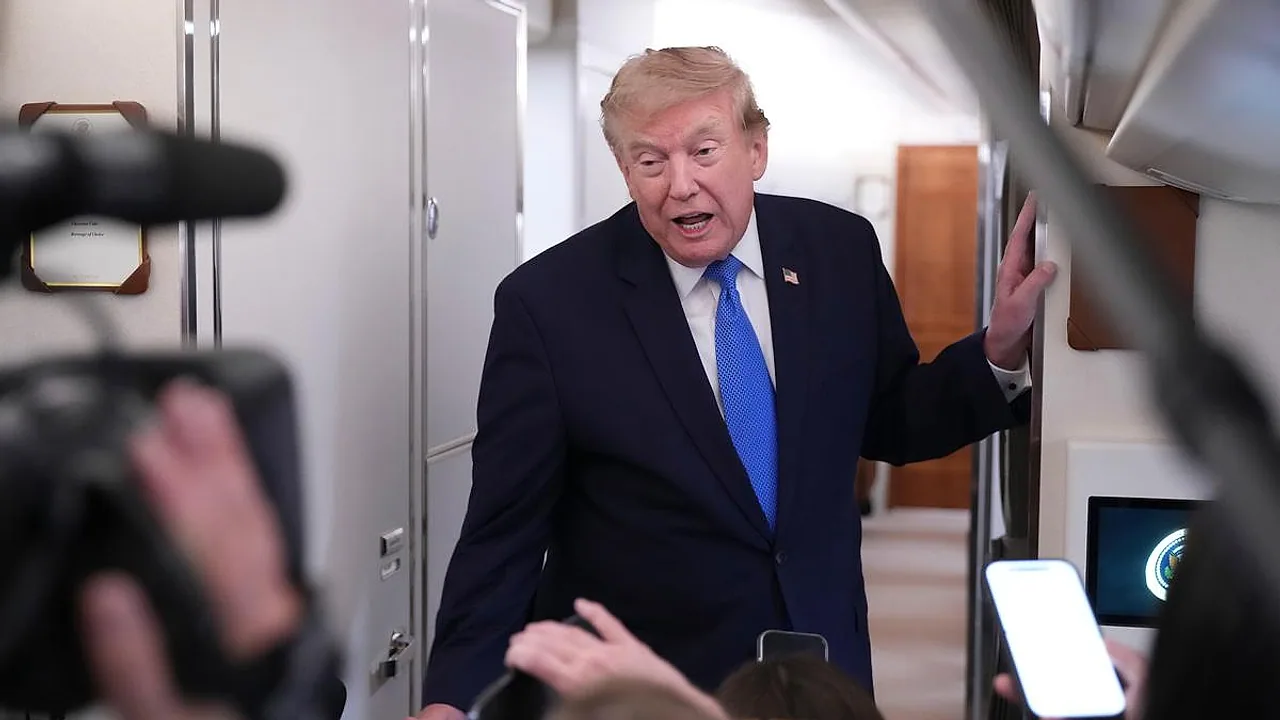
LiveLive: Trump expects Iran negotiations today without timeline, aiming for Strait of Hormuz agreement
Tensions between Washington and Tehran escalated further after Iranian officials refuted claims of active diplomatic discussions. In response, US President Donald Trump accused Iran's leadership of being deceitful and insisted that military blockades will persist until a deal or complete surrender is reached.
Also read
ENDED
Closed
US President labels Iranian leaders 'unbelievably duplicitous'
American President Donald Trump on Monday criticized the Iranian regime as "unbelievably duplicitous," claiming they initially requested discussions to halt hostilities before publicly denying that any talks were taking place. In a message shared on Truth Social, he asserted that no supplies or goods will reach Iran without US approval, emphasizing that restrictions will remain until an agreement or full surrender occurs.Trump demands Iran agree to terms or face total surrender
President Donald Trump reacted strongly on Monday (August 3) following Tehran's denial of ongoing diplomatic dialogues with Washington, writing in a fiery social media message that the American naval blockade would stay in effect until a formal accord or total submission is achieved. Accusing Iran of deceit for proudly asserting that no parleys were happening, Trump noted on Truth Social that regardless of Tehran's public stance, conversations are indeed taking place to resolve a multi-decade crisis initiated by Iran. These comments follow Iranian statements refuting direct contact with Washington. Trump had previously called off planned intense airstrikes against Iran during the weekend, attributing the halt to requests from regional leaders and Tehran itself.War-driven surge in crude prices set to push U.S. shale profits to post-2022 peak
American shale producers are projected to register their most lucrative quarterly earnings since 2022 after the conflict with Iran triggered a sharp spike in crude oil prices. Industry analysts anticipate that firms will funnel most of this unexpected financial gain back to investors through payouts rather than allocating funds to expand drilling operations. The military hostilities, which started in late February, choked Middle Eastern energy deliveries and disrupted maritime routes through the Strait of Hormuz—a crucial shipping corridor handling roughly a fifth of global petroleum and natural gas supplies. Consequently, Brent crude jumped from a January average of $69.82 a barrel to $126.41 in April, while West Texas Intermediate (WTI) climbed from $65.17 to $109.64. This earnings surge for petroleum firms is set to rival the massive windfalls recorded following Russia's invasion of Ukraine in 2022.Diplomat Vishwesh Negi appointed as India's new envoy to Iran
Vishwesh Negi, a 2002-batch IFS officer currently serving as Joint Secretary in the Ministry of External Affairs, has been designated as India's next Ambassador to Iran. This diplomatic transition occurs amidst sharp geopolitical tensions in West Asia. Taking charge of the Indian embassy in Tehran, Negi will concentrate on strengthening bilateral strategic ties and addressing maritime security concerns across the region.Iran clarifies no ongoing talks with US, confirms dialogue with Oman
Tehran is not holding any discussions with Washington at present, Iran's foreign ministry clarified on Monday, adding that dialogue is instead taking place with Muscat regarding the administration of the vital Strait of Hormuz. Foreign Ministry Spokesperson Esmaeil Baqaei made these remarks during a weekly press interaction, stating, "At this stage, we are not in talks with the United States. Our ongoing dialogue is with Oman to guarantee safe navigation across the Strait of Hormuz."Discussions held with Oman over fresh passage through Strait of Hormuz, reveals Tehran
Tehran has been in talks with Oman regarding the establishment of an alternate channel in the Strait of Hormuz that features designated entry and exit lanes, foreign ministry representative Esmaeil Baghaei disclosed during a broadcast press briefing.Iran executes two citizens convicted of spying for Israel
As reported by the Fars news agency, Iran put two of its citizens to death on Monday after charging them with providing Israel with critical coordinates for military and security sites throughout the ongoing conflict.Tanker carrying Russian cargo redirects around Africa following U-turn in Red Sea
A Panama-flagged vessel carrying Russian naphtha attempted to navigate the Bab-el-Mandeb strait during the final week of July before altering its route to sail around Africa, according to market sources and LSEG tracking data. The Suezmax ship, identified as Sea Icon, had taken on at least 100,000 tons of naphtha at the Russian port of Ust-Luga on July 1 for delivery to Asian buyers, data revealed. When getting close to the Bab-el-Mandeb strait, a crucial bottleneck connecting the Red Sea to the Gulf of Aden where merchant shipping faced repeated attacks last week, the tanker completed a U-turn and exited the zone.Strait of Hormuz discussions between Tehran and Oman nearing completion, says IRNA
On Sunday (August 3, 2026), Iranian state media stated that Iran’s Foreign Minister Abbas Araghchi conducted telephonic conversations with Saudi Foreign Minister Prince Faisal bin Farhan and Pakistani Military Chief Asim Munir to review ongoing diplomatic initiatives. Earlier, Iran's official news outlet IRNA cited Foreign Minister Abbas Araghchi mentioning that dialogue between Tehran and Muscat concerning the Strait of Hormuz has entered its concluding phase. Esmaeil Baghaei, spokesperson for Iran's Foreign Ministry, clarified that deliberations center on establishing a fresh navigation corridor through the channel, emphasizing that this matter has "no link to the Strait of Hormuz being opened or closed. That is a separate discussion." In the previous month, Tehran openly dismissed a plan presented by Oman and supported by Gulf nations for joint oversight of the shared waterway. Sources familiar with the situation told Reuters the plan involved gathering voluntary transit charges for traversing the strait.Trump attributes delay in Iran strikes to recommendations from Gulf allies
American President Donald Trump stated on Sunday, August 2, 2026, that he paused plans for fresh military actions against Iran following requests from regional Gulf partners, including Qatar, Saudi Arabia, and the United Arab Emirates. According to the President, US armed forces were initially prepared to execute what would have been the largest military assault since World War II on Sunday, August 2, 2026. However, he chose to cancel the operation to allow room for diplomatic discussions, influenced by consultations with prominent Gulf figures such as Saudi Crown Prince Mohammed bin Salman and appeals from undisclosed Iranian diplomats.Crude oil prices plunge as Trump calls off strikes on Iran to pursue nuclear agreement
Crude oil valuations dropped by $4 per barrel on Monday, August 3, following US President Donald Trump's decision to pause a proposed strike on Iranian targets in an effort to swiftly negotiate a settlement to restrict Tehran's nuclear development and resume traffic through the Strait of Hormuz. By 2352 GMT, Brent crude benchmark contracts had fallen by $4.08, or 4.64 percent, reaching $83.85, whereas US West Texas Intermediate crude settled at $80.66 per barrel, reflecting a decline of $4.01 or 4.74 percent, according to Reuters.Two Saudi oil carriers navigate Bab el-Mandeb as Hormuz maritime traffic slows, tracking data reveals
Maritime tracking records released on Monday (August 3) indicated that a pair of vessels carrying crude from Saudi Arabia passed through the Bab el-Mandeb strait during the weekend. Concurrently, ship movements across the Strait of Hormuz recorded a deceleration after incidents targeting commercial craft were reported. Statistics provided by Kpler highlighted a drop in commercial traffic via Bab el-Mandeb, where ship counts decreased to 18 on Sunday, down from 27 on Saturday and 28 on Friday. This development follows the July 20 announcement by Iran-backed Houthi forces imposing a naval blockade on Saudi Arabia. The move introduced a fresh line of confrontation against Washington and its coalition in the ongoing Iran conflict, broadening strikes on vessels transporting energy resources and merchandise to areas outside the Gulf.Trump announces Monday talks with Tehran, declines to impose deadline for final agreement
American President Donald Trump confirmed that negotiations involving Iran are scheduled for Monday (August 3, 2026), while refraining from establishing a specific timeframe to reach a consensus. His statements followed a previous announcement where he halted a planned military strike, aiming to swiftly achieve a resolution to restart passage through the Strait of Hormuz and settle disputes surrounding Tehran's nuclear program. Late Saturday (August 1), Mr. Trump posted on Truth Social mentioning that Tehran alongside regional Middle Eastern nations had requested time to finalize a pact ensuring the immediate and total clearance of the waterway and an end to Tehran's nuclear risk, emphasizing that Iran needs to conclude the deal rapidly.
Comments 0
Sign in to join the conversation.
Sign inNo comments yet — be the first.
Citizen journalism
Become a TrendKia journalist
Voice of the peopleShare news, photos and videos from your area with TrendKia and let your voice reach the nation. Every citizen a journalist.
Join nowCH 01 LIVE
TrendKia TV ON AIR