






















Live: West Asia war updates: Vance says talks with Iranian officials set 'good foundation' for a deal to end the warLive
23 Jun 2026, 11:39 pm (52 days ago)· 1

Live: West Asia war updates: Vance says talks with Iranian officials set 'good foundation' for a deal to end the war

Iran and the United States have agreed on a 60-day roadmap toward a final deal to end the West Asia war, with mediators Pakistan and Qatar announcing major progress including sanctions relief, lifting of the blockade, and creation of a de-confliction cell for Lebanon. High-level talks at the Burgenstock resort in Switzerland have concluded, with technical negotiations set to continue through the rest of the week. The talks were led by U.S. Vice President J.D. Vance and Iran's Foreign Minister Abbas Araghchi, even as President Donald Trump continued to issue threats against Iran.

Iran and the United States have agreed on a roadmap that could produce a final agreement to end the West Asia war within 60 days, marking the most concrete sign yet that months of hostilities between the two sides may be winding down.

What the roadmap covers

Mediators Pakistan and Qatar announced the breakthrough, describing it as major progress after weeks of shuttle diplomacy. The roadmap includes relief from oil export sanctions imposed on Iran, the lifting of a blockade, and the creation of a so-called de-confliction cell aimed at winding down military operations in Lebanon.

Also read

Where the talks happened

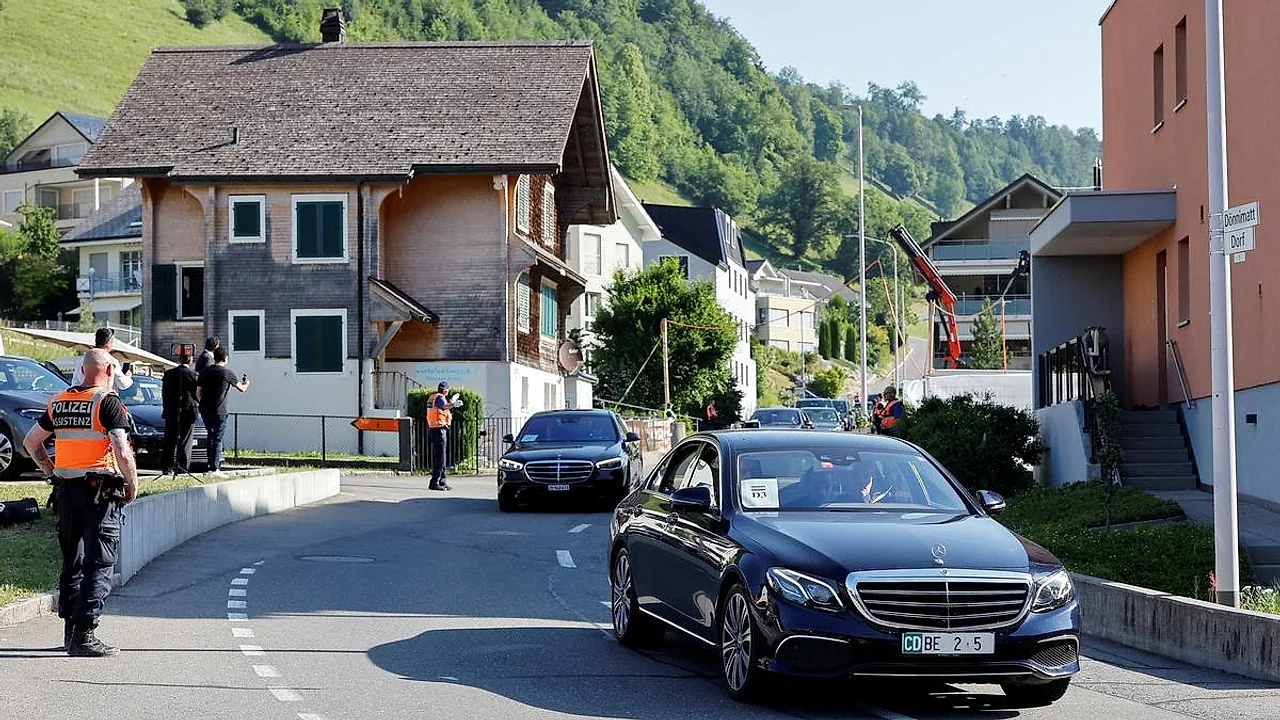
High-level negotiations concluded at the Burgenstock resort in Switzerland, a venue that has hosted sensitive diplomatic talks before. Officials said technical-level discussions between the two sides would continue through the rest of the week to work out the details of implementation.

How the conflict got here

The path to this roadmap has been anything but smooth. Around mid-June, reports pointed to an emerging consensus between Iran and the United States on a peace framework. That momentum collapsed within weeks: by late June, news accounts described the United States carrying out 21 strikes against Iranian targets, followed by a forceful Iranian counterattack, with the war appearing to enter a fresh, more dangerous phase rather than winding down. The wider West Asia region has for years been shadowed by unresolved conflicts, including the long-running Israeli-Palestinian dispute, which is part of why any sign of de-escalation between Iran and the US draws close attention.

What Vance said

Vance said that talks with Iranian officials had laid a 'good foundation' for an agreement to end the war, a comment that signals cautious optimism from Washington's side even as the details of a final deal remain to be worked out.

What happens next

With the high-level round of talks in Switzerland now over, attention shifts to the technical negotiations expected to run through the week. Whether the 60-day roadmap holds will depend on both sides implementing the sanctions relief, the blockade lifting, and the de-confliction arrangements for Lebanon without a repeat of the strikes and counterstrikes seen in late June.
ENDED

Closed

  1. Pentagon seeks $80 billion from Congress for Iran war

    The Pentagon has told senators it needs roughly $80 billion, mostly to cover the cost of the U.S. war against Iran, adding to what is already a sizable military spending boost being sought by President Donald Trump. The White House Office of Management and Budget has yet to make a formal request to Congress. But Defense Secretary Pete Hegseth has been making the rounds on Capitol Hill, including Monday evening. A top deputy defense secretary told senators about the Iran funding request last week, according to two people familiar with the situation but not authorized to discuss it publicly.
  2. U.S. temporarily suspends Iran oil sanctions, says nuclear inspectors to return

    The United States suspended sanctions on Iranian oil on Monday after Vice President JD Vance said Iran would allow UN nuclear inspectors to return to the country. “We laid a very good foundation for a successful final deal,” Vance told reporters following talks at Switzerland’s luxury Burgenstock resort aimed at ending the US-Israeli war with Iran. Iranian Foreign Ministry spokesman Esmaeil Baqaei said for his part that “a very brief discussion took place regarding the nuclear issue, but there was no discussion of details.” In Washington, President Donald Trump said the Strait of Hormuz, the critical channel for much of the world’s oil, is now “totally open” to shipping. Iran closed the waterway early in the war, sending economic shock waves across the globe.
  3. Oil falls as U.S. waives Iranian sanctions and Nasdaq tumbles

    Crude prices fell Monday after the U.S. said it is temporarily lifting sanctions on Iran to allow it to export oil, while the Nasdaq retreated on concerns after AI investments by SpaceX and other tech giants. US Vice President JD Vance said a “very good foundation” had been laid for negotiations towards a final deal with Iran, with mediators also claiming progress. Last week, Tehran and Washington signed a memorandum of understanding (MOU) laying the groundwork for the negotiations, after a 40-day war that was followed by weeks of an inconclusive and oft-breached ceasefire.
  4. Iran to establish a communication line for safe passage in Hormuz, top negotiator says

    Iran’s top negotiator Mohammad Baqer ‌Qalibaf said that Tehran ⁠has agreed to have a communication ‌line regarding ship passage ‌in ‌the ⁠strait of Hormuz ⁠to avoid conflict and incidents in the ‌strategic waterway. In comments given to state TV on ‌his way back from talks with U.S. ⁠in Switzerland on Sunday, ‌the Iranian negotiator added that the signing for the release ‌of $12 billion in frozen Iranian assets has been ⁠finalised in the ⁠talks.
  5. Trump says 'Will do what I have to do' if Iran does not stick to deal

    U.S. President ‌Donald Trump said on ⁠Monday “I will do what ‌I have ‌to ‌do” ⁠if Iran ⁠does not stick to its agreement ‌with Washington. “If Iran doesn’t live ‌up to their agreement, or ⁠if they’re not behaving, ‌I will do what I have ‌to do,” Trump told reporters.
  6. U.S. Treasury waives sanctions on Iranian oil as part of interim agreement to end war

    The U.S. Treasury has issued a 60-day license waiving sanctions on Iranian oil as part of the interim agreement to end the war. The license authorises the production, delivery and sale of Iranian oil. It will last through August 21. The license emerged Monday (June 22) as U.S. Vice President J.D. Vance said his lengthy talks with senior Iranian officials in Switzerland created a “good foundation for a successful final deal.” Negotiators are seeking a permanent end to the war that the U.S. and Israel began in late February.
  7. Vance says talks with Iranian officials set 'good foundation' for a deal to end the war

    Vice President J.D. Vance on Monday (June 22) said his lengthy talks with senior Iranian officials in Switzerland created a “good foundation for a successful final deal” as they seek a permanent end to the war that the U.S. and Israel began in late February. “The final deal is the house,” Mr. Vance told reporters after initial talks with Iran’s parliamentary speaker, Mohammad Bagher Qalibaf. “We set the foundation. We haven’t built the house, but we’ve laid a successful foundation to get to a good place for the American people.” Iran noted “major progress” to end the fighting in Lebanon and called it the first real test of the negotiations. The mediation effort in Switzerland, which started Sunday and stretched into early Monday (June 22), had rocky moments. But the talks also led to some agreements, mediators said, as technical talks continue this week.
  8. U.S. Treasury issues a 60-day license waiving sanctions on Iranian oil

    U.S. Treasury issues a 60-day license waiving sanctions on Iranian oil as part of the interim agreement to end the war.
  9. Lebanese President discusses Israel truce with senior U.S., Qatari officials

    Lebanese President Joseph Aoun spoke with senior U.S. and Qatari officials on Monday (June 22) about consolidating a ceasefire in Lebanon and forming a “de-confliction cell”, his office said, after U.S.-Iran negotiations in Switzerland. Fighting between Israel and Hezbollah, which drew Lebanon into the West Asia war on March 2 with rocket fire at Israel in support of its backer Iran, has repeatedly threatened to derail regional peace efforts. After a first round of talks in Switzerland on ending the regional conflict, mediators Pakistan and Qatar said on Monday (June 22) that Tehran and Washington had agreed to set up a “de-confliction cell” with Lebanon to ensure adherence to the termination of military operations there.
  10. India and Iran hold security talks, China's FM attends BRICS meeting

    Top Indian and Iranian security officials met in New Delhi on Monday (June 22), the Foreign Ministry said, as security chiefs gathered for a BRICS meeting that also included China’s Foreign Minister Wang Yi. India’s National Security Advisor Ajit Doval met Iranian official Ghadir Nezamipour, a senior member of Tehran’s Supreme National Security Council, and discussed the “ongoing situation” in West Asia, as well as India-Iran ties, the Foreign Ministry said. India has long maintained cordial ties with Iran but has had to carefully balance its relationship with the United States, especially during the recent weeks of conflict in West Asia.
  11. Any unfreezing of Iranian funds will not finance terrorism: Vance

    If Iranian funds are ever unfrozen under a deal to end the West Asia war, Washington can make sure that the money does not finance terrorism, U.S. Vice President J.D. Vance insisted Monday (June 22). “If we ever unfreeze Iranian assets, we can ensure that. Iranian money goes to help the people of Iran and not to fund terrorism,” Mr. Vance told reporters at Switzerland’s Burgenstock resort, where a first round of talks between Tehran and Washington concluded early Monday (June 22). The talks were the first stage of a two-month negotiating period set out under a preliminary deal agreed last week, aimed at drawing a line under the war launched by the United States and Israel on February 28.
  12. Iran agreed to invite IAEA inspectors back into country: Vance

    Tehran has agreed to invite International Atomic Energy Agency inspectors back into the country, US Vice President J.D. Vance said Monday (June 22), after a first round of US-Iran talks towards ending the West Asia war. “The Iranians have agreed to invite IAEA inspectors back into their country,” Mr. Vance told reporters at Switzerland’s Burgenstock resort, where his talks with Iran’s chief negotiator Mohammad Bagher Ghalibaf opened on Sunday (June 21). “That is a major milestone for the American people and the first step in permanently denuclearising or permanently ending a nuclear weapons program in Iran,” he said.
  13. Lebanese President discusses Israel truce with senior U.S., Qatari officials

    Lebanese President Joseph Aoun spoke with senior U.S. and Qatari officials about consolidating a ceasefire in Lebanon and forming a “de-confliction cell”, his office said, after U.S.-Iran negotiations in Switzerland. Fighting between Israel and Hezbollah, which drew Lebanon into the West Asia war on March 2 with rocket fire at Israel in support of its backer Iran, has repeatedly threatened to derail regional peace efforts. After a first round of talks in Switzerland on ending the regional conflict, mediators Pakistan and Qatar said that Tehran and Washington had agreed to set up a “de-confliction cell” with Lebanon “to ensure the adherence of the termination of military operations” there.
  14. Mediators hail 'progress' in U.S.-Iran talks after lengthy opening session

    Iran’s senior envoys left talks in Switzerland after a marathon negotiating session with the United States, state media reported, as mediators claimed progress towards a definitive U.S.-Iran deal. The host nation said conditions were set for technical talks to immediately follow, with the sides at the beginning of 60 days to secure a long-term settlement. Last week, Tehran and Washington signed a memorandum of understanding laying the groundwork for the negotiations, after a 40-day war that was followed by weeks of an inconclusive and oft-breached ceasefire.
  15. Qatar brings LNG tankers into Hormuz despite shipping slowdown

    Four liquefied natural gas tankers controlled by Qatar were heading into the Strait of Hormuz on Monday (June 22, 2026), despite a fall in ship traffic ⁠after Iran announced that it had again closed the waterway over the weekend, shipping data showed. Read more
  16. Israeli strikes leave Lebanon’s ancient coastal city of Tyre shaken

    The dust has barely settled in Tyre after weeks of Israeli airstrikes on the ancient city along Lebanon‘s Mediterranean coast. Despite the relative calm, life remains largely at a standstill. A new ceasefire between Israel and the Iranian-backed Hezbollah militant group is in effect. But previous ceasefires have broken down. Uncertainty and fear linger, even as the U.S. and Iran meet for talks in Switzerland that Lebanese residents hope will bring calm to their troubled country.
  17. 'Progress', say mediators, after Iran-U.S. talks towards ending war

    Iran and the United States agreed to set up communications lines to keep the vital Strait of Hormuz open and end fighting in Lebanon, mediators said, after their first round of talks in Switzerland toward ending the war in the West Asia. The teams led by U.S. Vice President JD Vance and Iran’s Mohammad Bagher Ghalibaf opened talks Sunday (June 21, 2026), as part of a two-month negotiating period set out under a preliminary deal agreed last week. Mediators Pakistan and Qatar said the negotiators reached an agreement on a “roadmap towards reaching a final deal within 60 days”, with technical talks to continue for the rest of the week at the Swiss resort of Burgenstock.
  18. U.S., Iranian negotiators enter 2nd day of talks after rough start

    Negotiators from the U.S. and Iran were set to engage in a second day of talks to solidify a permanent end to the war between the countries, after a first day of mediation began with a rocky start. Mediators Qatar and Pakistan hailed what they called “encouraging progress” made during the talks. A senior U.S. diplomat claimed progress on multiple fronts, including the establishment of “mechanisms” to ensure the Strait of Hormuz, a vital waterway for global energy shipments, remains open and that a ceasefire in southern Lebanon holds.
  19. Iran-U.S. technical talks to continue for rest of the week at Burgenstock: mediators

    Technical talks between Iran and the United States will continue this week in Switzerland, following the conclusion of first-round negotiations to end the West Asia conflict, mediators Pakistan and Qatar said on Monday (June 22, 2026). "Technical talks will continue for the remainder of the week at the Burgenstock resort on all issues," Pakistan and Qatar said in a joint statement. -- AFP
  20. High-level Iran-U.S. negotiations over, says mediators

    Mediators say high-level Iran-US negotiations over in Switzerland; technical talks to go on to reach final Iran war deal. -- AP U.S. and Iran conclude tense talks in Switzerland, agreeing on a roadmap for peace and cooperation within 60 days.
  21. Pakistani, Qatari mediation delivered major progress to end Lebanon war, says Araghchi

    Iran's Foreign Minister Abbas Araghchi said Monday (June 22, 2026) there was "major progress" in talks with the United States. "Pakistani and Qatari mediation has delivered major progress to end Lebanon War," Mr. Araghchi posted on X. "Oil and petrochem exports are waived, blockade lifted, some frozen assets released, and major reconstruction & development plan launched for Iran." -- AFP
  22. Trump threats shake up U.S.-Iran talks in Switzerland; negotiators expect to work through night

    U.S. President Donald Trump continued to threaten Iran on Sunday (June 21, 2026) even as talks began in Switzerland between his vice president and Iranian officials on next steps in the interim agreement signed last week to end the war. The U.S. team is led by Vice President J.D. Vance and includes Jared Kushner and Steve Witkoff. The Iranian negotiators are led by Parliament Speaker Mohammad Bagher Qalibaf and Foreign Minister Abbas Araghchi. Pakistan and Qatar are mediators. Trump's threats disrupt U.S.-Iran negotiations in Switzerland as talks focus on nuclear issues and regional conflicts.
  23. Iran, U.S. to set up 'de-confliction cell' with Lebanon to stop military operations

    Iran and the United States have agreed to set up a "de-confliction cell" with Lebanon to stop military operations, mediators Pakistan and Qatar said in a joint statement on Monday (June 22, 2026). "The parties agreed on the creation of a de-confliction cell, between the parties, the Lebanese Republic and facilitated by the Mediators, to ensure the adherence of the termination of military operations in Lebanon," the joint statement read. -- AFP
  24. Iran, U.S. agree roadmap to final deal within 60 days: Qatar, Pakistan mediators

    Iran and the United States agreed on a roadmap towards reaching a final deal to end the war within 60 days, mediators Pakistan and Qatar said in a joint statement on Monday (June 22, 2026). "The High Level Committee has agreed upon a roadmap towards reaching a final deal within 60 days, laying the foundation for the immediate commencement of further technical talks," the joint statement read. -- AFP

Comments 0

No comments yet — be the first.

Citizen journalism

Become a TrendKia journalist

Voice of the people

Share news, photos and videos from your area with TrendKia and let your voice reach the nation. Every citizen a journalist.

Join now
CH 01 LIVE
TrendKia TV ON AIR