






















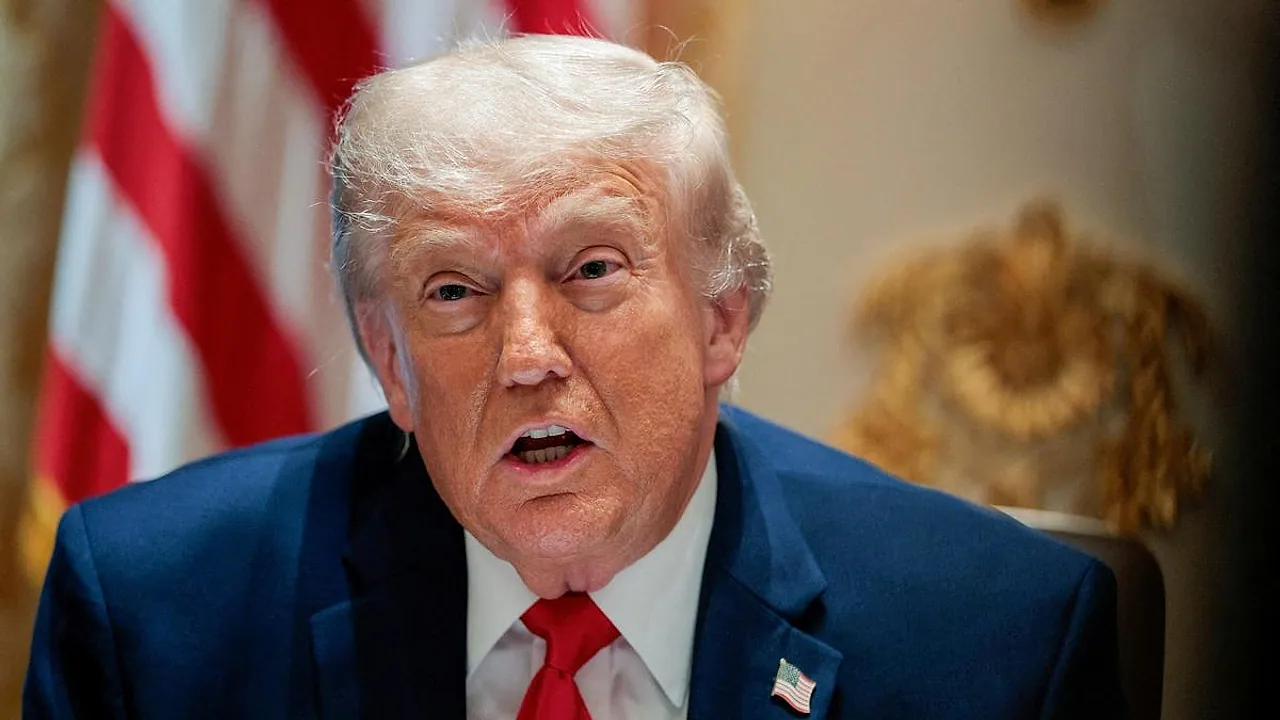

Amidst escalating geopolitical conflict in West Asia, US President Donald Trump has issued a severe warning threatening the complete destruction of Iran. On Saturday, June 26, 2026, Trump declared that if Washington is forced to resume military hostilities due to ongoing violations of the temporary ceasefire by Tehran, the Islamic Republic of Iran will cease to exist. This warning was issued immediately after the US military confirmed carrying out targeted airstrikes on several Iranian military positions, responding to a series of attacks against commercial vessels in the strategically vital Strait of Hormuz.
US Air Assaults Target Iranian Military Infrastructure
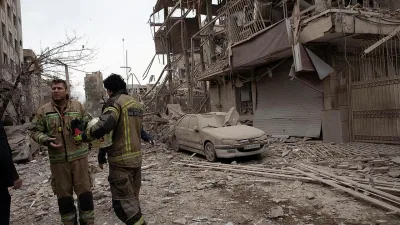
US Central Command confirmed on Saturday, June 27, 2026, that following direct orders from President Donald Trump, American fighter jets carried out air raids against 10 specific Iranian military installations. The pre-dawn operations targeted and successfully destroyed surveillance capabilities, communication networks, air defense systems, drone storage facilities, and mine-laying infrastructure belonging to Iranian forces in and around the Strait of Hormuz. The military action was intended to neutralize the threat posed by Iran to the vital international energy shipping corridor.
Addressing the development on his social media platform Truth Social, Trump stated that US aircraft successfully struck Iranian missile and drone storage centers alongside coastal radar installations. He accused Tehran of repeatedly breaching the terms of the temporary ceasefire agreement. Trump warned that a critical juncture could be reached where maintaining a diplomatic posture would no longer be feasible, forcing the US to complete its military objectives through direct force, which would result in the total end of the Iranian state.
Missile and Drone Retaliation in Kuwait and Bahrain
The conflict quickly spread to neighboring Gulf nations on Sunday, June 28, 2026, when air defense sirens were activated across Kuwait and Bahrain. The Kuwaiti military reported that its air defense units actively engaged and neutralized incoming hostile missiles and drones, urging citizens to follow official safety directives. Simultaneously, the Ministry of Interior in Bahrain, which hosts a major US naval facility, confirmed the activation of air raid sirens and advised residents to remain calm and seek immediate shelter.
The Islamic Revolutionary Guard Corps (IRGC) of Iran claimed responsibility for the launches, stating they targeted eight key US military installations in Kuwait and Bahrain in retaliation for the airstrikes on Iranian soil. The IRGC asserted that their missiles struck the Ali Al-Salem airbase in Kuwait and the headquarters of the US Navy Fifth Fleet at Port Salman in Bahrain. Iranian military commanders warned that any further aggression from the United States or its allies would be met with an even more crushing and decisive response.
Israeli Combat Operations and Damage to Cultural Heritage in Lebanon and Syria
As regional hostilities expanded, the Israeli military escalated its operations on multiple fronts. On Sunday, June 28, 2026, the Israel Defense Forces (IDF) reported that its troops had eliminated several armed militants within a self-declared security zone in southern Syria, an area the IDF has occupied since late 2024 to mitigate threats to Israeli territory. In southern Lebanon's Nabatieh region, Israeli forces targeted rocket launchers and Hezbollah fighters equipped with rocket-propelled grenades.
During a sweep of a suspicious structure in the southern Lebanese village of Deir Seryan, a combat engagement resulted in the death of 21-year-old Israeli Platoon Commander Captain David Hazout and a Hezbollah fighter, while another Israeli soldier sustained minor injuries. Captain Hazout's death brings the total Israeli military casualties since the outbreak of hostilities in March to 38 soldiers and one civilian contractor. Meanwhile, Lebanese Culture Minister Ghasan Salame reported that four months of Israeli airstrikes and ground campaigns have caused severe damage to historic heritage sites, including a Mamluk-era market in Nabatieh and a UNESCO-listed ancient column in Tyre. Salame pointed out that the ongoing 10 km deep Israeli occupation has made it impossible for cultural officials to conduct a full assessment of the damaged sites.
Diplomatic Standoff, Technical Talk Boycott, and Regional Shifting
The sudden military escalation has put severe pressure on the 60-day interim agreement designed to allow Washington and Tehran to negotiate a permanent end to their conflict. The Iranian Foreign Ministry condemned the US airstrikes as barbaric and a flagrant violation of the agreed truce. In protest, Iran boycotted scheduled technical talks on Monday, June 29, 2026. Mehdi Fazaeli, a member of the office preserving the works of Iran's Supreme Leader, explained on state television that the decision was taken because the US had failed to meet its obligations, particularly regarding Iran's access to its unfrozen financial assets.
Despite the diplomatic breakdown, diplomatic reports indicate that the US and Iran have reached a temporary agreement to halt mutual military strikes and allow the unhindered movement of vessels through the region. Both nations are scheduled to hold technical talks on Tuesday, June 30, 2026, in Doha, Qatar, to resolve their dispute over the Strait of Hormuz. Meanwhile, during a meeting in Baghdad, Iraqi Foreign Minister Fuad Hussein urged visiting Iranian Foreign Minister Abbas Araghchi to prevent the expansion of the war to other Gulf states. Araghchi responded by warning that any attempt to bypass or challenge Iran's control over the Strait of Hormuz would only complicate the situation and increase regional friction.
Global Market Impacts, Shipping Advisories, and Aviation Resumption
The geopolitical conflict has directly impacted international energy markets and shipping networks. On Monday, June 29, 2026, crude oil prices experienced a sharp increase. Brent crude futures rose by 50 cents, or 0.69 percent, to settle at $72.49 per barrel, while US West Texas Intermediate (WTI) crude grew by 73 cents, or 1.05 percent, to reach $69.96 per barrel. Analysts attribute the price hike to fears of supply disruptions along major maritime trade corridors.
In response to the safety concerns, India's Directorate General of Shipping (DGS) lifted its previous restrictions on the movement of Indian vessels in the Persian Gulf and the Strait of Hormuz, as well as the deployment of Indian seafarers in conflict zones, while advising operators to remain highly vigilant. Additionally, the Qatari Interior Ministry reported that a Qatari citizen was killed and another injured by military shrapnel during naval operations in the Gulf. Amidst the ongoing security crisis, aviation authorities announced that commercial flights between Tehran and Dubai are set to resume on Monday, June 29, 2026, following several weeks of suspension due to previous regional strikes.
Lebanese Political Friction and the Syrian Geopolitical Dimension
The trilateral peace framework signed in Washington has triggered intense political divisions within Lebanon. Lebanese Parliament Speaker Nabih Berri, an ally of Hezbollah, rejected the agreement, stating it fails to protect Lebanon's sovereign rights and constitutes an imposed settlement. Hezbollah MP Hassan Fadlallah warned that attempting to enforce the agreement could trigger civil conflict within Lebanon, while Hezbollah leader Naim Qassem declared the agreement null and void, labeling it a surrender of national sovereignty.
Adding to the complexity, US President Donald Trump proposed that the new rebel-led government in Syria, which overthrew dictator Bashar al-Assad, should be utilized to dismantle Hezbollah in the region. Although Syrian President Ahmad al-Shara rejected the suggestion, stating his government has no interest in such an operation, the proposal has generated substantial security anxieties in both Israel and Lebanon, where Israeli forces continue to maintain a defensive presence in southern Syria.