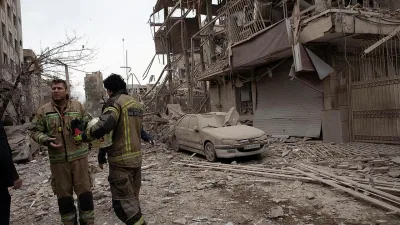



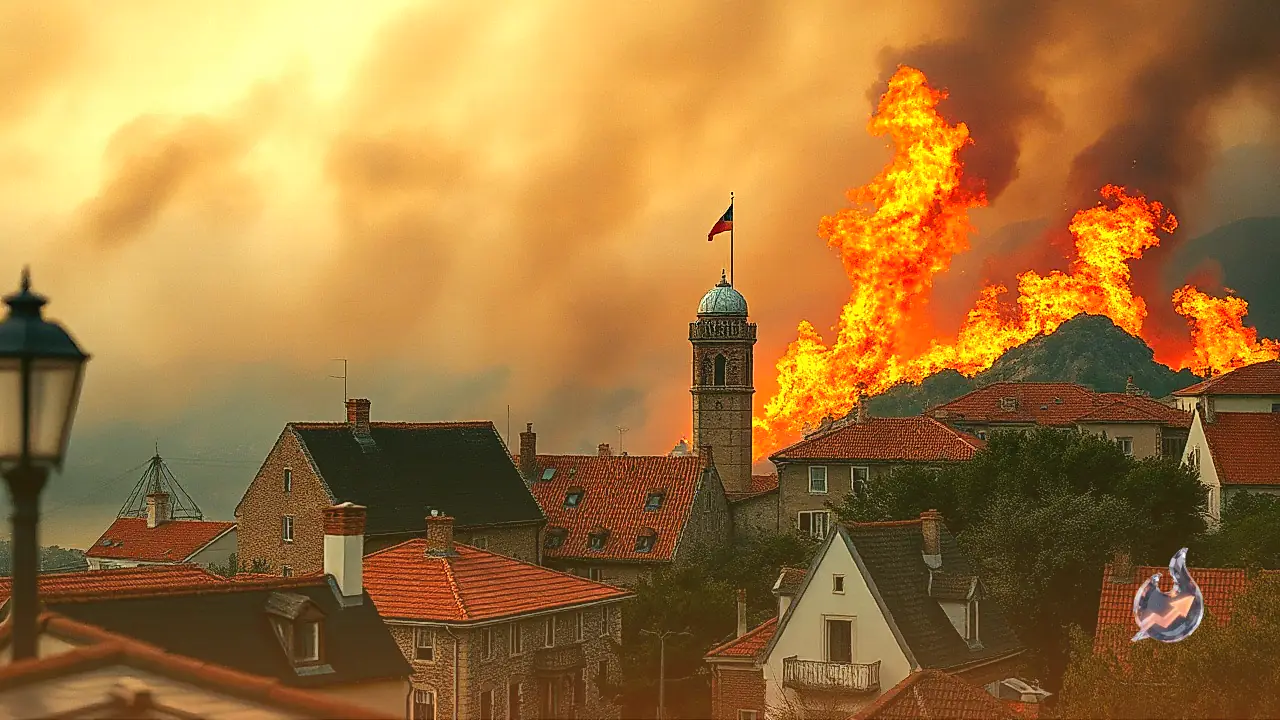

















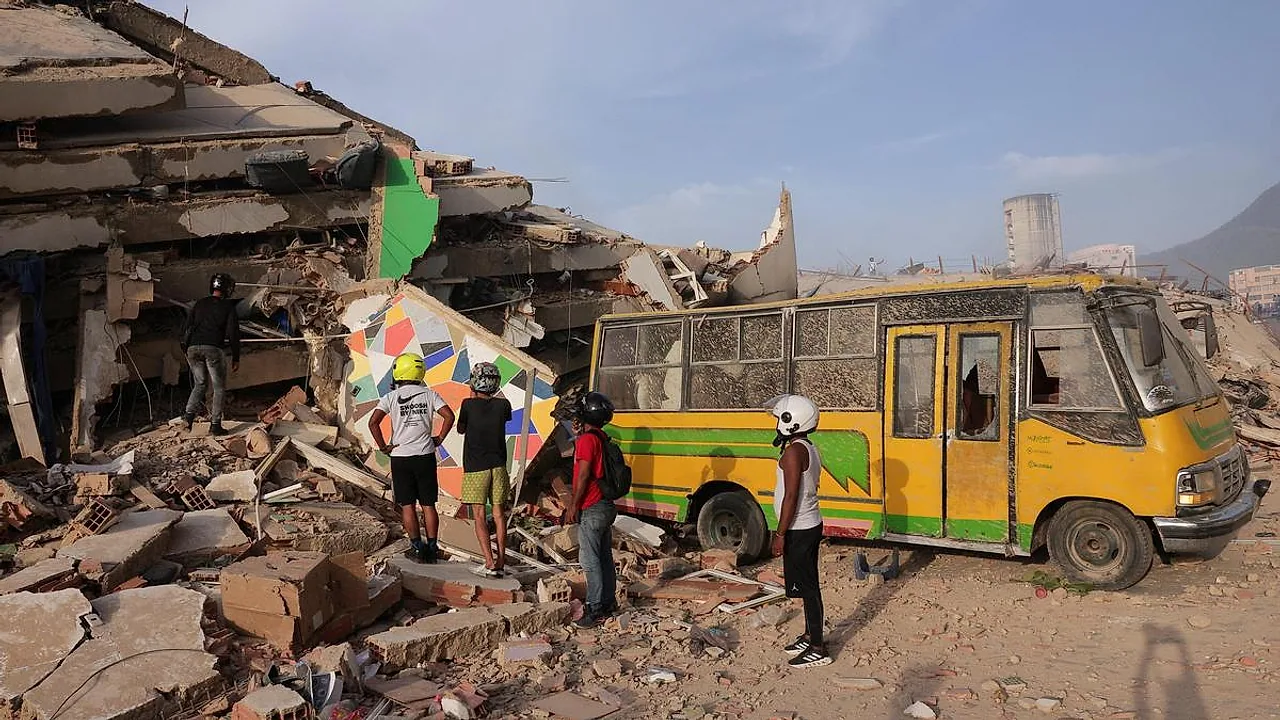
Two powerful earthquakes that struck northern Venezuela within a short span of each other on Wednesday evening have left the country reeling, and the disaster is far from over. The official death toll from the magnitude 7.2 and magnitude 7.5 twin quakes has climbed to 920, with more than 3,360 people reported injured. The coastal state of La Guaira has been hit hardest, where families are still digging through concrete with their bare hands searching for loved ones trapped under the rubble. Meanwhile, countries around the world, the United Nations and global aid organisations have stepped forward to help Venezuela with relief and rescue efforts.
Two quakes in quick succession, and a toll that kept climbing
On Wednesday evening, two major earthquakes struck northern Venezuela within a short interval, measuring 7.2 and 7.5 in magnitude. The quake was so powerful that it is being described as the most destructive Venezuela has experienced since 1900. The coastal state of La Guaira bore the brunt of the damage, where 188 deaths were confirmed early on from collapsed buildings. By late Thursday night, Health Minister Carlos Alvarado said the death toll had reached around 235, with at least 4,300 people injured. Thousands were still missing at that point and rescue operations were continuing round the clock, so officials themselves warned that the toll could rise further.
That warning was soon borne out. In the early hours of Friday, interim President Delcy Rodríguez announced, in the presence of senior government and military officials, that the death toll had risen to 589, with 2,980 people injured. She made the announcement as rescue teams that had arrived from around the world were being welcomed. "We will get every single person out who is trapped," she said. "We are working tirelessly at this." She said La Guaira state had suffered the worst damage and that troops had been deployed there to support rescue work and get food and water to affected areas.
Later on Friday, National Assembly President Jorge Rodríguez updated the figures again, saying the death toll had reached 920 and that more than 3,360 people had been injured. "Every life saved is a miracle," he said. Rescue operations are still under way, and many families say their loved ones remain trapped under collapsed buildings, raising fears that the toll could climb even higher. Venezuela, a country of roughly 30 million people, has already been grappling with a deep economic crisis for years, making a disaster of this scale a double blow.
Digging through rubble by hand in search of survivors
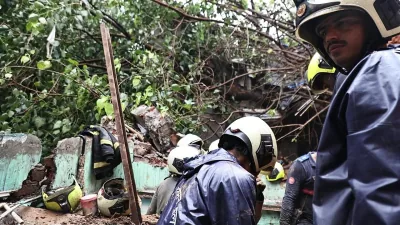
On Thursday, in towns and cities across northern Venezuela, neighbours came together to clear the rubble of collapsed buildings by hand. One such story to emerge was that of Emparo Del Giudis, who was clearing away huge chunks of concrete with her bare hands in search of her son, trapped under the debris of this, the country's most powerful earthquake in over a century. As time passed with no help arriving from the government, she grew desperate and began digging through the rubble herself. Sitting near the spot where her son was buried, she said, "This is a huge rock, and it's impossible to move it with bare hands." Her 23-year-old grandson Alessandro put on a volunteer firefighter's helmet and joined the search for his missing father. Looking at the wreckage of the collapsed building, he said through tears, "He's in there."
Venezuela's state television broadcast several gut-wrenching rescue scenes. In one, a woman was trapped under a heavy slab of cement, with only her bare foot visible from outside, before rescue workers managed to pull her out alive. Many of the survivors pulled from the rubble were covered in dust and blood, including children and animals among them. However, in the early hours outside the capital Caracas, government search teams were largely absent, forcing ordinary residents to lead the rescue effort themselves.
With communication networks down, social media and independent online registries became the biggest lifeline for people trying to find missing relatives. One photo showed a father holding his daughter's hand as she stood dressed as a fairy; another showed a 24-year-old man in a pilot's uniform looking proudly at the camera; and another showed a family embracing on a football field. These were among the pictures shared by relatives in Venezuela and abroad on WhatsApp, Facebook and X in search of their missing loved ones. The number of missing people logged in independent online registries reached 40,000, far higher than the official government figures.
Aid pours in from around the world
Interim President Delcy Rodríguez said in a televised address that UN-certified search and rescue teams would help find people trapped under the rubble. Aid then began arriving from countries around the world. Spain and France sent dozens of trained experts, while Germany pledged to provide six military transport aircraft. Switzerland readied 80 rescue workers, eight trained search dogs and 18 tonnes of equipment for deployment. The Netherlands' Foreign Trade Minister Sjoerd Sjoerdsma announced two million euros in aid along with the deployment of a search-and-rescue team, while the Czech Republic said its team was also ready to fly out.
The International Federation of Red Cross and Red Crescent Societies, or IFRC, released 2.5 million dollars in emergency funding for Venezuela's recovery. Pope Leo XIV sent an initial emergency aid package of 100,000 euros, or roughly 114,000 dollars, from the Vatican. The United States announced it was sending two naval vessels, transport aircraft and helicopters, along with 150 million dollars in humanitarian aid. Chinese foreign ministry spokesperson Guo Jiakun said Beijing was ready to provide all possible help in an appropriate manner based on Venezuela's needs, while Iranian foreign ministry spokesperson Esmaeil Baghaei expressed Tehran's full readiness to provide the necessary assistance for relief and rescue operations. Chinese President Xi Jinping later sent a condolence message directly to interim President Delcy Rodríguez, saying Beijing was ready to cooperate on both disaster relief and reconstruction after the earthquake.
Brazilian President Luiz Inácio Lula da Silva announced that a field hospital, 36 firefighters and several rescue and communications specialists would be sent to Venezuela on two flights on Friday and Saturday. Mexican President Claudia Sheinbaum said she was sending military rescue teams and medical personnel, and promised more aid if needed. Cuban Foreign Minister Bruno Rodríguez said Cuban health workers were already providing medical services in the affected areas. Chilean President José Antonio Kast announced humanitarian aid and rescue teams would be sent.
Neighbouring Colombia, where the tremors were also felt, said its disaster management agency was sending more than 60 rescue workers and 12 tonnes of humanitarian material. Argentina, Costa Rica and Uruguay expressed solidarity with Venezuela, while Ecuador and the Dominican Republic said they were ready to send aid. According to the UN's humanitarian aid coordination office, OCHA, relief teams from Chile, Colombia, El Salvador, Italy, Mexico, Switzerland and the United States had already arrived in the country.
India sends a medical team, a field hospital and 35 tonnes of relief material
Foreign Minister Subrahmanyam Jaishankar said India dispatched a medical team, a military field hospital and more than 35 tonnes of emergency relief material to earthquake-hit Venezuela on Friday, June 26. "Two Indian Air Force C-17 aircraft carrying essential relief material for Venezuela departed today to assist in relief and rescue operations following the earthquake," he said in a statement. He added that the consignment included a field hospital run by the Indian Army along with more than 35 tonnes of relief material, medicines and medical equipment. According to the Indian Army, the 41-member team sent includes nine medical officers.
Meanwhile, the Congress party also expressed deep grief over the loss of life in the twin earthquakes in Venezuela and said India stood ready to provide all possible help, including humanitarian relief, to the people of Venezuela as they battled the disaster. The party said that in this hour of grief, the people of India stood shoulder to shoulder with the people of Venezuela. Congress president Mallikarjun Kharge wrote on X, "On behalf of the Indian National Congress, I express my deep grief and heartfelt condolences over the massive loss of life and widespread destruction caused by the twin earthquakes in Venezuela." He added, "Our deepest sympathies are with the grieving families and every Venezuelan affected by this unimaginable tragedy. Our prayers are with those who have lost loved ones, those still trapped under the rubble, those who are injured, and with all the rescue workers who are risking themselves to save others." Kharge also noted that India and Venezuela have long shared warm and friendly relations built on mutual respect, solidarity and cooperation.
Foreign nationals among the dead, hundreds still unaccounted for
Several foreign nationals are among those who lost their lives in the earthquake. Brazil's foreign ministry confirmed on Thursday that two of its citizens, a man and a woman, had died in the disaster, adding that consular assistance was being provided to their families. Italy's foreign ministry said a roughly 55-year-old man, born in Caracas and holding dual Italian-Venezuelan nationality, died when a building collapsed in La Guaira, the worst-hit area. Rome estimates that around 170,000 Italian passport holders currently live in Venezuela.
China's state news agency Xinhua, citing the Chinese embassy in Caracas, reported that two Chinese nationals had been confirmed dead. The embassy issued a message on its official WeChat account urging Chinese citizens living in Venezuela to take precautions against secondary hazards arising from aftershocks and other seismic activity. Portugal's foreign ministry also officially confirmed the death of a Portuguese national, saying in a post on X that the person had been pulled out of the rubble alive but died before reaching the hospital.
Spain's foreign ministry also confirmed the deaths of two of its citizens, saying in a statement, "We express our deep sorrow over the deaths of our two Spanish nationals, confirmed by their families, and we extend our condolences to them." The ministry had initially said 80 Spanish nationals were missing. Later, Spain's Minister for Territorial Policy, Ángel Víctor Torres, told Cadena SER radio that the number of missing Spanish nationals had risen to 90. Around the same time, Portugal's foreign ministry said 56 of its nationals were missing or unaccounted for, while the number of confirmed Portuguese deaths also rose to nine. In all, nine Portuguese and two Spanish nationals have now been officially confirmed dead in the disaster.
US military support, and sanctions eased for four months
The US military said a senior military official had arrived in the Venezuelan capital Caracas to oversee relief efforts. US Southern Command, or SOUTHCOM, wrote on X, "US Marine Corps Major General Kevin J. Gerard arrived in Caracas, Venezuela today to oversee the Department of War's support to Venezuela earthquake relief efforts." The statement said Gerard is serving as the senior SOUTHCOM official on the ground. SOUTHCOM is supporting the State Department's relief operations there, and Gerard is leading the effort on the ground. The statement also noted that Venezuela's interim government had officially requested US assistance following the earthquake. A photo shared with the post showed Gerard being welcomed by two Venezuelan representatives.
To speed up relief efforts, the US government also suspended several economic sanctions on Venezuela for four months. A license issued by the US Treasury Department on Thursday evening said that all transactions related to earthquake relief in Venezuela would be authorised until October 23, easing the path for relief supplies and funds to flow into the country for four months.
The US also sent a disaster relief team of more than 250 personnel, including search dogs, to earthquake-hit Venezuela. According to the US State Department, the team includes three specialised search-and-rescue units made up of firefighters, doctors, paramedics, structural engineers and canine search specialists. A total of 18 trained dogs capable of locating people trapped under rubble were sent along with them. The teams, dispatched from Miami, Los Angeles and Fairfax County, west of Washington DC, will work alongside local emergency personnel. According to the statement, the rescuers are also carrying more than 200,000 pounds of specialised search-and-rescue equipment.
UN warning: more than 50,000 people missing
The United Nations said search-and-rescue teams from at least 17 countries were being rushed to Venezuela to help find survivors. The UN's humanitarian agency OCHA called getting these teams to the ground the current "top priority." Speaking to reporters in Geneva, OCHA spokesperson Jens Laerke said, "Earthquakes are among the worst disasters any country can face, it truly is a terrifying tragedy." He added that the international response being seen was extraordinary. "The entire humanitarian response system has mobilised at great speed and on a huge scale," he said, calling it "international solidarity at its best."
Tom Fletcher, the UN Under-Secretary-General for Humanitarian Affairs and Emergency Relief Coordinator, warned that more than 50,000 people were unaccounted for and that the death toll was very likely to rise sharply. In an interview, he described it as an extremely complex disaster relief operation, saying, "This is an extremely complex emergency response. More than 50,000 people are missing, more than 500 have died, the task of sifting through the rubble is enormous." His remarks came around the time Venezuela's official death toll had more than doubled to 589, with rescue teams working relentlessly to find survivors in the rubble of collapsed buildings.
The UN and several other humanitarian organisations also issued a joint statement making a strong appeal for global "solidarity." The Inter-Agency Standing Committee, or IASC, which brings together UN agencies and non-UN humanitarian organisations on a common platform, said in the statement, "The people of Venezuela urgently need solidarity right now." It demanded that "rapid and unimpeded humanitarian access" be ensured for the affected population, so that the emergency does not turn into an even bigger humanitarian tragedy.
Infrastructure disrupted, movement restricted in worst-hit areas
The earthquake's impact was not limited to buildings and human lives, it also shook the country's key infrastructure. The disruption of a major power transmission line in central Venezuela slowed down efforts to fully restore services at the Puerto Cabello port, the El Palito refinery and the Morón petrochemical complex.
Meanwhile, the Venezuelan government also decided to restrict movement in the worst-affected areas. Interior Minister Diosdado Cabello said in a televised address, "Entry into La Guaira state has been restricted starting tonight at 8 pm, that is 0000 GMT." Interim leader Delcy Rodríguez had earlier asked people not to travel to the area north of Caracas.
Delcy Rodríguez's biggest test yet, and growing protests
The most destructive earthquake Venezuela has seen in over a century has become the biggest test of interim President Delcy Rodríguez's short tenure. Yet the same crisis could also give her a chance to tighten her grip over a fractured government and lay the foundations for rebuilding a shattered country. Pulling people out from under the rubble, treating the injured, and rebuilding homes and infrastructure will all require an enormous and long-term effort by the state. How Rodríguez navigates this challenge could shape the course of her political future. Rodríguez, seen as close to US President Donald Trump, has presented herself as a symbol of political change, even though she previously served as vice president under the socialist government of Nicolás Maduro, who was removed from power in January with Washington's help.
However, support has not been universal. On Friday, residents of Caracas booed and jeered interim leader Delcy Rodríguez as she visited an area devastated by the earthquake. People standing behind a security cordon shouted, "The government is doing nothing for the people." Many of them have relatives still trapped under the rubble of buildings that collapsed in Wednesday's twin earthquakes.
A fresh 4.9-magnitude tremor days later
Another earthquake was felt near Venezuela's northern coast on Friday afternoon, just days after the two devastating quakes that flattened buildings and killed nearly a thousand people. Journalists stationed in Caracas and Maracay also felt this tremor. The seismic monitoring agency EMSC recorded its magnitude at 4.9, adding to the fear among a population already badly shaken.