





















Live: West Asia LIVE: U.S.-Iran Strikes On Hold but Deep Divisions Over Path to NegotiationsLive
30 Jun 2026, 8:08 am (46 days ago)· 4

Live: West Asia LIVE: U.S.-Iran Strikes On Hold but Deep Divisions Over Path to Negotiations

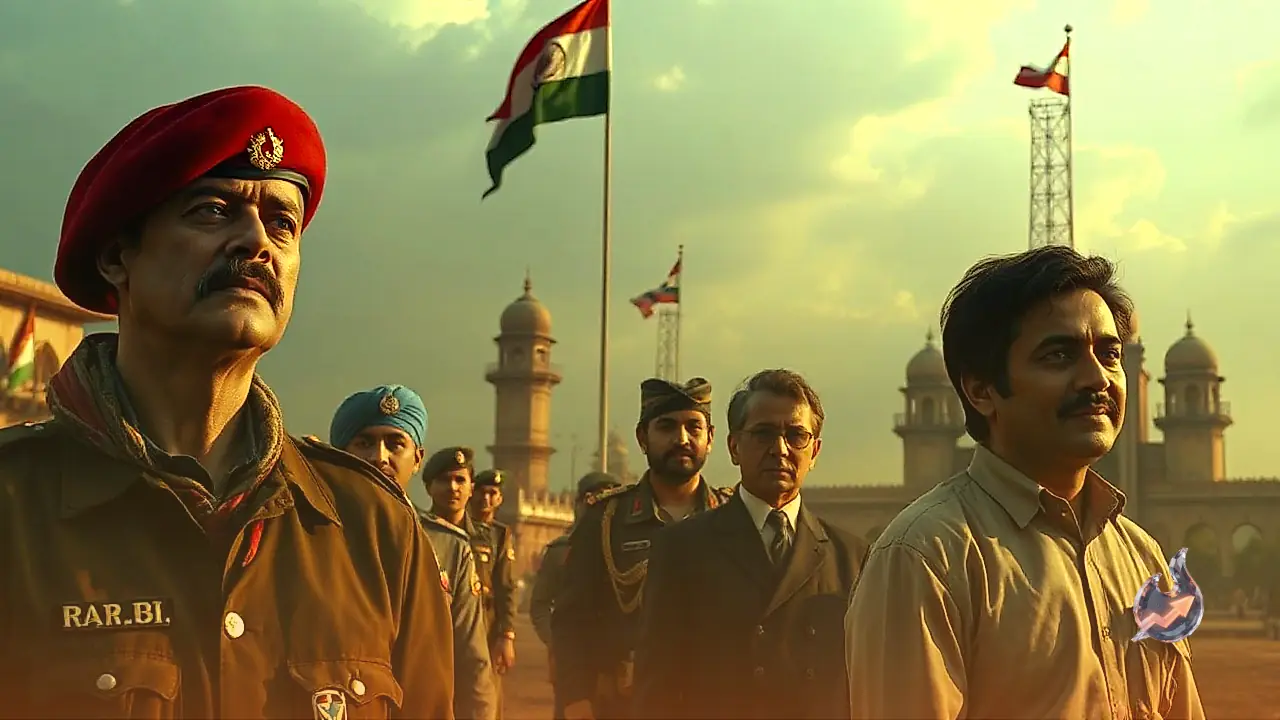
Amid escalating tensions in West Asia, Iran's top negotiator has made clear that Tehran favours diplomacy with Washington but stands fully prepared for armed conflict if it comes to that. Prime Minister Narendra Modi, in a phone call with Iranian President Masoud Pezeshkian, reaffirmed India's position that the Strait of Hormuz must remain open to free navigation.

Amid ongoing tensions in West Asia, Iran's chief negotiator has made it clear that Tehran's top priority is diplomacy, but that the country is also fully prepared for an armed conflict if the situation deteriorates. Meanwhile, Prime Minister Narendra Modi spoke by phone with Iranian President Masoud Pezeshkian and once again stressed the importance of preserving freedom of navigation through the Strait of Hormuz.

Iran's blunt stance

The statement from Iran's chief negotiator makes clear that Tehran is not shutting the door on talks, but it is also not backing down in the event of any military confrontation. According to news reports, direct attacks between the United States and Iran have currently paused, but deep differences remain between the two sides over the path forward for negotiations. That has raised the question of whether, if peace efforts fail, the region could once again slide back into war.

Also read

Modi's phone call with Pezeshkian

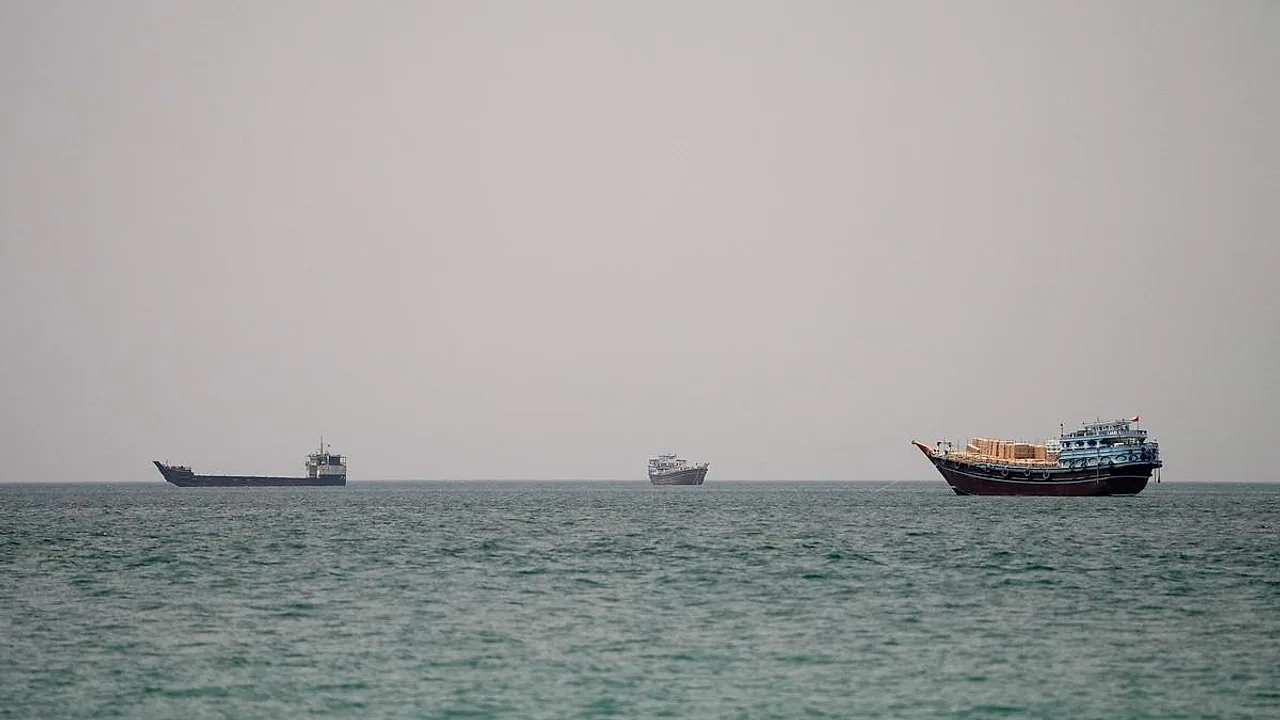
During this period, Prime Minister Narendra Modi held a telephone conversation with Iranian President Masoud Pezeshkian. In the call, Modi once again underlined the need to maintain freedom of navigation through the Strait of Hormuz. The Strait of Hormuz is considered one of the world's busiest and most strategically important shipping routes, through which large volumes of crude oil and other cargo move between regions. Any disruption to this waterway could directly affect global oil supplies and trade, which is why keeping it peaceful and open for passage matters greatly to countries like India.

Tensions have not gone away

Although direct clashes between the United States and Iran have paused for now, this cannot be mistaken for lasting peace. The differences between the two sides over the direction of talks run so deep that a concrete agreement still appears far off. This keeps alive the risk that the region could see renewed instability, and the world will be watching closely to see whether diplomacy moves forward or whether the situation swings back toward military confrontation in the days ahead.
ENDED

Closed

  1. Comment | India's entrenched Israel reflex confronts the realities of West Asia

    When heads of government take foreign-policy decisions, each individual choice can appear entirely justified when examined on its own. Yet their collective effect, when assessed as a whole, can diverge sharply from the outcome originally envisioned. The invitation extended by Iranian President Masoud Pezeshkian to Prime Minister Narendra Modi to attend the funeral of the late Supreme Leader Ayatollah Ali Khamenei throws India's deepening closeness with Israel into sharp focus — and that relationship may well belong to this category. What was once a partnership between New Delhi and Tel Aviv that genuinely served both sides now seems to have solidified into an unthinking reflex rather than the product of careful strategic deliberation. Yet sound foreign policy cannot be driven by the inertia of habit, for habit and strategy frequently pull a country in opposite directions. A bilateral relationship between India and Israel that once yielded real mutual dividends now looks less like a considered strategic choice and more like an ingrained default setting that has never been seriously re-examined.
  2. Ghalibaf: Not a Single Barrel of Oil Left Iran During the U.S. Blockade

    Iran's lead negotiator Mohammad Bagher Ghalibaf disclosed on Tuesday (June 30, 2026), in an interview broadcast on state television, that Washington's blockade of Iranian ports had brought all oil shipments to an absolute halt — though he noted that exports climbed steeply once those restrictions were removed. "From the moment the blockade was lifted to this very day, we have dispatched upwards of 40 million barrels of oil," he said. "Set that against the preceding roughly 50 to nearly 60 days — throughout that entire period, we truly could not get even a single barrel out of the country."
  3. Qatar pledges to sustain its mediating role in U.S.-Iran negotiations after talks with Steve Witkoff

    Qatar's Prime Minister Sheikh Mohammed bin Abdulrahman al-Thani has reaffirmed his country's commitment to sustaining its mediating efforts and expressed full support for every negotiating channel that has emerged from the memorandum of understanding between the U.S. and Iran, the Qatari Foreign Ministry announced on Tuesday (June 30, 2026). The Prime Minister made these remarks after sitting down with U.S. special envoy Steve Witkoff and Jared Kushner, son-in-law of President Donald Trump, during which the three officials reviewed where the ongoing American-Iranian dialogue currently stands. The ministry's communiqué did not go into any specifics regarding the substance of what was discussed at the meeting.
  4. Iran Will Enter No Fresh Talks Until Every MoU Condition Is Met: Chief Negotiator Ghalibaf

    Iran's current diplomatic engagements are aimed solely at fulfilling the obligations laid out in the MoU, and Tehran will not participate in any additional negotiations until every condition in the bilateral accord has been honoured, Iran's top negotiator Mohammad Bagher Ghalibaf stated in a state television interview on Tuesday, June 30, 2026. Ghalibaf further asserted that both Iran and Oman hold sovereign authority over the Strait of Hormuz, and that Iran will never yield its rights there under any circumstances. He made clear that under the MoU, cost-free passage through the strait is only permissible for a window of 60 days. — Reuters
  5. PM Modi holds telephonic conversation with Iranian President Pezeshkian

    Prime Minister Narendra Modi held a telephonic exchange on Tuesday, June 30, with Masoud Pezeshkian, the President of the Islamic Republic of Iran. During the call, President Pezeshkian briefed the Prime Minister on recent developments across West Asia and the potential path ahead. PM Modi welcomed the mutual understanding that has been achieved and reaffirmed India's consistent stance that every dispute must be addressed through dialogue and diplomatic channels. The Prime Minister emphasised the importance of sustained efforts to achieve lasting peace and stability in the region, as well as the need to safeguard unhindered freedom of navigation and maritime commerce.
  6. Beijing urges Washington and Tehran to keep negotiations on track

    Chinese Foreign Minister Wang Yi, during a meeting in Beijing with his Saudi Arabian counterpart on Tuesday (June 30), urged that the current negotiating process between the U.S. and Iran must not lose its pace, according to Chinese state media outlet Xinhua. Wang noted that while the existing ceasefire remains on shaky ground, engaging in talks is far preferable to armed conflict, and pursuing diplomacy is more constructive than confrontation. He added that China stands ready to work hand in hand with Saudi Arabia to reduce tensions across the region and help build a foundation for durable peace.
  7. Tehran to discuss frozen assets with Qatar in Doha, not with U.S.: Foreign Ministry

    Iran's Foreign Ministry announced on Wednesday (June 30) that the country would engage with Qatari intermediaries over the matter of its frozen assets, while categorically denying any plans to meet with U.S. representatives, even though delegations from both nations were present in the Gulf state. Foreign Ministry spokesman Esmaeil Baqaei, at his regular weekly press conference, said the anticipated Doha meetings — expected likely the following day — would centre on putting the memorandum of understanding into practice, with particular focus on the clause concerning the release of Iran's restricted funds. All such discussions, he stressed, would be conducted solely with the Qatari side. -AFP
  8. Iran warns of decisive retaliation if U.S. breaches West Asia memorandum of understanding

    Iran's Foreign Ministry spokesperson declared on Tuesday (June 30) that Tehran would not allow any American breach of the memorandum of understanding — crafted to bring the West Asia conflict to a close — to go without a response. The statement came as delegations from both countries were preparing to travel to Qatar for indirect negotiations on the ceasefire agreement. "No action taken against us will be left unanswered. Iran's formidable armed forces have already demonstrated their capabilities to the world, and any strike against the goals of the Islamic Republic will draw an immediate and resolute reply," spokesman Esmaeil Baqaei said at his weekly press briefing. -AFP
  9. Witkoff and Kushner arrive in Qatar for Iran deal consultations; no direct contact with Iranian diplomats, Qatar confirms

    Two senior American officials touched down in Qatar on Tuesday (June 30) for consultations with intermediaries on putting an initial Iran war ceasefire agreement into effect, according to an official. Steve Witkoff, appointed by U.S. President Donald Trump as his special Middle East envoy, and Trump's son-in-law Jared Kushner made the trip following a turbulent weekend of armed exchanges in the Persian Gulf, sparked by competing bids to restore passage through the Strait of Hormuz for commercial shipping. Qatar's Foreign Ministry spokesman Majed al-Ansari clarified that the American envoys would not be sitting down face-to-face with Iranian diplomats in the Qatari capital, Doha. For now, intermediaries are acting as the channel between both governments, and senior officials from neither side would be participating in the discussions, he added. - AP
  10. No direct negotiations scheduled between U.S. and Iran in Doha, Qatar clarifies

    On Tuesday, mediating nation Qatar announced that there are no plans for direct discussions or high-level interactions between Washington and Tehran in Doha, despite the United States deploying a senior delegation for talks. Majed Al Ansari, the spokesperson for the Foreign Ministry, informed journalists in Doha that, as far as he is aware, no direct sessions are set between the two nations for the upcoming days. He noted that the U.S. representatives are slated to hold talks with the mediators instead, reiterating that no top-level meeting between the two adversaries is on the agenda. - AFP
  11. American diplomats Witkoff and Kushner holding talks with Qatari mediators in Doha, says official

    The Foreign Ministry spokesperson for Qatar confirmed on Tuesday that American envoys were holding discussions with Qatari mediators following Washington's announcement of dispatching a delegation for negotiations. According to Foreign Ministry spokesperson Majed Al Ansari, Steve Witkoff and Jared Kushner have arrived in Doha to hold sessions with Qatari officials and mediators. He specified that these discussions would encompass various regional matters, including issues related to Lebanon and deliberations concerning Iran. However, the spokesperson emphasized that their presence in the city is not intended for holding direct talks with Iranian representatives. - AFP
  12. Strategic importance of Strait of Hormuz grows amid West Asian geopolitical tensions

    The Strait of Hormuz, which serves as a crucial transit point for the international transport of liquefied natural gas and crude oil, remains a primary point of contention in discussions aimed at concluding the conflict in West Asia, despite a preliminary agreement reached between Tehran and Washington. For several weeks, Tehran has maintained its stance, contrary to the wishes of Washington, that the strategic waterway will not go back to its pre-war state of unrestricted maritime transit. Positioned between Iran and Oman's Musandam exclave on the edge of a narrow peninsula, this strait connects the Gulf with the Indian Ocean. The maritime corridor contains several sparsely populated or barren islands holding high strategic value, particularly the Iranian-controlled territories of Hormuz, Qeshm, and Larak. Additionally, the contested islands of Greater Tunb, Lesser Tunb, and Abu Mussa, situated between Iran and the United Arab Emirates, offer a key vantage point overlooking the Gulf. Iran has maintained administrative control over these islands since 1971. This passage also serves as an essential channel linking the resource-rich Gulf region with consumer markets across Asia, North America, Europe, and other global destinations. As per reports from the US Energy Information Administration (EIA), it stands out as one of the most critical oil transit chokepoints globally. Furthermore, over three months into the military hostilities, a memorandum of understanding was signed by Tehran and Washington on June 17, which outlined the resumption of operations through the strait. Although maritime traffic has begun to resume on a tentative basis, authority over this passage remains a central source of friction between the US and Iran, with both countries trading allegations of truce violations. - AFP
  13. Two IRGC members shot dead at home in Iran's border city of Paveh: state media

    Two members of Iran's Islamic Revolutionary Guard Corps were shot and killed inside their residence in Paveh, a city in the country's western reaches that borders Iraq's Kurdistan region, state media reported on Tuesday. Two further Guards personnel sustained injuries in the same attack. State television described the killings as a "terrorist and cowardly act" and said that the precise details of the incident, along with the steps being taken to identify those behind it, were still being reviewed. No group came forward immediately to claim the attack. Tehran has, however, on numerous previous occasions held Kurdish separatist factions in the area responsible for similar violence, alleging that these groups maintain operational ties with the United States and Israel. Sepah News, the IRGC's official media arm, subsequently reported that the Guards had dismantled a cell linked to "anti-government and separatist groups" that had crossed into Iran through the northwestern frontier. — AFP
  14. Two Revolutionary Guards Shot Dead by Unknown Gunmen in Western Iran

    Two members of Iran's Revolutionary Guards were killed and two others sustained injuries after unidentified assailants opened fire just outside the Guards personnel's home in the western province of Kermanshah on Monday evening. State media in Iran reported on Tuesday, June 30, 2026, that the Guards had described the incident as a "terrorist" shooting. Authorities have launched an investigation to track down and identify those responsible for the attack, according to state media. — Reuters
  15. Trump says Iran sought Qatar meeting, but Tehran denies direct talks are on the cards

    U.S. President Donald Trump said on Tuesday (June 30, 2026) that Iran had itself asked for a meeting in Qatar — even as Tehran denied having any plans for direct negotiations with Washington toward ending the West Asia war. Both nations have acknowledged that they are dispatching delegations to the Gulf state, yet their statements conflict on nearly every other point, including the timing of the discussions and what precisely they are meant to accomplish. The preliminary understanding the two sides reached — under which they agreed to halt hostilities and restore movement through the strategically vital Strait of Hormuz — has repeatedly come under pressure from continued clashes. It has also been further weakened by the two countries issuing sharply contradictory accounts of what was actually agreed upon. — AFP
  16. Lebanon Parliament Speaker Nabih Berri Denounces U.S.-Brokered Israel Deal, Warns It Could Split the Country

    Lebanon's Parliament Speaker Nabih Berri, widely regarded as a close ally of Hezbollah, sharply condemned the U.S.-mediated agreement between Lebanon and Israel on Monday (June 29, 2026). He cautioned that the deal could empower efforts to fracture Lebanese society and made it unambiguous that the accord would never be enforced. Lebanon's Parliament Speaker rejected the U.S.-facilitated pact with Israel, warning that it risked aggravating internal divisions within the country and asserting that it would not be put into effect.
  17. War on Iran: The Tale of a Faltering Hegemon

    "When we are finished, take over your government. It will be yours to take. This will be probably your only chance for generations," President Donald Trump told the Iranian people on February 28, following the United States and Israel's launch of a full-scale assault against the country. He urged the Islamic Revolutionary Guard Corps (IRGC), the armed forces and police to put down their weapons, adding the stark warning: "You will be treated fairly with total immunity, or you will face certain death."
  18. Iran's President Announces Qatar to Unfreeze $6 Billion in Assets as U.S. Talks Face Pressure

    Iran's President announced on Monday (June 29, 2026) that Qatar would release $6 billion in Iranian funds that had been held frozen, at a moment when U.S.-Iran negotiations were being tested by a string of attacks across the Persian Gulf over the weekend. Iran's President made the announcement on the $6 billion in frozen assets amid continuing negotiations with the United States and heightened regional tensions.

Comments 0

No comments yet — be the first.

Citizen journalism

Become a TrendKia journalist

Voice of the people

Share news, photos and videos from your area with TrendKia and let your voice reach the nation. Every citizen a journalist.

Join now
CH 01 LIVE
TrendKia TV ON AIR