























Live: West Asia War LIVE: Hormuz ship strike suspends UN sailor rescue; IAEA chief demands robust nuclear oversight for IranLive
26 Jun 2026, 11:41 am (50 days ago)· 5

Live: West Asia War LIVE: Hormuz ship strike suspends UN sailor rescue; IAEA chief demands robust nuclear oversight for Iran

The situation in West Asia escalates as the US military launches airstrikes against Iranian targets in retaliation for an assault on a cargo vessel. Meanwhile, Iran's Revolutionary Guards claim to have hit American positions in the region, while protests erupt in Beirut over a new Israel-Lebanon agreement.

An attack on a container ship in the Strait of Hormuz has forced the United Nations to pause its effort to evacuate stranded sailors from the waterway, even as the United States warned Iran against trying to collect transit fees from vessels passing through the strategic passage. The strike on the container vessel Ever Lovely on Thursday, 25 June 2026, came at a delicate moment, with Washington and Tehran negotiating a broader deal to end their war and the safety of one of the world's busiest oil corridors suddenly in the spotlight. Within hours, the Iranian agency that claims to control traffic through the strait issued a warning, the UN's shipping body suspended its rescue operation for hundreds of vessels and thousands of sailors trapped in the Gulf, and the head of the UN's nuclear watchdog said any deal would be meaningless without a 'very robust' verification system to stop Iran from building a bomb.

Attack On Ever Lovely Forces UN To Halt Its Rescue Mission

According to reports from the New York Times and several other American media outlets, Iran targeted a container ship in the strait. Soon after the incident, the Persian Gulf Strait Authority, the Iranian agency that claims to control traffic through the waterway, posted on X: 'Any transit outside the routes set by the PGSA will not be guaranteed safe passage.' The maritime monitoring agency UKMTO had already reported that a ship in the strait was hit by a projectile on Thursday, 25 June 2026, and several American media outlets attributed the attack to Iran. Taiwan's container shipping company Evergreen Marine confirmed that one of its ships was struck by an 'unknown object' while transiting the strait, though the crew, the vessel and its cargo were all reported safe. Singapore's Maritime and Port Authority (MPA) identified the ship as the Singapore-registered Ever Lovely. The MPA said the bridge area of Ever Lovely suffered minor damage from an unknown projectile while exiting the strait on 25 June. The authority clarified that the ship has already crossed the Strait of Hormuz and is heading to its next destination, though it did not disclose the vessel's final destination. Confirming Evergreen Marine's statement, the MPA said all 21 crew members are safe. It was after this incident that the UN temporarily halted its active efforts to evacuate sailors stranded in the strait.

Also read

IAEA Chief's Blunt Message: Intentions Alone Are Not Enough

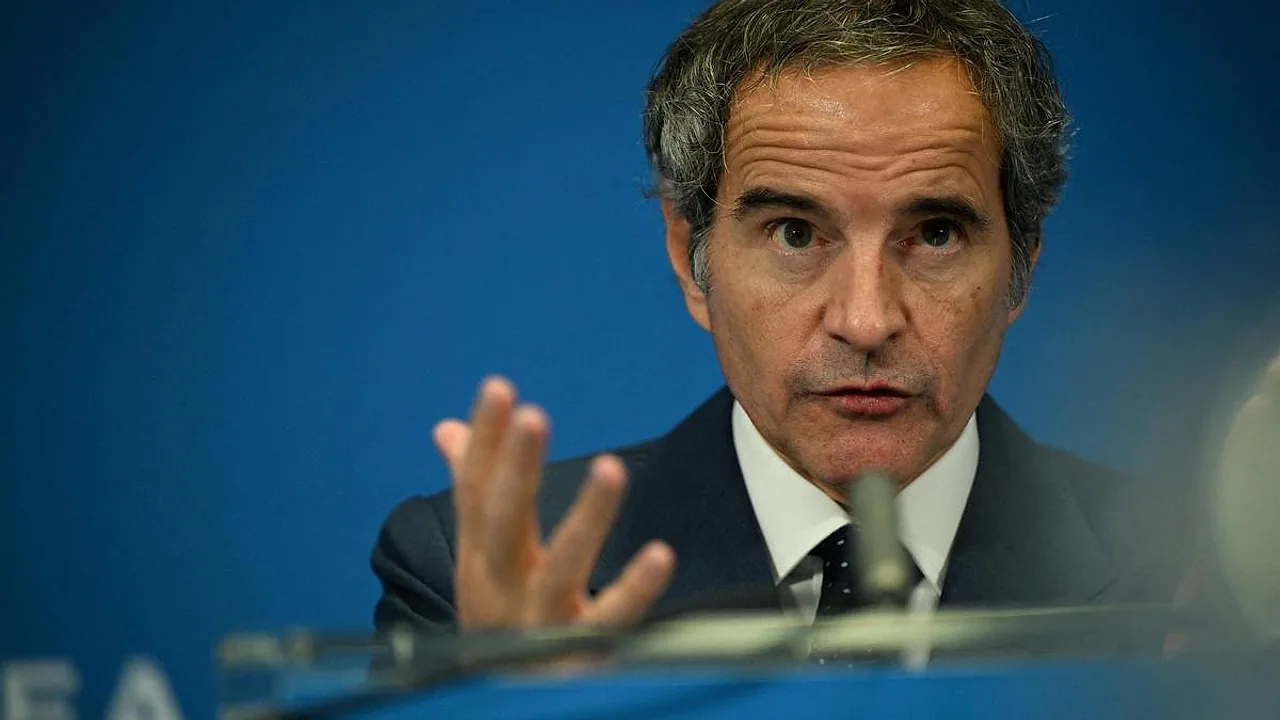
Rafael Grossi, Director General of the International Atomic Energy Agency (IAEA), told reporters in Japan on Friday, 26 June, that a 'very robust' verification system must be put in place to stop Iran from building nuclear weapons once the Middle East conflict ends. 'In my view, the goal of this recent US-Iran agreement is to ensure that nuclear weapons are not developed in Iran. The Iranian government has made it completely clear that this is not its intention,' Grossi said. 'But intentions alone are certainly not enough. A very strong verification framework needs to be put on the ground as soon as practically possible,' the IAEA chief added. Grossi also said the agency has only just 'begun with difficulty' discussions with Iran on the future of Tehran's uranium stockpile following the preliminary agreement with the US. The UN's nuclear chief separately reiterated that Iran's promise not to build nuclear weapons will require 'very robust' verification, as the United States and the Islamic Republic negotiate a lasting agreement to end their war. Iran's nuclear program remains one of the biggest obstacles in talks to end the Middle East war, which began with large-scale US-Israeli strikes in late February. Iran and the US signed a preliminary agreement last week to end the conflict, and the talks that followed are expected to cover several contentious issues including the nuclear program.

US Strikes Iran Again As Both Sides Trade Warnings

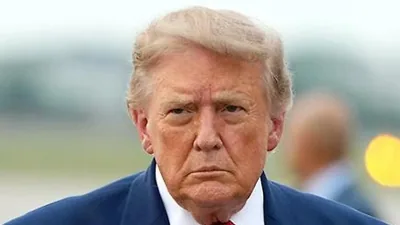
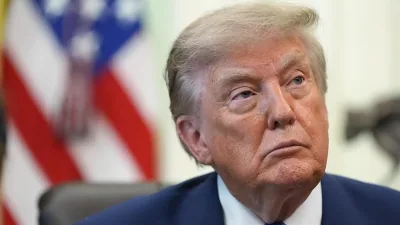
US Central Command confirmed in a statement on Friday that American armed forces carried out military strikes on Iran. The statement said American aircraft targeted Iran's missile and drone storage facilities along with the country's coastal radar centres, a move taken in response to Tehran's attack on a merchant ship in the Strait of Hormuz. US President Donald Trump directly blamed Iran for the drone attack on the ship in the Strait of Hormuz and called it a 'stupid violation' of the ceasefire agreement. Trump also said that despite the recent American military strikes, Iran still retains 'some' military capability, though he clarified that this remaining strength is 'not very much.' Iranian media reported that a projectile landed in an area near a pier in the southern Iranian city of Sirik; earlier that same Friday, warning shots had been fired in the Strait of Hormuz at ships 'violating the rules.' Iran's Revolutionary Guards claimed on Saturday that they had targeted American military bases in the region in response to the fresh US strikes, though the Guards did not share detailed information about which bases were targeted. This statement followed an earlier one issued by the semi-official news agency ISNA, which had said the response of force to the new American strikes on Iran would be 'swift and decisive,' though that statement was later removed, per Reuters. US Vice President JD Vance said America would respond to every violent act with equal force. He wrote on X: 'Violence will be met with violence,' adding that if there is any disagreement over how the MOU is being implemented, they can pick up the phone.

Washington's Diplomatic Push: Rubio Reassures The Gulf, Announces A Lebanon-Israel Framework

US Secretary of State Marco Rubio assured the Arab allies of the Gulf on Thursday, 25 June, that any deal with Iran would fully account for their interests. The statement came at the conclusion of his Middle East tour, whose purpose was to present the Trump administration's initial Iran agreement to skeptical regional partners. Rubio sought to address Gulf states' concerns over the concessions being offered in the US-Iran talks, stressing that their security would remain a priority under all circumstances. On Friday, Rubio announced that following the conclusion of talks in Washington, Israel and Lebanon had agreed on a framework agreement. Separately, according to the UAE's state news agency WAM, UAE Foreign Minister Sheikh Abdullah bin Zayed spoke by phone with his Iranian counterpart Abbas Araghchi on Friday, 26 June 2026. In the conversation, he underlined the need for compliance with the terms of the US-Iran agreement and for the safety of maritime corridors, including freedom of navigation through the Strait of Hormuz.

Iran Tightens Its Grip On Hormuz, Warns Ships To Coordinate Directly

Iran's Revolutionary Guards warned on Thursday, 25 June 2026, that any ship passing through the Strait of Hormuz without proper permission would face consequences, a warning issued amid the US-Iran talks. Iran's Deputy Foreign Minister Kazem Gharibabadi said on Friday, 26 June 2026, that safe passage for ships crossing the Strait of Hormuz cannot be guaranteed unless they coordinate directly with Iran. He also warned that any designated shipping route could be suspended if such coordination does not take place. The statement was posted on X, and came as Oman, together with the International Maritime Organization, announced temporary routes through the strait. Israeli Defense Minister Israel Katz said bluntly on Friday that if Iran attacks Israel, it would be Tehran's biggest historic mistake. A day earlier, on Thursday, Quds Force commander Esmail Qaani had said Israel cannot remain in southern Lebanon forever, and if it does not withdraw willingly, it will have to return in defeat. Analysts believe the biggest casualty of the US-Iran deal may not necessarily be Israel's Iran policy, but the deal could seriously weaken Israeli Prime Minister Benjamin Netanyahu's political strength and his grip on his country's relationship with the US.

Lebanon Divided: Aoun Hails A Sovereignty Step, Hezbollah Supporters Protest

Hezbollah leader Naim Qassem said on Friday, 26 June 2026, that Israel has no choice but to withdraw from the Lebanese territories it has occupied. He further said that the Iran-US agreement, which has reduced fighting with Israel, reflects an American-Israeli defeat, and demanded that Israel withdraw from Lebanon unconditionally. On the other side, Lebanese President Joseph Aoun called the framework agreement signed with Israel on Friday a first step toward restoring his country's full sovereignty. In a statement from the president's office, Aoun said, 'This framework agreement signed today is a first step' that will help Lebanese citizens return 'to their fully liberated land, and to homes that will certainly be rebuilt, under the sovereignty of the Lebanese state,' a state that has no partner in sovereignty over its own land and people. Aoun also vowed that efforts would continue until this goal is fully achieved, saying, 'There will be no more occupation, no prisoners, no subordination and no protection of anyone.' But the agreement also drew opposition, with Hezbollah supporters taking to the streets of Beirut late on Friday. According to the state National News Agency (NNA), Hezbollah supporters drove motorcycles through the streets of Beirut, including a central area near parliament and the main road leading to the airport, protesting 'the framework agreement declared between Lebanon and Israel.' Protesters blocked at least one road using burning tyres. A correspondent saw people riding motorcycles and chanting slogans along one route, along with temporary checkpoints set up by the Lebanese army across various roads in the capital. Meanwhile, according to Lebanese state media, the Israeli military dropped leaflets on a town in southern Lebanon on Friday, ordering residents to evacuate, the first such order since the Israel-Hezbollah ceasefire took effect. The town is located near the boundary of the area held by Israeli troops inside southern Lebanon. A senior Lebanese military official said Israel had recently added this town to the area under its forces' control in southern Lebanon. Lebanese officials say Israeli soldiers are keeping close watch on the northern boundary of this area and firing at anyone approaching it, including civilians and Lebanese soldiers. The official said farmers had been continuously coming and going in Mansouri, but were not living there permanently.

What This Means For India And Global Trade

Crisil Ratings has said that the hit to corporate India's profitability from the Middle East conflict could turn out to be nearly half of the earlier estimate, provided the ceasefire between the US and Iran holds and the restoration of energy supplies continues. The agency's latest estimate is that the conflict could reduce Indian companies' operating margins by around 100 basis points in FY2027, compared with its earlier estimate of a 200 basis point decline, which was based on a scenario in which the conflict dragged on and maritime trade through the Strait of Hormuz was disrupted. This revised assessment comes against the backdrop of a sharp fall in crude oil prices after the Strait of Hormuz reopened, a development that came under a temporary US-Iran memorandum of understanding. However, Crisil cautioned that geopolitical risks in the region remain elevated and gas supplies could take longer to normalise. According to Indian refining sources, Tehran is trying to speed up its sales after Washington granted a temporary relief in sanctions, with several intermediaries offering Indian refineries Iranian oil at discounted rates. On Monday, 22 June 2026, the United States eased sanctions on Iran for 60 days following initial talks under a new peace agreement, opening a small window to resume energy trade. Sources say Indian refineries have been contacted directly by the National Iranian Oil Company (NIOC) as well as through intermediaries claiming to have been allocated oil by the Iranian state producer. Data also shows fertiliser shipments through the Strait of Hormuz are picking up pace again, though market analysts believe it will take time for these exports to return to pre-conflict levels and bring relief to the global market. Before the US and Israel launched the war on 28 February, roughly one-third of the world's traded urea, the world's most prominent fertiliser, and about half of seaborne sulphur, a key input, passed through this waterway. But with this crucial sea route largely closed for much of the war, the movement of these essential goods had dropped sharply.

Tanker Traffic Through Hormuz: Slower, But Still Flowing

According to ship tracking data, traffic through the Strait of Hormuz was significantly lower on Friday, 26 June 2026, than earlier in the week, hours after Iran's shelling of a Taiwan-operated vessel. After the ship was damaged near the Omani side of the waterway, the UN's shipping agency temporarily paused its voluntary plan to safely evacuate hundreds of stranded vessels and thousands of sailors from the Gulf. Even so, Friday's ship tracking data from LSEG and MarineTraffic showed that at least four tankers, including three giant crude carriers capable of carrying up to 2 million barrels of oil, entered the Gulf to load oil. Separate shipping data showed two more supertankers entering the strait to collect Iranian oil, while an analysis by Kpler showed another tanker exiting via the Omani route of Hormuz carrying 2 million barrels of oil. Ships are continuing to cross the strait via Oman's coastal route despite Iran's warnings, even though overall traffic through the strait has fallen from its peak on Wednesday, 24 June 2026. Kpler's tracking data showed at least 42 cargo vessels, including oil, gas and dry cargo carriers such as fertiliser tankers, crossed the strait on Thursday, compared with a peak of 57 on Wednesday, 24 June 2026. Of these 42 vessels, ten were entering the Gulf while 32 were exiting, and half of all the ships chose the southern route running along the Omani coastline. On Friday, 26 June 2026, the head of the UN's maritime agency announced that around 115 ships and about 2,500 sailors had been safely evacuated from the Strait of Hormuz since Tuesday. IMO Secretary-General Arsenio Dominguez shared this update a day after the organisation had temporarily suspended its plan to evacuate around 600 ships and 11,000 sailors following the strike on a vessel in the Gulf of Oman. At an online press conference, Dominguez said 115 vessels have departed the strait over the past three and a half days, and around 2,500 sailors have now reached safe locations.

Dubai's False Alarm, Ashura Amid Mourning, And Freed Sailors Reach Pakistan

UAE authorities issued a warning on Friday, 26 June 2026, about a possible missile attack on the city of Dubai. It was not immediately clear what triggered the alarm, which was issued shortly after 5:15 pm local time. Iran is suspected of carrying out a drone attack on an oil tanker near the coast of Oman on Thursday, and Tehran continues to challenge the region and the United States over control of the Strait of Hormuz, even though an interim peace agreement is currently in effect in the Iran war. Just minutes after the warning was issued, officials issued an 'all clear' message without providing any further details. Separately, residents of the UAE received an emergency message on their phones from the Interior Ministry on Friday warning of a 'potential missile threat,' which was withdrawn shortly afterwards, the first such warning in more than a month. The ministry then issued another notice asking people to 'disregard the previous warning,' which appeared to be a false alarm. However, some residents had already received another missile warning alert before this cancellation message. The Interior Ministry's mobile notification had said, 'Given the current situation, there is a possible missile threat, move to a safe location immediately,' which was quickly followed by another alert stating, 'The situation is currently safe. You may resume your normal activities.' Meanwhile, Shia Muslims observed Ashura, one of the most significant days on their calendar, on Friday, 26 June 2026, with huge crowds gathering in Iran, Iraq, Lebanon and other parts of the world, commemorating the seventh-century martyrdom of Hussein, grandson of the Prophet Muhammad. This year's observance comes primarily after the war between Shia-majority Iran and the US and Israel, who struck Iran on 28 February. Those strikes killed several senior officials, including Supreme Leader Ayatollah Ali Khamenei. The 86-year-old Khamenei was not only Iran's foremost political leader but also had the final say on all religious matters, and was held in deep respect by hundreds of millions of Shia around the world. Khamenei's funeral procession is planned for early July. In another development, Tehran said on Friday that 22 Iranian crew members from an oil tanker seized by the United States during the recent military confrontation have been transferred to Iran's consulate in Pakistan. According to Iran's state news agency IRNA, Pakistan, Iran's eastern neighbour that has been mediating talks with Washington, 'paved the way for the return of these 22 Iranian sailors whose oil tanker was seized by the United States.' The agency said the crew has been handed over to Iranian diplomats in Karachi and is expected to return to Iran in the coming days.
ENDED

Closed

  1. Iranian Revolutionary Guards claim targeting American locations in region following latest strike

    On Saturday, the Revolutionary Guards of Iran announced that they had struck American military sites within the region. This action was taken as a retaliation against the recent offensive launched by the United States on Iran. No specific information was shared by the Guards regarding which American installations in the area were hit. This declaration from the IRGC followed a previous report by the semi-official ISNA news agency, which had shared an earlier message allegedly from the IRGC. That deleted message warned that the force's reaction to any new American action against Iran would be "swift and decisive". This development was reported by Reuters.
  2. Backers of Hezbollah demonstrate in Beirut over agreement with Israel, state media reports

    Late on Friday, loyalists of Hezbollah demonstrated across the streets of Beirut, voicing their opposition to a newly declared pact between Israel and Lebanon, according to reports from state media and an AFP journalist on the ground. The state-operated National News Agency (NNA) noted that demonstrators on motorcycles navigated through the capital's thoroughfares, including key zones near the parliament building and the highway heading toward the airport, to manifest their anger against the Lebanon-Israel framework accord. The agency further stated that protesters set tyres on fire to obstruct at least one route. A journalist from AFP observed motorcycle riders shouting slogans along a major route, while the Lebanese military established makeshift checkpoints across multiple areas of the capital city.
  3. VP Vance puts Iran on notice: Washington will answer every hostile move with equal force

    American Vice President JD Vance stated on Friday that the United States would respond to any act of hostility with equal force, declaring 'violence will be met with violence.' His remarks came in the wake of Washington's military strikes on Iran, which were launched after a cargo ship came under attack while transiting the Strait of Hormuz. In a post on X, Vance also wrote: 'If they have disagreements about how the MOU is being applied, they can pick up the phone.'
  4. Projectile reported near pier in Sirik in southern Iran; warning shots fired earlier in Hormuz, says Iranian media

    Iranian media reported on Friday that a projectile came down near a pier in Sirik, a town in Iran's southern region. The report surfaced after the U.S. military had already announced that it carried out strikes against Iran. Iranian media, quoting a military source, further said that warning shots were fired earlier the same Friday in the direction of vessels described as "violating" the Strait of Hormuz.
  5. U.S. military strikes Iran, hitting missile and drone depots and coastal radar sites

    The U.S. Central Command released a statement Friday confirming that American forces had executed strikes on Iran. It said U.S. aircraft hit sites where Iran stores its missiles and drones, along with radar installations positioned along the Iranian coast — all of it carried out in response to Tehran's strike on a commercial ship passing through the Strait of Hormuz.
  6. Lebanon's Aoun calls Israel framework accord a milestone on the road to full sovereignty restoration

    Lebanese President Joseph Aoun has described the framework agreement concluded with Israel on Friday as an opening step toward the complete restoration of his country's sovereignty, reached in the wake of the recent conflict between Israel and the Iran-backed organisation Hezbollah. In a statement issued by the presidential office, Aoun said the accord signed that day was "a first step" that would allow the Lebanese people "to return to their fully liberated lands, and to their certainly rebuilt homes... under the sovereignty of the Lebanese state that has no partner in its sovereignty over its land and people." He vowed that work would press on until the objective is completely achieved, declaring: "There will be no more occupation, prisoners, subordination or tutelage." — AFP
  7. Trump says Iran still holds onto 'some' military capability after U.S. strikes, but calls it 'not much'

    American President Donald Trump declared on Friday that Iran has managed to preserve "some" military capability even after the recent U.S. strikes carried out against it — though he was careful to note that this residual strength amounts to "not much."
  8. Rubio unveils Israel-Lebanon framework agreement following Washington diplomatic consultations

    America's Secretary of State Marco Rubio on Friday revealed that a framework agreement had been reached between Israel and Lebanon, coming at the conclusion of a round of diplomatic discussions held in Washington.
  9. Trump holds Iran responsible for Hormuz drone attack, brands it a 'foolish ceasefire breach'

    US President Donald Trump has held Iran squarely accountable for the drone strike targeting a vessel in the Strait of Hormuz. He condemned the attack as a "foolish violation" of the ceasefire accord that had been in force.
  10. UN Maritime Chief: Around 115 Ships and 2,500 Sailors Have Safely Cleared the Strait of Hormuz Since Tuesday

    The head of the UN's maritime agency announced on Friday (June 26, 2026) that roughly 115 ships and approximately 2,500 sailors had successfully cleared the Strait of Hormuz since Tuesday. IMO Secretary-General Arsenio Dominguez shared this update a day after the organisation paused its operation to move out around 600 vessels and 11,000 crew members, following a strike on a ship in the Gulf of Oman. Speaking at a virtual press briefing, Dominguez said that over the previous three and a half days, 115 ships had departed the strait, and around 2,500 seafarers had now reached safety.
  11. Hormuz Traffic Dips But Vessels Keep Sailing Via Oman's Coast Despite Iranian Warnings

    Shipping movement through the Strait of Hormuz dipped from its Wednesday (June 24, 2026) peak, yet vessels continued sailing along a route not approved by Iran, even after a ship was struck by a projectile, according to data from maritime tracking platforms on Friday (June 26, 2026). Kpler's tracking data showed at least 42 cargo ships — including oil tankers, gas carriers, and dry bulk vessels transporting goods like fertilisers — made the crossing on Thursday, down from a peak of 57 recorded on Wednesday (June 24, 2026). Of those 42 ships, ten were heading into the Gulf while 32 were exiting. Half of the total vessels opted for a southerly route running along the Omani coastline.
  12. UAE issues and swiftly retracts 'potential missile alert'

    Residents across the United Arab Emirates received an emergency mobile alert from the interior ministry on Friday (June 26, 2026) warning of a "potential missile threat," which was deactivated shortly afterward. This marked the first such warning in over a month. The ministry later distributed a follow-up notification advising people to "disregard the previous warning," indicating that it was likely a false alarm. However, some citizens had already received a second alert about the threat before the cancellation message was sent. "Given the ongoing situation and potential missile threats, please seek a safe shelter immediately," the interior ministry stated in the initial notification, before broadcasting another message that read: "The situation is currently safe. You may resume your normal activities."
  13. UAE Foreign Minister highlights need for unhindered navigation in Hormuz during call with Iran

    UAE Foreign Minister Sheikh Abdullah bin Zayed on Friday (June 26, 2026) underscored the importance of abiding by the terms of the US-Iran agreement and ensuring the safety of maritime pathways, including the freedom of passage through the Strait of Hormuz, during a telephone conversation with his Iranian counterpart Abbas Araqchi, according to the UAE's state news agency WAM.
  14. Iranian sailors reach Pakistan consulate following US tanker seizure, state media reports

    Tehran announced Friday that 22 Iranian crew members from an oil tanker seized by the United States during the recent hostilities have been moved to the Iranian consulate in Pakistan. Pakistan, which acts as a mediator in discussions with Washington and is Iran's eastern neighbour, facilitated the repatriation of the "22 Iranian seafarers whose oil tanker had been seized by the United States," according to the official state news agency IRNA. The crew members were placed in the custody of Iranian diplomats stationed in Karachi and are expected to head back to Iran in the coming days, the agency reported.
  15. Fertiliser shipments resume passage through the Strait of Hormuz

    Shipments of agricultural fertilisers through the Strait of Hormuz are beginning to recover following a temporary agreement to halt the war with Iran, data indicates. However, analysts caution that it will take some time for transport volumes to return to pre-war levels and ease pressure on the global market. Before the United States and Israel initiated the conflict on February 28, approximately one-third of globally distributed urea—the most common crop nutrient—and nearly half of ocean-transported sulphur, a vital component, regularly crossed the strait. However, the near-total shutdown of this critical passage for the majority of the conflict led to a steep decline in those cargo movements.
  16. Emergency alert in Dubai, UAE warns of incoming missile

    Authorities in the United Arab Emirates issued an incoming missile warning for Dubai on Friday (June 26, 2026). What triggered the alert, which sounded just after 5:15 p.m. local time, was not immediately clear. Iran is suspected of executing a drone strike on a tanker near the coast of Oman on Thursday, as Tehran continues to challenge regional forces and the US over dominance in the Strait of Hormuz, despite the ongoing temporary truce in the Iran conflict. A few minutes later, government officials declared the situation safe and ended the alert, without offering any further details.
  17. Katz puts Iran on notice: attacking Israel would be Tehran's single biggest blunder

    Israeli Defence Minister Israel Katz said on Friday (June 26, 2026) that any move by Iran to launch an attack against Israel would turn out to be the gravest error Tehran has ever made. The day before, on Thursday (June 25, 2026), Quds Force commander Esmail Qaani had stated that Israel could not hold on to southern Lebanon indefinitely — if it chose not to pull back voluntarily, it would sooner or later be compelled to leave in defeat.
  18. Intermediaries pitch discounted Iranian crude to Indian refiners following US sanctions relief, say sources

    Indian refining industry sources revealed that multiple brokers have pitched discounted crude from Iran to refiners in India, as Tehran aims to accelerate its oil sales following a brief sanctions waiver granted by Washington. On Monday, June 22, 2026, the United States suspended its sanctions against Iran for a period of 60 days in the wake of initial discussions under a developing peace agreement, creating a brief opportunity for restarting energy commerce. The proposals to the Indian refineries have originated both directly from the National Iranian Oil Co (NIOC) and via third-party agents who claim to have received oil allocations from the state-owned Iranian producer, according to the sources.
  19. Israeli military scatters flyers over southern Lebanese town, directing inhabitants to evacuate

    On Friday, June 26, 2026, Israel's military released leaflets over a community in the southern region of Lebanon, commanding residents to evacuate, according to reports from Lebanese state media. This marks the initial instruction of its kind since the ceasefire agreement between Israel and Hezbollah went into effect. The location of the town is close to the edge of the territory inside southern Lebanon that is currently occupied by Israeli forces, according to Israel's border specifications. A high-ranking military officer from Lebanon stated that Israel had lately incorporated the town into the zone occupied by its forces in southern Lebanon. According to Lebanese authorities, Israeli troops are securing the northern boundary of this designated zone by opening fire on anyone who comes near it, including local civilians as well as Lebanese armed forces. The military source added that while agricultural workers had been coming in and out of Mansouri, they had not been residing there.
  20. Huge Shiite gatherings observe Ashoura following recent aftermath of Iran-Israel-US conflict

    Shiite Muslims observed one of the most significant occasions on their calendar on Friday, June 26, 2026, assembling in massive crowds across Iran, Iraq, Lebanon, and other nations to commemorate the seventh-century death of Hussein, the grandson of Islam’s Prophet Muhammad. This year's Ashoura takes place after a conflict involving Shiite-majority Iran against the United States and Israel, which conducted airstrikes on the nation on February 28, resulting in the deaths of high-level figures, including Supreme Leader Ayatollah Ali Khamenei. The 86-year-old Khamenei served not only as Iran’s premier political authority but also held the ultimate decision-making power on religious topics, being deeply venerated by millions of Shiites globally. A funeral procession dedicated to Khamenei is set to be held in the early part of July.
  21. Maritime movement in Strait of Hormuz decelerates following assault on vessel

    Fewer ships navigated through the Strait of Hormuz on Friday, June 26, 2026, compared to earlier in the week, shortly after Iranian forces fired upon a vessel operated by a Taiwanese company, vessel-tracking information revealed. The UN shipping regulator briefly suspended its voluntary program to assist the exit of hundreds of stranded vessels and thousands of crew members from the Gulf region after the ship sustained damage near the Omani section of the passage. Even so, a minimum of four tankers, including three massive crude carriers capable of holding up to 2 million barrels of oil each, navigated into the Gulf to take on oil cargo, as shown by LSEG and MarineTraffic monitoring data on Friday. Furthermore, two distinct supertankers navigated the strait to take on Iranian crude oil, according to different shipping data, and an additional tanker departed the strait carrying 2 million barrels of crude via the Omani territory of Hormuz, according to analytical data from Kpler.
  22. Iran's commitment to refrain from nuclear weapons requires robust verification, says UN

    The head of the UN's nuclear watchdog declared on Friday, June 26, 2026, that Iran's vow to avoid constructing nuclear weaponry would require highly rigorous verification measures, as the United States and Tehran negotiate a lasting treaty to formally conclude their conflict. The nuclear initiative of Iran remains a central point of contention in the diplomatic talks aimed at resolving the war in the Middle East, which erupted in late February following heavy strikes launched by US and Israeli forces. Last week, Iran and the US penned an initial framework to halt the hostilities, initiating discussions that are set to cover a wide array of disagreements, with the nuclear program being a primary topic.
  23. Hezbollah leader asserts Israel has no choice but to unconditionally exit Lebanon

    Hezbollah chief Naim Qassem stated on Friday, June 26, 2026, that Israel is left with no choice but to pull out of the Lebanese territories it is currently occupying, characterizing the Iran-US agreement that eased combat with Israel as a defeat for Washington and Jerusalem. With rising hostilities and regional friction, Naim Qassem of Hezbollah is demanding that Israeli troops conduct an unconditional withdrawal from Lebanon.
  24. Evergreen Marine says Ever Lovely struck in Hormuz but all 21 crew safe, vessel resumes voyage

    Taiwanese container shipping firm Evergreen Marine has confirmed that one of its vessels was struck by an "unidentified object" while making its way through the Strait of Hormuz, though the crew, the ship and its cargo all emerged without injury. The U.K. Maritime Trade Operations (UKMTO), a maritime monitoring agency, had earlier reported that a projectile hit a ship in the strait on Thursday, June 25, 2026, with multiple U.S. media outlets reporting that Iran was responsible for the attack. Following the incident, the Iranian body that asserts control over traffic in the Strait of Hormuz issued a warning, and the UN suspended its ongoing effort to evacuate mariners who remain stranded in the waterway. Singapore's Maritime and Port Authority (MPA) named the ship as the Ever Lovely, a container vessel registered in the city-state. The MPA said the Ever Lovely suffered "minor damage to the bridge area from an unknown projectile" as it was leaving the Strait of Hormuz on June 25, and confirmed that the ship has since cleared the strait and is now continuing its journey. The MPA did not reveal the vessel's destination but corroborated Evergreen Marine's account that all 21 crew members on board are unharmed.
  25. Iran warns Hormuz safe passage cannot be assured without prior coordination with Tehran

    Iran's Deputy Foreign Minister Kazem Gharibabadi declared on Friday, June 26, 2026, that vessels passing through the Strait of Hormuz cannot be given any assurance of safe transit unless they engage directly with Tehran beforehand. He added that a failure to do so could result in the suspension of any officially designated shipping route through the strait. The statement was posted on social media platform X and came in response to Oman's announcement — made in coordination with the International Maritime Organization — of temporary designated routes for ships navigating through the strait.
  26. Crisil: West Asia War's Hit on India Inc Profits Could Halve if U.S.-Iran Ceasefire Holds

    Crisil Ratings has assessed that the damage to corporate India's profitability from the West Asia conflict could turn out to be roughly half as severe as first feared, on the condition that the ceasefire between the U.S. and Iran holds and energy supplies keep recovering. The agency now forecasts that the conflict will pare India Inc's operating margins by around 100 basis points in fiscal year 2027. This is a significant revision from its earlier projection of a 200-basis-point reduction, which was premised on a scenario where the conflict dragged on and choked maritime trade through the Strait of Hormuz. The updated estimate comes against the backdrop of a steep fall in crude oil prices following the Strait of Hormuz being reopened under a tentative U.S.-Iran memorandum of understanding. Crisil nonetheless cautioned that geopolitical risks across the region remain elevated, and that gas supplies could take considerably longer to return to normal. — PTI
  27. IAEA chief: Iran will need 'very strong' nuclear verification system after the war

    Ensuring Iran does not develop nuclear weapons after the Middle East conflict will require a "very strong" verification framework to be put in place, the head of the UN's nuclear watchdog said on Friday. The remarks by International Atomic Energy Agency (IAEA) Director-General Rafael Grossi come as the United States and Iran conduct broader negotiations to bring the war to a close, with Tehran's nuclear programme remaining among the most contentious points on the table. "The objective of this recent U.S.-Iran agreement, as I understand it, is to guarantee that nuclear weapons are not developed in Iran. Iran's government has stated very clearly that this is not its intention," Mr. Grossi told reporters in Japan. "Intentions, however, are simply not sufficient. A very strong verification system must be established — and this needs to happen as soon as practically possible," the IAEA chief said. Mr. Grossi further noted that the watchdog had "barely begun" discussions with Iran — following Iran's preliminary agreement with the United States — on what should be done with Tehran's existing stockpile of enriched uranium. -AFP
  28. Analysts: Netanyahu may emerge as the biggest casualty of the U.S.-Iran deal

    Analysts suggest that the primary victim of the U.S.-Iran deal may not be Israel's strategy toward Iran. Rather, it is Israeli Prime Minister Benjamin Netanyahu whose political clout and ability to shape Israel's relationship with the United States stand to take the hardest hit from the agreement.
  29. Iran warns vessels of consequences for crossing Hormuz without authorisation

    Iran's Revolutionary Guards on Thursday (June 25, 2026) issued a stern warning that any vessel attempting to pass through the Strait of Hormuz without proper authorisation would face repercussions. The alert came amid the ongoing U.S.-Iran negotiations.
  30. Rubio assures Gulf allies their security will be central to any Iran agreement

    U.S. Secretary of State Marco Rubio on Thursday (June 25) offered reassurances to Gulf Arab partner nations that any deal ultimately reached with Iran would fully factor in their regional interests. The remarks came as he concluded a West Asia visit aimed at presenting the Trump administration's preliminary Iran accord to regional allies who have remained sceptical of the agreement. Rubio moved to address Gulf partners' concerns over concessions under discussion in the U.S.-Iran talks, emphasising that their security would be a top priority in any eventual outcome.
  31. IAEA chief calls for 'very strong' nuclear verification in Iran once war ends

    Preventing Iran from acquiring nuclear weapons after the West Asia conflict will require a "very strong" verification mechanism to be established, the chief of the UN's nuclear oversight body said on Friday (June 26). "As I see it, the goal of this recent U.S.-Iran agreement is to ensure that nuclear weapons are not produced in Iran. Iran's government has made it entirely clear that this is not its intention," Rafael Grossi told journalists in Japan. "Yet intentions alone are not sufficient. A very strong verification structure must be put in place on the ground — and at the earliest possible opportunity," Mr. Grossi said.
  32. Ship struck in Hormuz Strait forces UN to suspend evacuation of stranded sailors

    An attack on a vessel in the Strait of Hormuz on Thursday (June 26) forced the United Nations to suspend its ongoing efforts to bring stranded mariners to safety. At the same time, the United States cautioned Iran against levying fees on ships navigating the strategically vital waterway. The New York Times and several other American news organisations reported that Iran had targeted a container ship within the strait. Shortly after the incident, an Iranian body claiming regulatory authority over traffic in the waterway issued a public alert. "Any transit through routes not sanctioned by PGSA will not be afforded safe passage protections," the Persian Gulf Strait Authority posted on X. - AFP

Questions & Answers

Which ship was attacked in the Strait of Hormuz?
The Singapore-registered container ship Ever Lovely was attacked on 25 June 2026, suffering minor damage to its bridge area, though all 21 crew members are safe.
Why did the UN halt sailor evacuations?
After the attack on Ever Lovely, the UN's shipping agency temporarily paused its voluntary plan to evacuate hundreds of stranded ships and thousands of sailors from the Gulf.
What did IAEA chief Rafael Grossi demand?
Grossi said intentions alone are not enough to stop Iran from building nuclear weapons, and a very robust verification system must be established as soon as possible.
How many ships and sailors have been evacuated since Tuesday?
According to the IMO, around 115 ships and about 2,500 sailors have been safely evacuated from the Strait of Hormuz since Tuesday.
What agreement was reached between Israel and Lebanon?
US Secretary of State Marco Rubio announced a framework agreement between Israel and Lebanon after talks in Washington, which Lebanese President Joseph Aoun called a first step toward restoring sovereignty.
How much will Indian companies be impacted, per Crisil?
Crisil estimates that if the ceasefire holds, the conflict could cut Indian companies' operating margins by around 100 basis points in FY2027, roughly half its earlier estimate of 200 basis points.
What warning has Iran given to ships crossing Hormuz?
Iran's Deputy Foreign Minister Kazem Gharibabadi said ships can only be guaranteed safe passage if they coordinate directly with Iran, or designated shipping routes could be suspended.
What happened to the Iranian sailors from the US-seized oil tanker?
The 22 Iranian crew members were transferred to Iran's consulate in Pakistan and handed over to Iranian diplomats in Karachi, and are expected to return to Iran soon.

Comments 0

No comments yet — be the first.

Citizen journalism

Become a TrendKia journalist

Voice of the people

Share news, photos and videos from your area with TrendKia and let your voice reach the nation. Every citizen a journalist.

Join now
CH 01 LIVE
TrendKia TV ON AIR