




















A sophisticated wildlife management operation is underway in Hannukhedi village within the Kalapipal assembly constituency of Madhya Pradesh's Shajapur district. Aimed at curbing agricultural damage in border fields while offering the animals a secure natural habitat, the capture drive successfully secured around 97 blackbucks on its opening day. Utilizing coordinated aerial tracking from a helicopter alongside ground barricades, the captured antelopes are scheduled for transfer to the Kuno sanctuary center. The extensive operation, launched on October 10, is slated to continue through October 31.
Aerial Tracking and Boma Technique Draw Local Attention
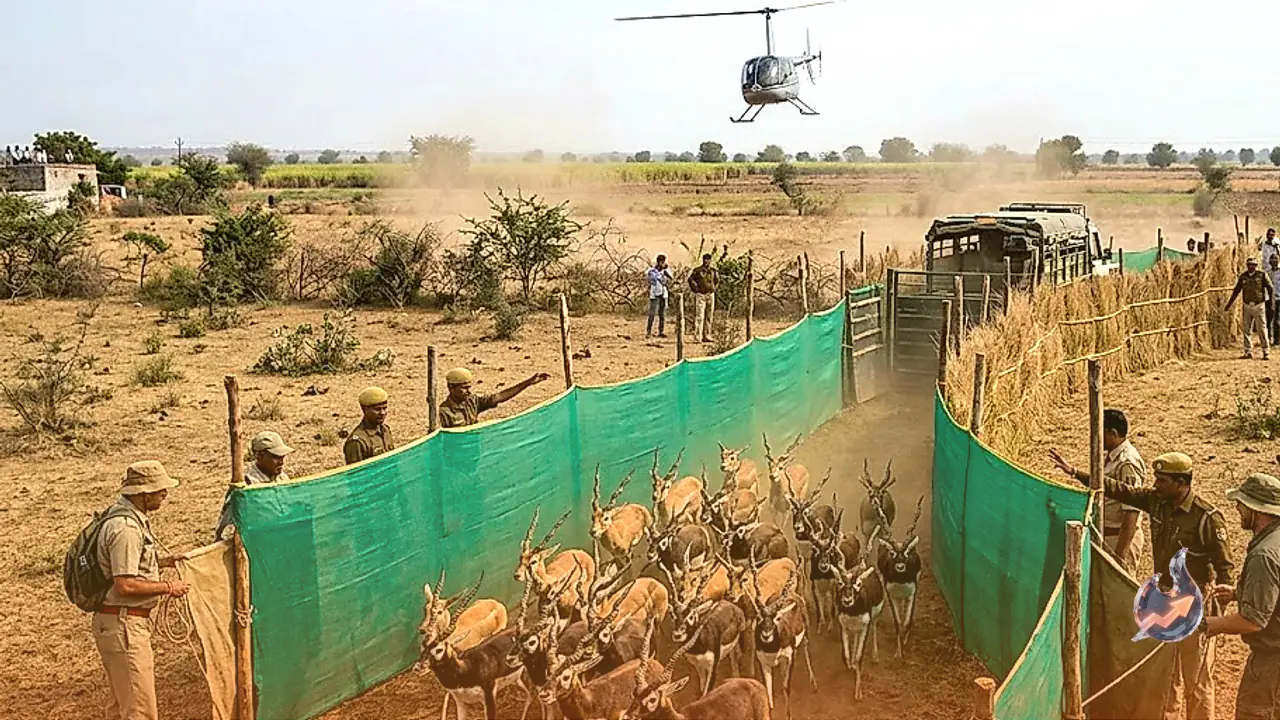
The quiet surroundings of Hannukhedi village transformed into a hub of activity on Saturday as the roar of a low-flying helicopter echoed across the plains. Curious villagers looked upward as the aircraft worked in tandem with ground crews to direct scattered herds across open farmland. The operation is employing the traditional African Boma capture methodology, which utilizes funnel-shaped boma enclosures to funnel wild animals smoothly into secure holding pens without causing severe stress or physical harm.
A specialized team of wildlife experts from South Africa is supervising the maneuvers. The airborne crew pinpoints blackbuck herds grazing across wide stretches of farmland and carefully directs them toward designated capture zones. Simultaneously, ground teams manage the perimeter to prevent panic, ensuring the animals do not bolt into human habitations or injure themselves on barbed field fences.
Sequential Drives Yield Early Results with 97 Antelopes Secured
Securing 97 blackbucks during the first drive marked a productive start to the scheduled initiative. Early on Sunday morning, the South African specialists resumed work, scanning the perimeter areas around Hannukhedi. The helicopter resumed low passes to herd the animals, while ground personnel prepared capture corridors to secure additional groups.
All captured blackbucks are being gathered in designated temporary holding enclosures where their physical condition is closely observed. From this intermediate point, logistics are being aligned to safely transport the animals into the Kuno sanctuary facility to support regional biodiversity.
Legislative Initiative Behind the Kalapipal Conservation Drive
The ground intervention follows sustained efforts by local Kalapipal legislator Ghanshyam Chandravanshi, who had previously raised the persistent crop-raiding problem in the Madhya Pradesh Legislative Assembly. Advocating for a humane relocation mechanism, he called for an organized capture drive to relieve local cultivators while protecting the native blackbuck population. Following formal approvals, fieldwork commenced at Hannukhedi on October 10.
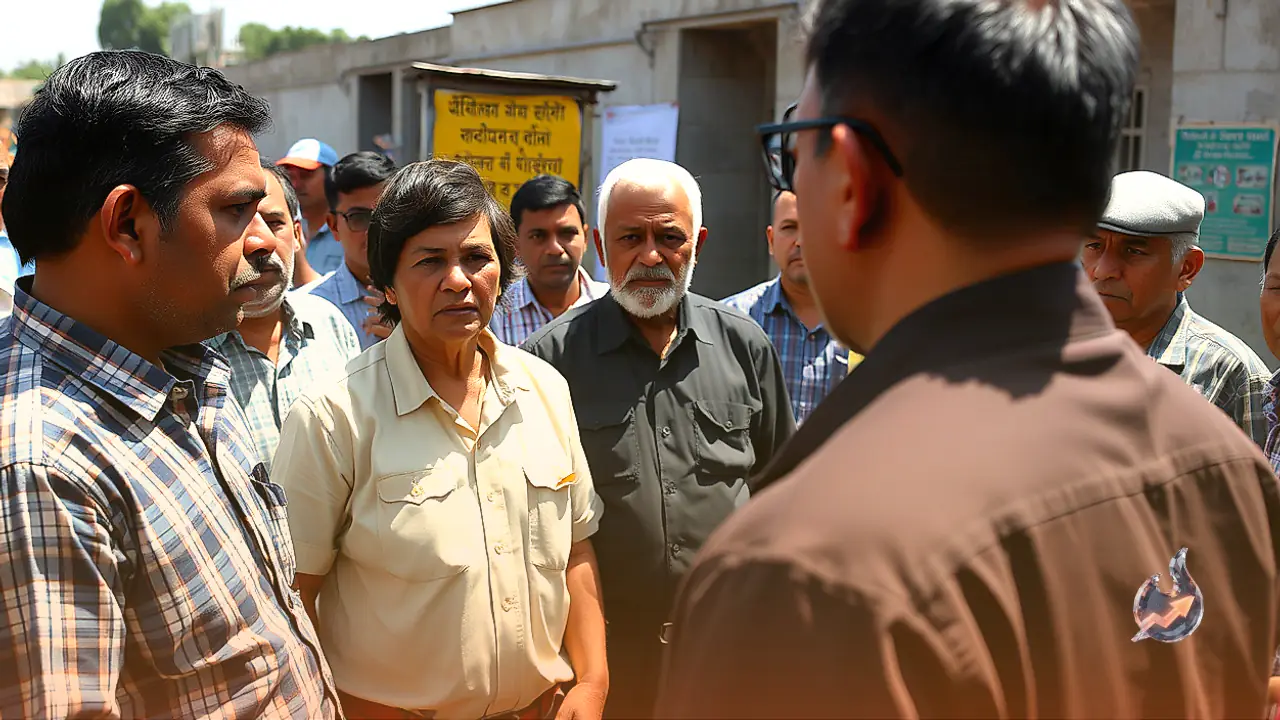
Ghanshyam Chandravanshi visited the operational site on Saturday to inspect the field arrangements firsthand. Following the capture of the initial 97 blackbucks, he met with the South African technical crew and forest officials to review safety standards and assess next steps. During the interaction, he took stock of ongoing field sweeps and the planned transportation schedule to Kuno.
Balancing Farmland Preservation with Modern Wildlife Management
The exercise unfolding in Hannukhedi highlights how modern game-capture techniques can resolve human-wildlife conflict without harming vulnerable species. This marks only the second instance in India where such a specialized Boma operation has been undertaken within the Kalapipal assembly jurisdiction. By combining aerial support, funnel traps, and international handling experience, the operation aims to preserve standing crops while providing the blackbucks with an expansive ecosystem in Kuno. Observers and farmers alike are now monitoring the progress of the operation as field drives continue through October 31.