























Amethi district in Uttar Pradesh carries a rich cultural tapestry that extends far beyond modern affairs, deeply rooted in centuries of spiritual folklore, architectural heritage, and historical landmarks. Across the region lie multiple ancient temples, hermitages, and historic water reservoirs that represent varied historical eras. Ranging from legends of the epic Mahabharata to the administrative initiatives of regional royal estates, these sites continue to serve as significant pilgrimage destinations while simultaneously drawing leisure travelers and history enthusiasts.
Gayatri Shaktipeeth and the Sculptures of the Saptarishis
Located right within the main city limits of Amethi, Gayatri Shaktipeeth stands as a renowned spiritual institution and center of faith. A defining feature of this historic shrine is the presence of ancient sculptures depicting the Saptarishis, the seven revered Vedic sages. Devotees perform traditional worship rituals following scriptural guidelines on a daily basis. Beyond spiritual seekers, people fascinated by regional history and Vedic lore regularly tour the premises to explore the heritage behind these sage idols, making the complex a vibrant focal point of local culture.
Mata Karyakram Dham: A Revered Siddha Peeth with a Healing Spring
Another major spiritual and tourism site in Amethi is Mata Karyakram Dham, widely recognized as a Siddha Peeth. At the heart of this temple complex sits an ancient water body known as the Amrit Kund. A strong belief persists among visiting pilgrims that the sacred water from this spring possesses remarkable curative qualities capable of healing various physical ailments. Because of this long-held conviction, worshippers and curious visitors travel to this shrine not only from across Amethi district but also from numerous adjoining districts across Uttar Pradesh to offer prayers and collect the spring water.
Mukut Nath Dham: A Temple Tracing Its Origins to the Pandavas
Echoes of the Mahabharata period survive at Mukut Nath Dham, an extraordinary temple believed to date back to the time of the Pandavas. The naming of this sacred site is closely tied to an intriguing historical legend. According to local lore, ancient kings and warriors would temporarily place and deposit their royal crowns at this sanctified spot while engaged in battles. Because crowns were ceremonially kept here during conflicts, the temple came to be revered as Mukut Nath Dham, retaining its aura as a remarkable monument of faith and ancient heritage.
Swami Paramhans Dham: Monastery Housing 108 Shivalingas and Five-Faced Shiva
Representing the monastic lineage of the region, Swami Paramhans Dham is an esteemed historical and spiritual establishment in Amethi. The campus preserves local heritage through an ancient hermitage alongside a functioning Sanskrit school dedicated to classical learning. The shrine houses a grand spiritual assembly consisting of 108 Shivalingas, a rare five-faced statue of Lord Shiva, and a consecrated idol of Swami Paramhans himself. Historical accounts hold that the ascetic Swami Paramhans once resided here, renowned for intense penance and the prophetic nature of his words. Today, the complex functions as a prominent Sant Peeth, where followers gather to seek blessings at the saint's memorial samadhi.
Devarshi Narad Dham in Gunnaur Village and Its Mythological Shield
Reinforcing the ancient mythological connections of Amethi, Devarshi Narad Dham is situated in Gunnaur village. According to timeless lore, Kayadhu, the wife of the demon king Hiranyakashipu, sought refuge within these very forest groves to protect her unborn son, the pious devotee Prahlad. Idols commemorating both Kayadhu and the divine sage Narada remain installed at the location today. The village also carries a widely discussed local belief that celestial lightning never strikes within the boundaries of Gunnaur, which villagers attribute to the sacred protection of sage Narada.
The Multi-Arched Royal Stepwell of Ramnagar and the Enormous Navgrah Sagar
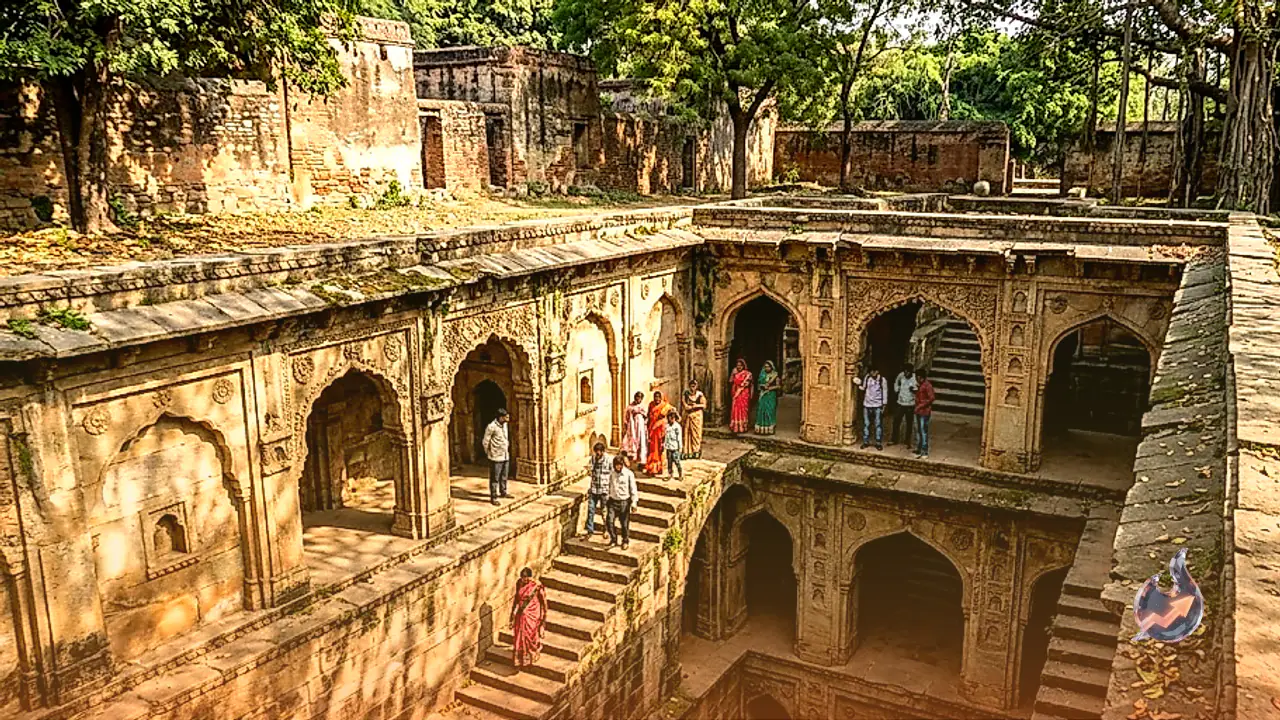
Apart from religious institutions, Amethi preserves notable engineering feats in historical water management. In the Ramnagar locality, an elaborate historic stepwell built during the era of the local royal estate continues to attract attention. Constructed to strengthen local water reserves, its most striking architectural feature is an intricate Baradari or open-pillared pavilion. Historically, queens and women of the royal household would visit this deep stepwell accompanied by their companions for bathing and leisure. Furthermore, situated approximately 14 kilometers away from the Gauriganj area lies the vast reservoir known as Navgrah Sagar, originally established under the reign of the Bhar kings. Celebrated as the Bhar kings' lake, it was noted for being so exceptionally deep that even elephants could be fully submerged. This historic body of water remains an intriguing landmark where visitors come to spend time and observe regional antiquities.