




















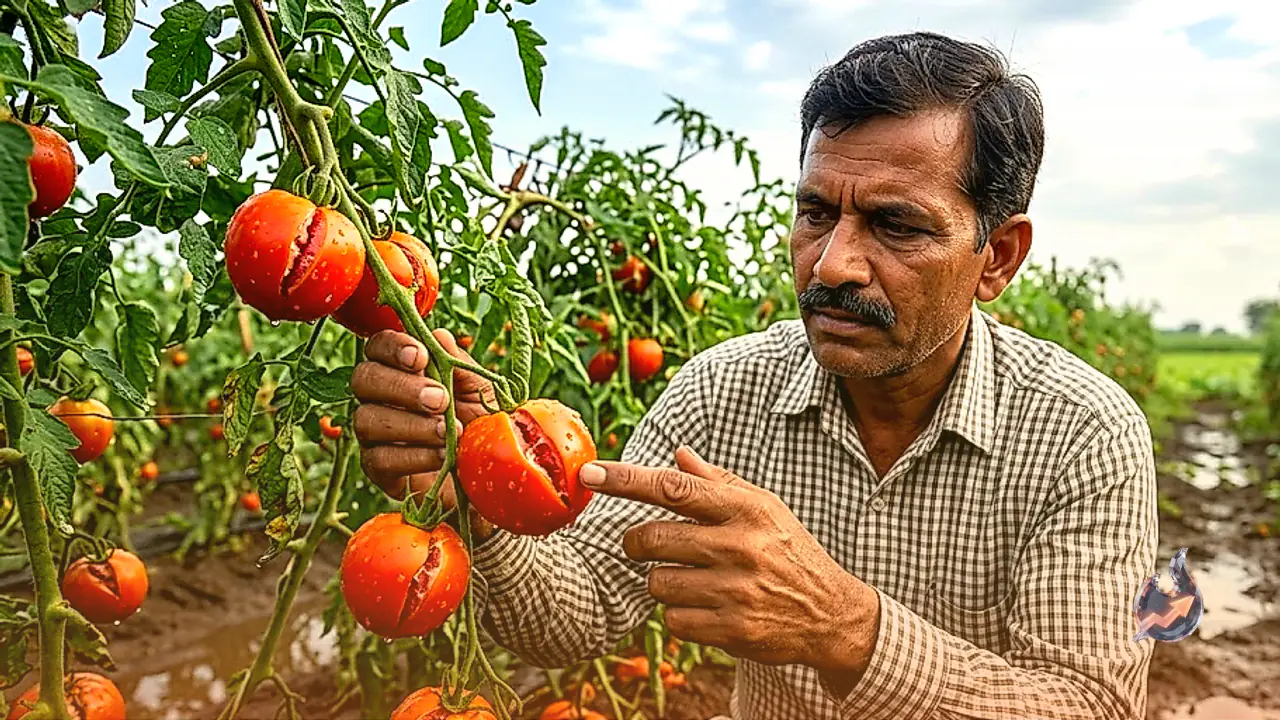

Every monsoon, tomato growers face the same frustrating cycle, fruits splitting open from the inside just before they are ready to be picked. In Sidhi, July brings alternating spells of heavy downpour and sudden sharp sunshine, and that swing is exactly what is punishing tomato crops this season. Cracked fruit not only look unappealing but also fetch far lower prices in the market, so despite months of effort, farmers end up losing out on fair returns.
Agriculture expert Mansukh Lal Kushwaha explains that the root cause of the cracking lies in sudden shifts in soil moisture. When farmland stays dry for a stretch and is then hit by intense rain all at once, the plant's roots absorb a large volume of water in a short span. That surge causes the inner flesh of the fruit to expand rapidly, but the outer skin cannot stretch at the same pace. This mismatch is what tears the fruit open from within.
Boron deficiency plays a role too
According to Kushwaha, the second major reason behind the problem is a shortage of boron, a micronutrient in the soil. Boron keeps a plant's cells strong and flexible, which in turn helps the fruit's skin withstand internal pressure. During spells of continuous heavy rain, boron and other micronutrients get washed away from the topsoil. When plants are left without enough boron, the tomato's skin turns weak, and even a small rise in moisture is enough to make the fruit split.
This is why Kushwaha advises farmers to keep water management in the field balanced. Fields should neither be allowed to waterlog nor be left to dry out completely. Along with proper irrigation, having an adequate drainage system in place is just as important, so that soil moisture stays consistent and fruits are not subjected to sudden pressure.
What to do once cracking has already begun
If fruit cracking has already started in a field, the advice is to mix 2 grams of boron per litre of water and spray it evenly across the plants and fruits. This spray can bring the cracking problem under considerable control. Alongside this, using calcium nitrate is also said to be highly beneficial. Adequate calcium availability strengthens the outer skin of the fruit, which lowers the chances of rot or splitting at the base of the tomato.
Experts also point out that mulching the field delivers significant benefits. Mulching helps soil retain moisture for longer, softens the direct impact of heavy rain on the ground, and prevents sudden swings in temperature. This gives plant roots a more stable environment to grow in, which improves overall plant development and reduces the likelihood of fruit cracking.
Don't wait for tomatoes to turn fully red
Kushwaha also advised farmers not to wait until tomatoes turn completely red before harvesting them. As soon as the fruit takes on a pink or light red shade, it should be picked. A fruit that stays ripening on the plant for longer is far more likely to crack once rain hits, since its skin is already weaker and cannot withstand extra moisture. Looking ahead, farmers should opt for improved and hybrid varieties that have thicker skin and are more tolerant to cracking, which can significantly cut down on this problem over time.