























The Australian Dollar posted advances against the US Dollar on Friday, gaining 0.20 percent to hover around the 0.7125 mark during trading hours. Fresh momentum was driven by policy signals from the Reserve Bank of Australia, whose leadership reiterated that further monetary tightening remains an open option to pull consumer prices back toward official objectives. In Asian trade, the currency pair sustained positive traction for a second straight session, remaining comfortably above the 0.7100 baseline as easing US Treasury bond yields placed US Dollar buyers on the defensive. However, the Federal Reserve's firm monetary stance and broader geopolitical concerns have cushioned the greenback against steeper losses, restricting the pair from establishing a broader breakout. According to live market data, the pair trades around 0.7121, up 0.08 percent from the previous close of 0.7115, within a 52-week band spanning 0.6422 to 0.7277.
RBA Leadership Flags Lingering Price Pressures
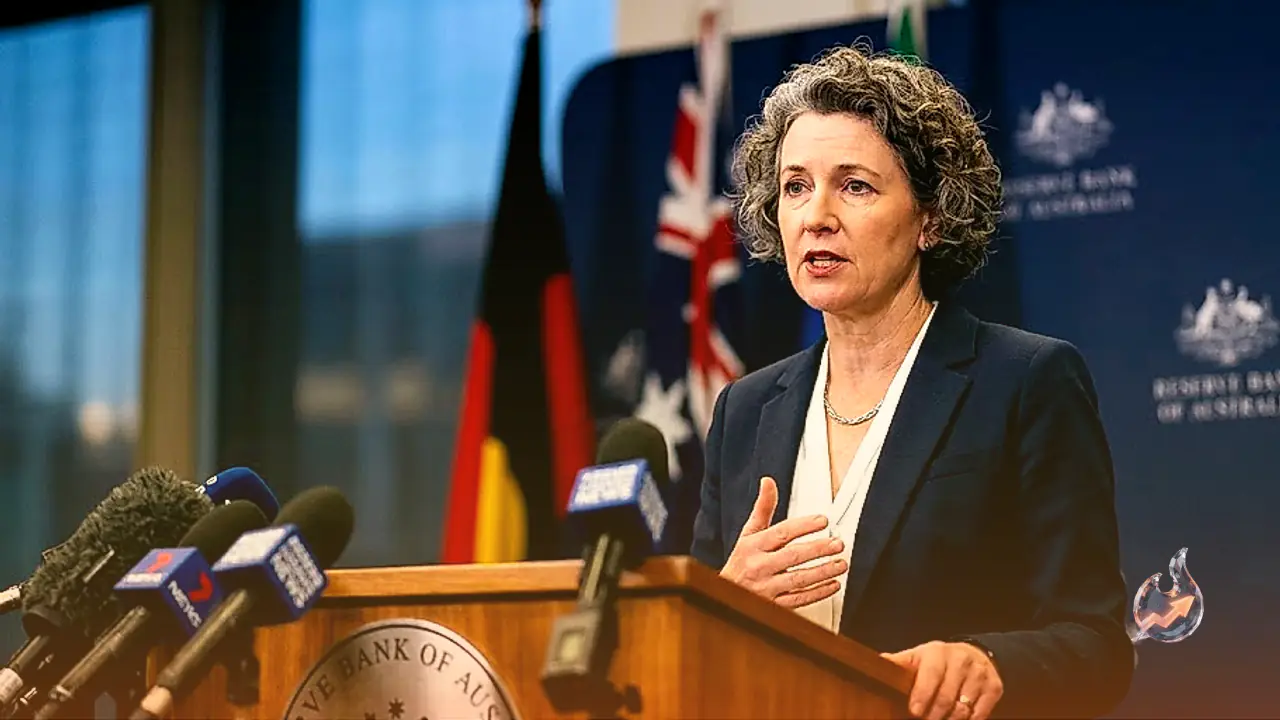
Addressing a parliamentary committee hearing, Reserve Bank of Australia Governor Michele Bullock underscored that inflation across the domestic economy remains uncomfortably elevated. Bullock pointed out that several upside risks to consumer prices appear to be taking shape, directly citing escalating tensions across the Middle East as a notable driver. These observations fueled market expectations that the central bank will not hesitate to implement further policy measures if price stability remains threatened.
The central bank currently maintains its benchmark cash rate at 4.35 percent, an outcome that followed three consecutive rate hikes implemented earlier in the year. Despite the current pause, interest rate markets are pricing in an increase to 4.6 percent at the upcoming monetary policy meeting as policymakers continue to underline their resolve against inflationary forces. The resolute tone struck by Governor Bullock provided immediate support to the Aussie by accelerating expectations for higher borrowing costs.
Federal Reserve Actions and Conflicting Currency Pressures
The upward potential of the Australian Dollar remains constrained by the persistent resilience of the US Dollar. The Federal Reserve delivered a 25 basis point rate hike on Wednesday, adjusting the benchmark federal funds target range to 3.75 percent to 4 percent, an outcome that aligned directly with broad market expectations. The prospect of further interest rate moves from the US central bank continues to underpin greenback demand, setting up a clash between two central banks committed to firm monetary policy.
As a consequence, the currency pair is trapped between dual tightening projections. The Australian Dollar draws support from warnings regarding stubborn inflation and potential rate increases from Canberra, while anticipation of continued policy firming by the Fed sustains appetite for the US currency. Softening yields on US government paper offered temporary headwinds for the greenback, yet lingering geopolitical risks have created a supportive base for the US currency, preventing steep drawdowns.
Technical Boundaries and Chart Metrics
From a technical standpoint, the immediate barrier for the currency pair sits at horizontal resistance near 0.7140. A break higher would bring the 200-period Simple Moving Average at 0.7159 into view, followed by a heavier ceiling positioned at 0.7188. On the downside, the initial protective layer is established around 0.7122, where an ascending trendline intersects with the 100-period Simple Moving Average. Should a deeper retracement materialize, the structural base at 0.7075 is positioned to attract fresh interest from dip buyers.
Live market technical readings show the 14-period Relative Strength Index at 48, denoting balanced momentum. The MACD stands at 0.00 against a signal line of 0.00 with a mildly negative histogram. Exponential Moving Averages place the 20-day line at 0.7142, the 50-day line at 0.7107, and the 200-day line at 0.6955, maintaining a golden cross alignment that supports a long-term upward structure. Simple Moving Averages show the 50-day at 0.7085 and the 200-day at 0.7012. The 20-day Bollinger Bands range between 0.7092 and 0.7239, with price tracking near the midline of 0.7165. The 14-period Average Directional Index stands at 19, indicating a range-bound environment, while the Stochastic fast line is at 23 and the signal line is at 14. Key 20-day levels establish support around 0.7087 and resistance near 0.7239.
Developments Across Currency and Commodity Markets
Broad market dynamics reflected shifts across multiple assets on Friday. The US Dollar gained ground against the Japanese Yen during the European session, touching fresh two-week peaks near 158.00. The Japanese Yen continued to weaken even after the Bank of Japan lifted its policy rate to 1.25 percent and Governor Kazuo Ueda offered hawkish commentary, as two unexpected dissenting votes against the hike dampened confidence. For over a decade, Japan's ultra-low interest rates had financed trillions of dollars in global assets, making the currency a primary global funding vehicle, an environment that is shifting as policy normalizes.
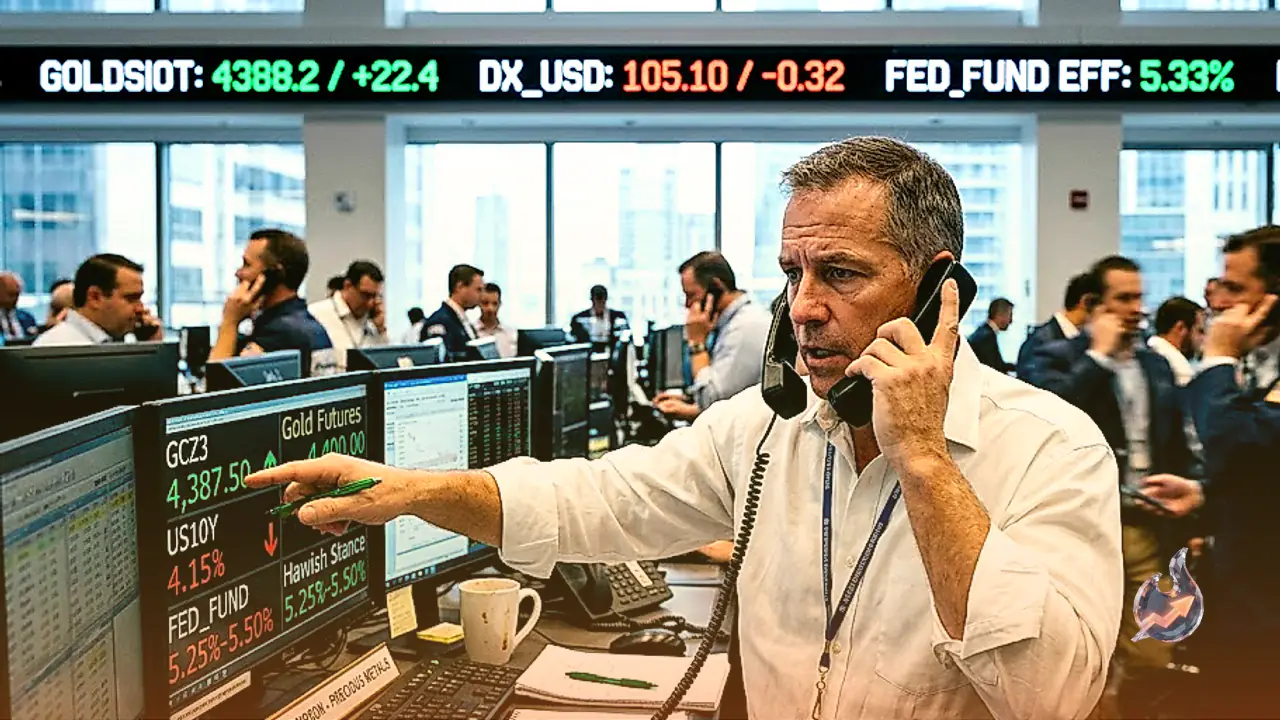
In the commodities space, gold prices advanced for a second straight day, establishing new weekly peaks during early European trade as buyers set sights on a break above the 4,400 dollar barrier. In digital assets, Bitcoin has rebounded roughly 33 percent from its July yearly trough of 57,800 dollars, logging back-to-back monthly gains through July and August. However, with the cryptocurrency remaining approximately 40 percent below its record high, market participants continue to assess whether the move marks a genuine bullish transition or a cyclical correction within a broader downtrend.