






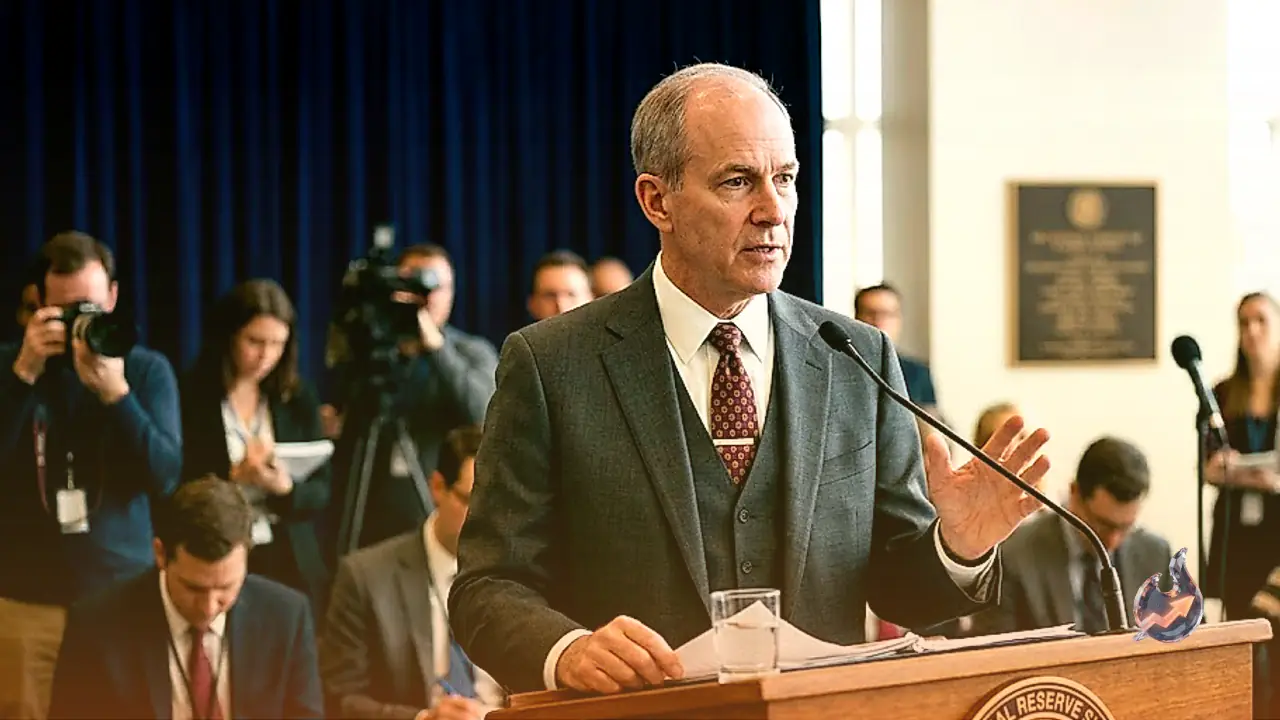


















Canada's monetary authorities are navigating a delicate economic landscape shaped by concurrent pressures from global energy markets and cross-border trade restrictions. Speaking in Halifax, Nova Scotia, on Monday, Bank of Canada Governor Tiff Macklem delivered a prudent evaluation of macroeconomic conditions, noting that elevated energy expenses and United States import tariffs are generating conflicting hazards for both inflation dynamics and overall expansion. In Macklem's view, central bank officials determining benchmark borrowing costs need to look past the immediate disruption triggered by rising crude markets, even as persistent trade levies threaten to roughly halve Canada's fourth-quarter economic growth to below 1%.
Refining Disruptions and the Mechanics of the Fuel Squeeze
Addressing the behavior of petroleum markets, the central bank governor indicated that if international oil valuations remain anchored near $100 a barrel, headline inflation is likely to tilt upward over the coming months. Pump prices have surged well past ordinary historical correlations, reflecting significant damage sustained by worldwide oil refining capacity. This operational impairment has distorted downstream pricing, leaving recent retail fuel rates aligned with crude benchmark levels that would theoretically sit nearly $40 above where oil has actually been trading.
Crucially for policymakers, higher fuel expenses have not yet triggered a broad secondary wage-price spiral across the wider economy. Macklem observed that there is currently no tangible evidence indicating that heightened crude oil expenses are spilling over into the pricing structures of other goods and consumer services. This lack of broad-based transmission provides the central bank with breathing room to assess underlying economic momentum rather than reacting hastily to localized energy spikes.
Calibrating Monetary Policy Against Structural Headwinds
The central bank faces competing mandates as it seeks to preserve expansion without allowing inflation expectations to unmoor. The institution does not want to lift borrowing costs and suppress growth if existing price pressures remain relatively contained. Conversely, Macklem noted that the monetary authority cannot afford to be overly hesitant in adjusting policy should underlying price pressures show signs of becoming deeply embedded. The Bank of Canada, operating from its headquarters in Ottawa, holds a core directive to ensure price stability by anchoring annual inflation within a target corridor of 1% to 3%.
Compounding these monetary considerations is an acute demographic constraint: the central bank projects that domestic labor force growth will remain close to zero over the coming few years. Meanwhile, Canadian commercial enterprises are demonstrating operational agility in the face of international trade disruptions. Evidence is accumulating that a significant portion of domestic businesses have begun actively adjusting their supply chains and operating models to mitigate the ongoing impact of US tariffs.
Central Banking Levers: Rate Adjustments, QE, and Quantitative Tightening
The Bank of Canada governs national monetary policy primarily through eight predetermined schedule meetings each calendar year, alongside unscheduled emergency sessions convened during moments of extreme volatility. Its principal lever remains the policy interest rate; elevating this rate typically attracts capital and bolsters the value of the Canadian Dollar, while loosening policy exerts downward pressure on the currency.
Under extraordinary economic distress, the central bank maintains the capability to deploy Quantitative Easing. Through this emergency procedure, the institution issues currency to purchase government and corporate debt securities directly from commercial lenders, injecting liquidity into financial conduits when rate cuts alone cannot revive frozen credit mechanisms. This tool, which traditionally softens the Canadian Dollar, was utilized during the 2009-11 Great Financial Crisis when counterparty distrust paralyzed domestic banking. In contrast, once an economic recovery gains traction and inflationary pressures resurface, the bank engages in Quantitative Tightening. Under QT, bond purchases cease and maturing principal is no longer reinvested, reducing system-wide reserves and generally providing supportive, bullish tailwinds to the domestic currency.
Divergent Global Backdrop Across Currencies, Sovereign Debt, and Commodities
These policy assessments occur as the global financial arena approaches the final weeks of the third quarter under an unusual configuration of market forces. While broader volatility and geopolitical anxiety remain elevated, crude oil has experienced downward pressure even as European and United States equity markets indicated firmer opening trajectories on Monday. Stress signals have centered predominantly on sovereign debt markets, where bond yields across Europe and the US extended late-week gains.
In Asia, monetary tightening advanced as the Bank of Japan lifted its short-term interest-rate target from 1.00% to 1.25% through a 7-2 vote, cementing a policy normalization trajectory that aligned with consensus expectations. The decision, coupled with official rate checking that renewed market caution over potential currency intervention, propelled modest Japanese Yen appreciation and guided USD/JPY down below 157.00. Geopolitical frictions involving Russia and Ukraine alongside Middle Eastern unrest further capped the US Dollar's broader pullback.
Elsewhere, the Australian Dollar held steady above 0.7100 against the greenback; although the People's Bank of China maintained its Loan Prime Rates unchanged, expectations surrounding a potential Reserve Bank of Australia rate hike offered support ahead of high-level diplomatic talks between Trump and Xi. Concurrently, gold traded softer near $4,350 per troy ounce, as resilience in the US Dollar offset falling yields across the Treasury curve and prompted a minor retreat in the safe-haven asset.