























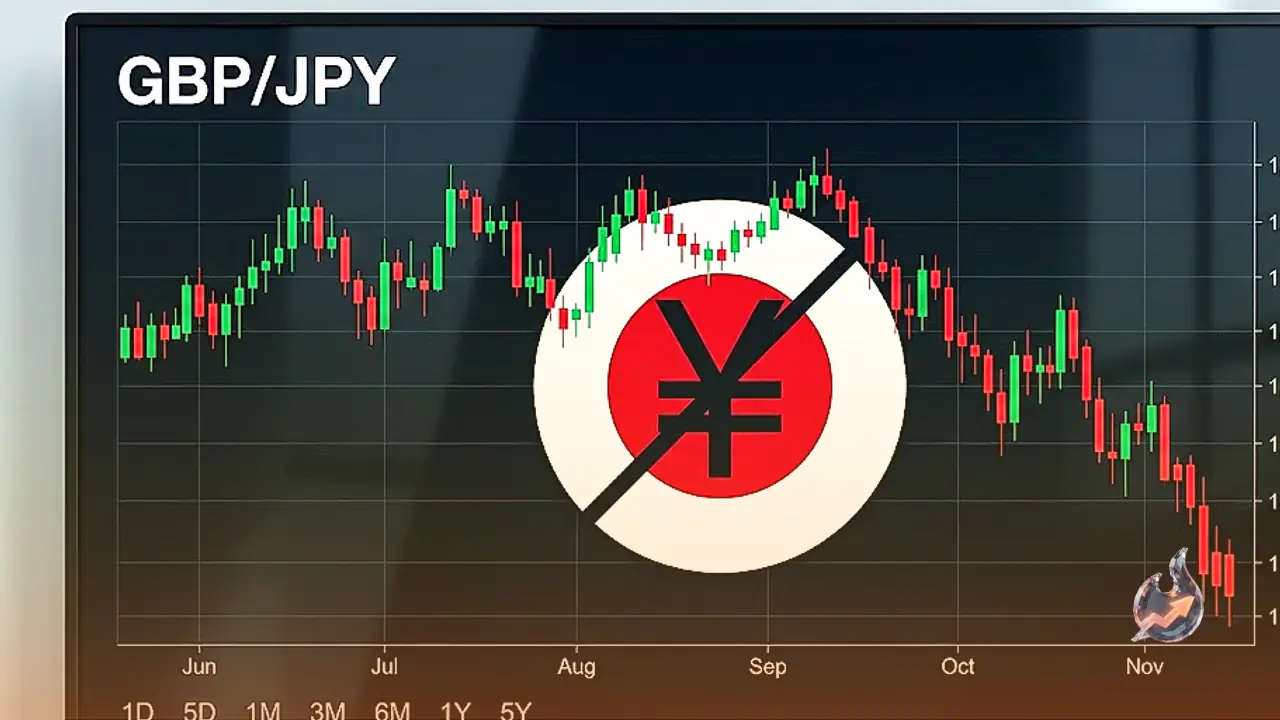

The British Pound has lost ground against the Japanese Yen as a mix of broader Sterling weakness and shifting market expectations weighs on the currency pair ahead of upcoming central bank meetings. Traders are actively reducing their exposure before the Bank of England monetary policy decision, while markets widely anticipate that both central banks will opt to keep interest rates on hold throughout the week.
Bond Yields and Inflation Pressures
Sterling is facing additional downward pressure stemming from lower UK government bond yields, which followed a sharp drop in oil prices at the start of the week. A temporary pause in hostilities between the United States and Iran has successfully eased near-term inflation anxieties, subsequently lowering expectations that the Bank of England will need to implement aggressive monetary tightening measures.
The central bank is widely expected to leave its benchmark interest rate unchanged at 3.75%. Thus far, the recent energy shock has exerted only a limited impact on domestic inflation within the UK, with the Consumer Price Index dropping to a 15-month low of 2.6% in June. However, upside risks to consumer inflation have not completely vanished. The recent decline in oil prices could ultimately prove short-lived if concrete diplomatic negotiations fail to materialize between Washington and Tehran, especially while energy supplies routed through the Strait of Hormuz continue to face heavy disruptions.
Structural Weakness in the Japanese Yen
Despite the downward pull on the currency pair, the downside for the British Pound and Japanese Yen pairing remains inherently limited due to the structural weakness plaguing the Japanese currency. Japan's persistently low interest rates and heavy economic reliance on imported energy continue to weigh down the currency, with global oil prices remaining elevated despite Monday's correction. Looking ahead, the Bank of Japan is scheduled to announce its own interest rate decision on Friday, where it is broadly expected to maintain its policy rate steady at 1%.
Broader Currency Movements and Market Dynamics
Performance metrics indicate how the British Pound has fared against other major global currencies, showing particular strength when measured against the Canadian Dollar. Currency heatmap comparisons illustrate relative performance across pairs using base and quote columns. In related currency action, major pairs experienced intraday shifts. For instance, the British Pound and US Dollar pair reversed its earlier direction, trading in the red near the 1.3300 mark during the second half of the day on Monday after initially starting the week on a bullish note. Falling crude oil prices, triggered by the Middle East conflict pause, have helped cap the gains of the US Dollar and allowed the pair to hold its ground temporarily.
Similarly, the Euro and US Dollar pair surrendered its bullish momentum, trading with modest gains below the 1.400 threshold during the latter half of Monday's session. While market participants maintain cautious optimism regarding a potential de-escalation in the Middle East following the temporary halt in strikes, considerable uncertainty remains regarding whether diplomatic channels can successfully bridge the gap between the US and Iran.