


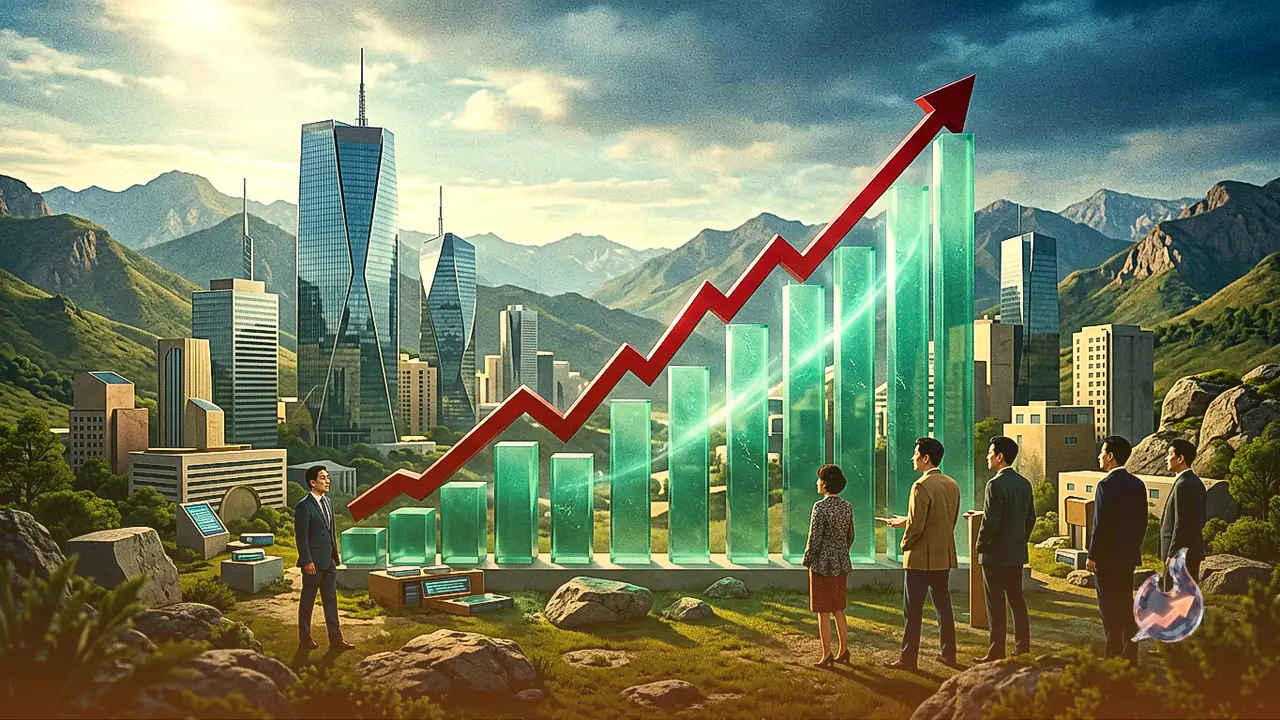



















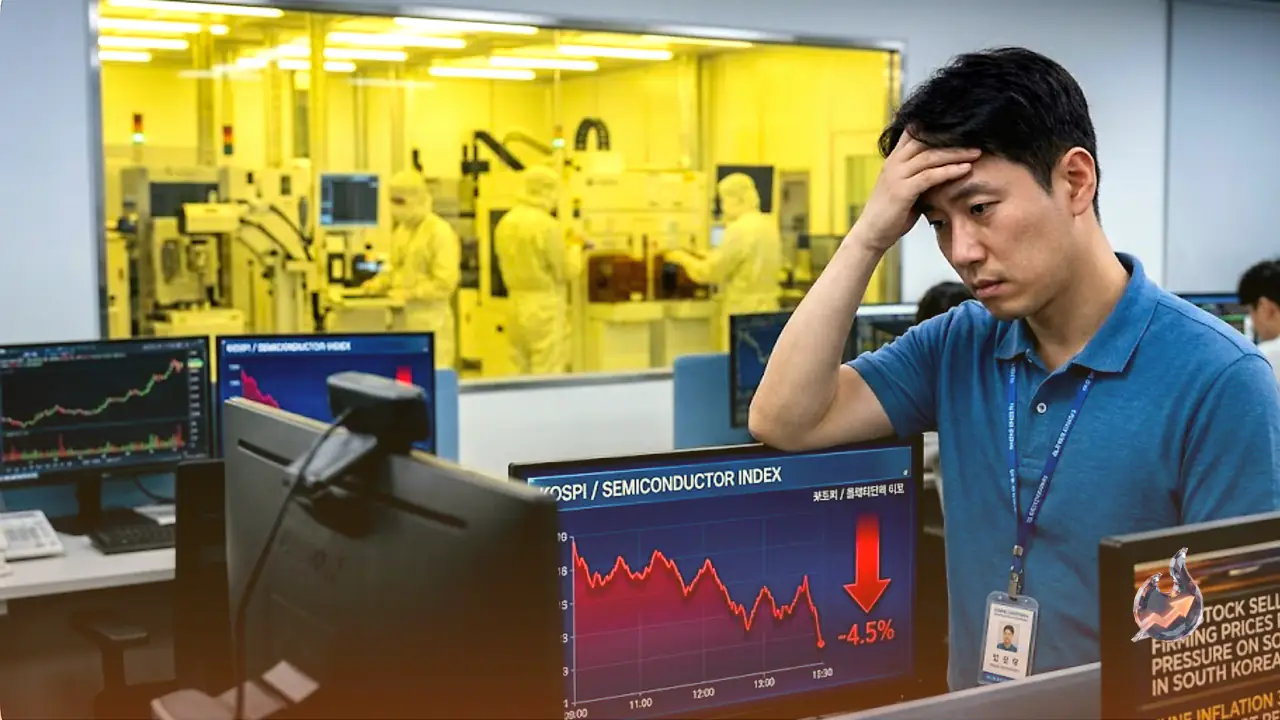

South Korea's economy is being squeezed from two directions at once: a sharp sell-off in its semiconductor stocks and a fresh inflation reading that shows consumer prices edging higher. A BNY report highlights just how heavy the selling in chip shares has been, while the OECD's 2026 Economic Survey of Korea warns that the country's dependence on semiconductor exports leaves it increasingly exposed to the swings of the global technology cycle.
A regional sell-off in chip shares
The heavy selling in semiconductor stocks was not confined to South Korea. It hit markets across Japan and Taiwan too, as investors questioned whether the sheer scale of AI-related capital spending can keep justifying recent gains. Chinese tech indices also suffered sharp losses during the same stretch. In short, unease over technology shares rippled through the whole region, with the gap between lofty expectations and real spending starting to worry investors.
The OECD flags concentration risk
The move came as the OECD warned that South Korea's growing dependence on semiconductor exports is increasing the economy's exposure to swings in the global technology cycle, reinforcing concerns around concentration risk, the danger of leaning too heavily on a single sector.
The OECD's 2026 Economic Survey of Korea cautioned that while semiconductor exports are a key growth driver, the heavy reliance on them is raising the economy's exposure to external shocks, output volatility and tax revenue swings. It noted that export and investment growth accelerated in early 2026, supported by the AI boom, but said this same dependence is also creating strategic vulnerabilities.
What the OECD wants Seoul to do
The report urged the government to use fiscal policy to support domestic demand in the near term, while consolidating over the medium term to preserve fiscal health. That advice carries weight because aging-related spending pressures are rising rapidly and weighing more heavily on the budget over time.
Alongside this, the OECD called for a stronger fiscal framework, later pension eligibility, labor market reform and broader tax reform. On the tax side, it singled out property taxation as an area in particular need of change.
Inflation firms up in June
On the price front, the consumer price index points to a modest firming. It rose 0.1% month on month and 3.2% year on year in June, accelerating from 0.5% m/m and 3.1% y/y in May on an annual basis. The core index, which strips out food and energy, was unchanged month on month and up 2.5% year on year, in line with the previous month.
The pressure on prices was led by furnishings, household equipment and routine maintenance, which climbed 1.2% m/m. That was followed by food and non-alcoholic beverages at 0.4%, alcoholic beverages and tobacco at 0.3%, and health at 0.2%.
Where the pressure sits now
Taken together, the picture is mixed. Core inflation is stable and sector moves are uneven, keeping energy volatility firmly in focus. On one side stands the chip-stock sell-off and the risk of leaning on a single sector; on the other, inflation that is slowly firming. For now, those two forces are the most important factors shaping the direction of South Korea's economy.