






















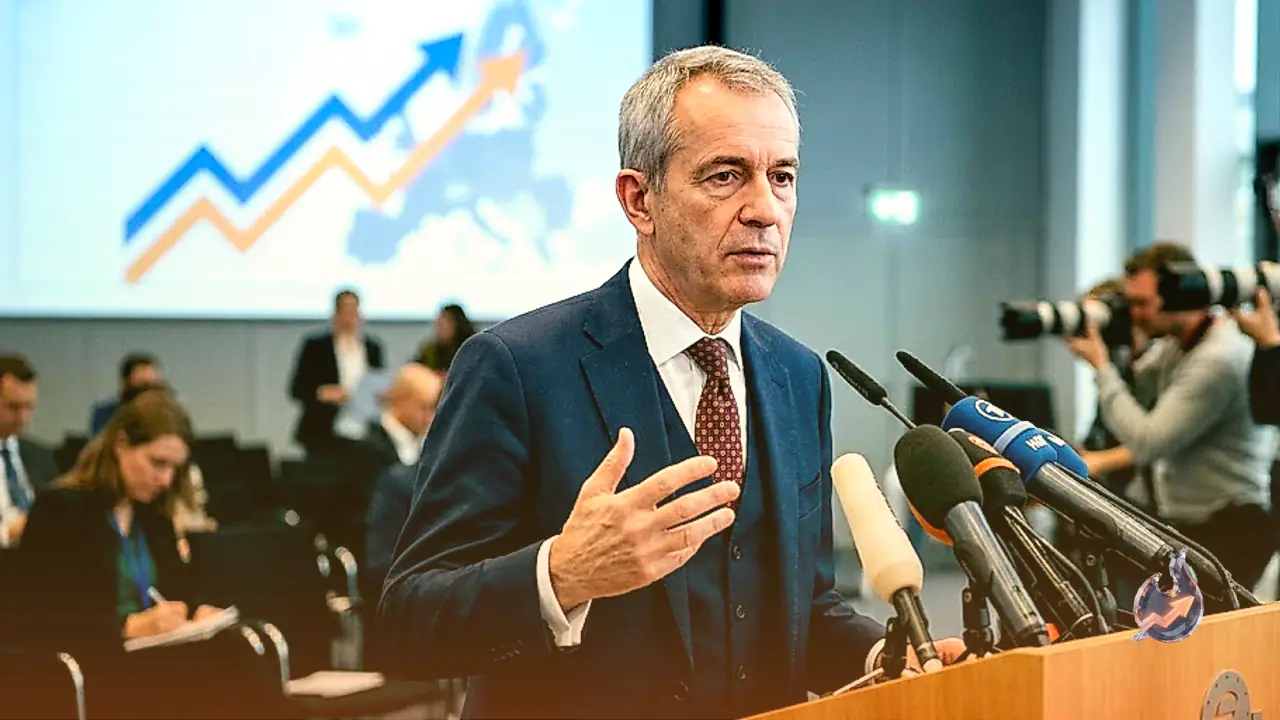

European Central Bank policymakers evaluated that economic data available during their July meeting built a compelling case for halting interest rate increases. However, several Governing Council members underscored that upside risks to inflation endure, driven largely by ongoing energy market vulnerabilities. Consequently, another rate increase remains highly probable unless the inflation outlook improves markedly, even though no formal commitment has been made for the upcoming September gathering. Financial markets have already priced in a 96% probability of a 25-basis-point hike in September.
Inflation Trends and the Rationale Behind the July Pause
Official records from the European Central Bank highlight that headline inflation moderated to 2.8% in June, down from 3.2% recorded in May. Core inflation, which strips out volatile components, similarly eased to 2.4% from 2.6%. Underlying price pressures experienced a broader deceleration, with more persistent inflation segments evolving more favorably than initial central bank projections had anticipated. These developments offered sufficient justification for members of the Governing Council to pause tightening during the July session.
Energy Supply Vulnerabilities and Upside Risks
Despite positive signs in baseline consumer prices, the Frankfurt-based institution maintains a heightened focus on energy market dynamics. Officials cautioned that the complete inflationary transmission of the recent energy price shocks has not yet fully materialized across the Eurozone economy. Prominent risk factors include elevated natural gas prices, seasonally depressed gas storage capacity across Europe, and geopolitical disruptions affecting critical energy supply chains. Policymakers warned that the longer energy prices remain at elevated levels, the greater the likelihood of broader indirect and second-round price spillover effects.
Labor Cost Pressures and Long-Term Inflation Anchor
Developments within the Eurozone labor market provided additional support for keeping interest rates steady during July. Growth in labor costs continues to moderate, and gradual softening in labor market conditions has reduced the probability of energy shocks triggering damaging second-round wage-price spirals. Central bank officials noted that these cost pressures have not become entrenched within domestic goods and service prices. Crucially, long-term inflation expectations remain anchored close to the ECB's 2% target, although prolonged above-target inflation forecasts necessitate continuous monitoring of energy shock duration and intensity.
Market Expectations for the September ECB Policy Decision
Financial markets continue to position for further monetary policy tightening despite the recent pause in rate hikes. Data from the ECB Watch tool indicates that swap markets are pricing in a 96% probability of a 25-basis-point interest rate hike at the September policy meeting. The Governing Council reaffirmed that inflation risks remain tilted to the upside, emphasizing that monetary policy must stay vigilant to guarantee timely convergence to price stability.
European Central Bank Mandate and Institutional Framework
Headquartered in Frankfurt, Germany, the European Central Bank serves as the central monetary authority for the Eurozone member states. The primary objective of the ECB is maintaining price stability, defined as keeping medium-term inflation around the 2% target. The central bank adjusts key interest rates to regulate monetary conditions; higher relative interest rates typically appreciate the Euro, while lower interest rates exert downward pressure on the currency. The Governing Council convenes eight times per year to deliberate on monetary policy, comprising governors from Eurozone national central banks alongside six executive board members, including ECB President Christine Lagarde.
Unconventional Policy Tools: Quantitative Easing vs. Tightening
In extraordinary economic environments, the European Central Bank deploys unconventional tools such as Quantitative Easing (QE). Under QE, the ECB creates electronic Euros to purchase government and corporate bonds from financial institutions, injecting liquidity into the banking system to stimulate economic activity. QE generally weakens the Euro and serves as a measure of last resort when conventional interest rate cuts fail to achieve price stability. The ECB previously initiated QE programs during the 2009-11 Great Financial Crisis, the low-inflation environment of 2015, and the COVID-19 pandemic. Conversely, Quantitative Tightening (QT) represents the reversal of QE during economic recoveries. Under QT, the ECB halts net bond purchases and ceases reinvesting principal payments from maturing securities, a stance that typically supports Euro strength.
Global Forex and Commodity Dynamics Ahead of Jackson Hole
Foreign exchange and commodity markets traded cautiously following the release of the ECB accounts. During European trading hours on Thursday, GBP/USD consolidated near the lower boundary of its weekly range below the 1.3600 benchmark. EUR/USD remained under pressure, sinking to a one-week low below 1.1650 as the ECB minutes failed to provide meaningful support against a resilient US Dollar. Meanwhile, spot Gold (XAU/USD) languished near the $4,600 per ounce level, holding close to its weekly lows touched in the prior session.
Market Focus Shifts to Fed Chair Kevin Warsh's Keynote Address
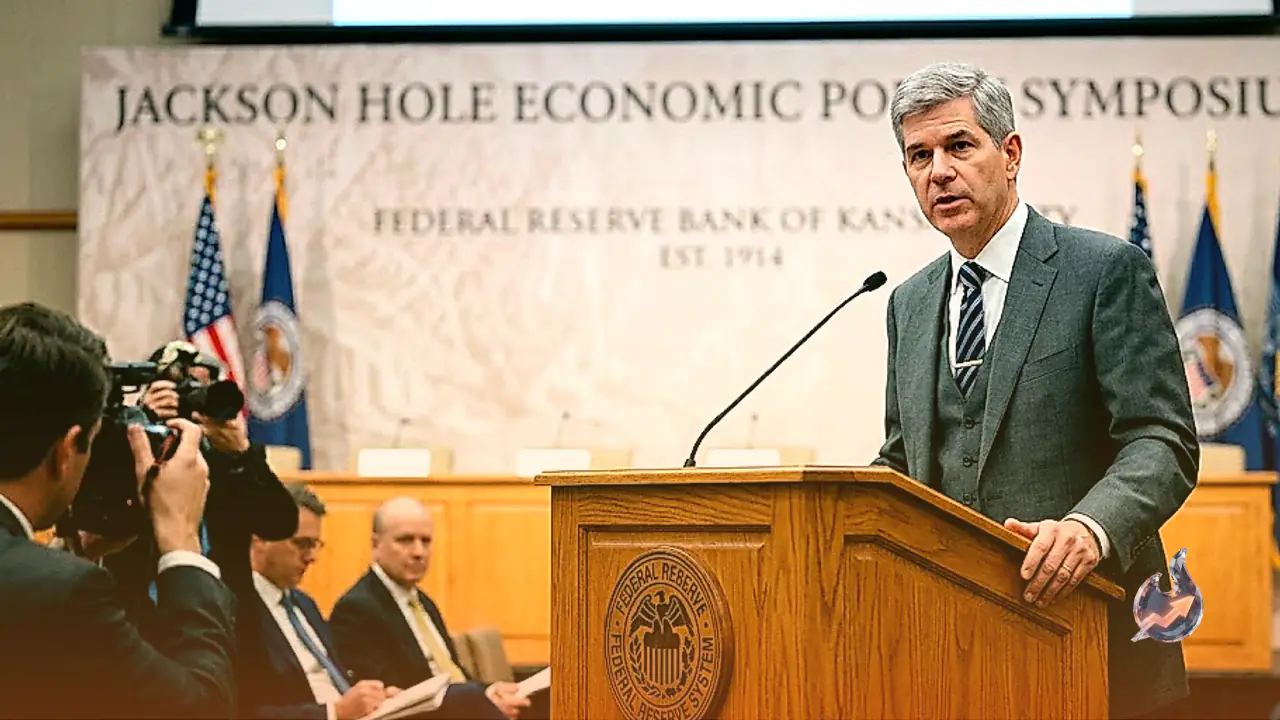
Market participants worldwide are closely monitoring the annual Federal Reserve Jackson Hole Symposium, centered on the theme 'Financial Innovation: Implications for Payments and Policy'. Attention is fixed on Federal Reserve Chair Kevin Warsh, who is set to deliver his inaugural Jackson Hole keynote address on Friday. Investors are seeking clarity regarding the potential trajectory of US monetary policy heading into September, though analysts expect Kevin Warsh to maintain a measured stance with limited explicit forward guidance.