
























Gold's long-standing upward trajectory is confronting a rigorous examination as prices fluctuate near the pivotal $4,000/oz threshold. Financial positioning reveals that Commodity Trading Advisors are holding short stances across all technical indicators, prompting systematic funds to offload contracts heavily. Compounding this supply pressure, early-stage outflows from exchange-traded funds, particularly within Chinese markets, have weakened overall market depth. Despite spot and futures pricing dipping beneath the key $4,000/oz benchmark, trading activity has demonstrated notable stability, with prices staging swift rebounds shortly after breaching the line.
CTA Bearish Positioning and Chinese ETF Liquidations
The immediate headwinds confronting precious metals stem largely from systematic capital strategies. Ryan McKay and Bart Melek from TD Securities point out that the overarching bull thesis is under strain near $4,000/oz because systematic trend-followers and algorithmic traders are completely short across signals. The market has also had to absorb liquidations from exchange-traded funds, where Chinese investor redemptions have added immediate drag to an already soft trading environment. Yet, spot and futures contracts dipping under $4,000/oz encountered immediate dip-buying interest, reflecting remarkable resilience across physical and institutional desks.
Market assessments indicate that despite softer ETF allocations over the immediate run, the structural backdrop remains constructive. Central bank purchases continue to provide a vital pillar of support, demonstrating particular strength whenever bullion trades near these lower bounds. For a broader technical turn, systematic funds will need to reverse course. Estimates suggest that systematic desks will initiate short-covering operations once gold clears north of $4,092/oz. This follows last week's sharp downturn that dragged gold to $3,975, marking its softest quotation since August. A consolidation of modest gains on Monday was aided by a retreat in oil prices as diplomatic efforts sought to de-escalate Middle Eastern tensions.
Currency Fluctuations and US Dollar Consolidation
Foreign exchange markets witnessed distinct realignments amid softening US yields, weakening the greenback's posture. In Asia, AUD/USD successfully preserved ground above 0.7000, hovering near a one-month peak reached early Monday morning under sustained dollar liquidation. Pulling back from a three-week trough, the dollar's recovery remained constrained as Treasury yields retreated further alongside easing crude oil valuations. Speculation surrounding a possible November interest rate hike from the Reserve Bank of Australia gave additional momentum to the Australian dollar, though gains stayed checked in advance of the two-day Federal Open Market Committee meeting scheduled to begin Tuesday.
Concurrently, USD/JPY faced renewed selling interest across Asian trading hours, stalling attempts to rebound from Friday's low, which stood as its weakest valuation since September 18. The ongoing decline in US yields capped the pair's trajectory, while the Japanese Yen gathered strength from hawkish stances articulated by the Bank of Japan. Despite the downward tilt, price movements remained confined as market participants awaited the upcoming policy pronouncements from both the Federal Reserve and the Bank of Japan later in the week.
Bitcoin Consolidation and Major Central Bank Agenda
Within digital assets, trading ranges compressed around familiar boundaries. Bitcoin fluctuated in the vicinity of $80,500 on Monday following three consecutive weeks of market correction. Heightened geopolitical frictions in the Middle East have repeatedly applied upward pressure on energy markets, sustaining inflation worries and dampening speculative risk appetite across non-yielding and digital instruments.
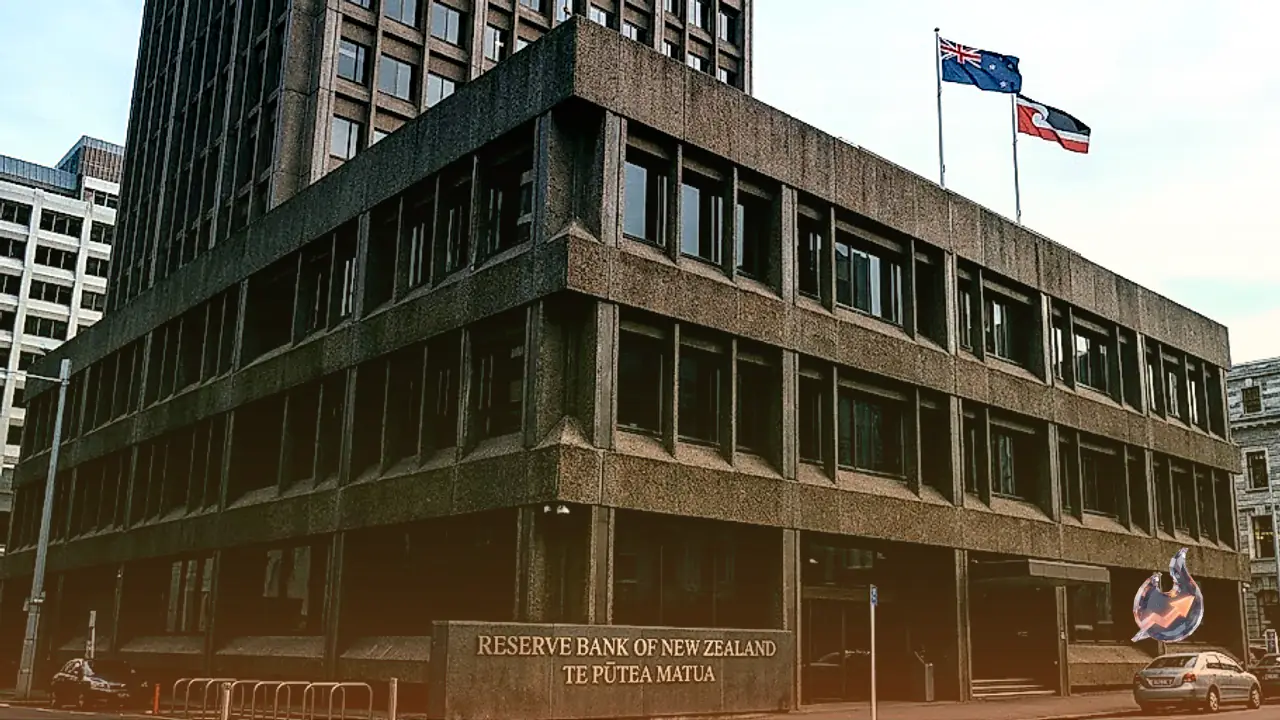
The final full week of October brings an extraordinarily dense schedule for macro participants. Attention is heavily concentrated on impending monetary updates from five major central banks: the Reserve Bank of New Zealand, Bank of Canada, Federal Reserve, European Central Bank, and Bank of Japan. Alongside these policy calls, traders face the release of the UK Autumn Budget, Australian inflation readings, and a packed corporate earnings calendar, with roughly 36% of S&P 500 constituents slated to disclose their third-quarter performance.
US Midterm Dynamics and Policy Repercussions
The greenback enters an increasingly consequential environment leading into the November 3 midterm elections. While derivatives markets anticipate a further rate increase from the Federal Reserve during its December assembly, the legislative contest to determine control of the US Congress holds the potential to significantly alter fiscal expectations. Such shifts in fiscal policy could subsequently alter the course of US monetary policy heading into 2027.