
























The Euro is gaining fundamental support across international foreign exchange markets, sustained by strong economic metrics and evolving central bank interest rate expectations. Persistent inflationary pressure within the Eurozone, further compounded by recent surges in wholesale natural gas prices, has significantly reinforced market expectations that the European Central Bank (ECB) will continue raising interest rates. High interest rate expectations traditionally boost currency valuations by drawing global investment capital into regional assets. However, the Euro's appreciation against the US Dollar remains restricted as the Greenback maintains considerable strength across the board. Despite intervention efforts by the US Treasury to manage liquidity and stabilize sovereign bond yields through an expanded long-term bond buyback initiative, US Treasury yields have resumed their upward movement. This upward trend in bond yields has reinforced baseline support for the US Dollar, effectively capping potential upside movement for the EUR/USD trading pair.
ECB Monetary Policy Rationale and Eurozone Inflation Dynamics
Inflation measurements represent the paramount economic catalyst governing monetary policy actions within the Eurozone. The Harmonized Index of Consumer Prices (HICP) serves as the standard econometric benchmark utilized by central bank officials and market participants to monitor regional price stability. When Eurozone inflation data releases exceed consensus forecasts, particularly when remaining notably above the ECB's official 2% medium-term target, central bank officials are forced to implement monetary tightening measures through policy rate hikes. From a foreign exchange standpoint, relatively higher interest rates relative to peer economies enhance yield differentials, rendering Euro-denominated assets increasingly attractive to international institutional investors seeking higher returns. This capital inflow generates sustained commercial demand for the single currency, providing direct upward pressure on its exchange valuation. Furthermore, recent spikes in wholesale natural gas prices have driven up energy overheads for European manufacturers, adding cost-push inflation risks to the broader economic outlook and reinforcing expectations for restrictive policy.
Beyond inflation figures, a comprehensive spectrum of macroeconomic data releases heavily dictates the Euro's directional momentum. Crucial economic indicators such as Gross Domestic Product (GDP), Manufacturing Purchasing Managers' Index (PMI) numbers, Services Purchasing Managers' Index (PMI) data, employment figures, and consumer sentiment surveys provide detailed evaluations regarding the fundamental health of the Eurozone economy. Robust macroeconomic indicators not only stimulate foreign direct investment (FDI) into European enterprises but also grant the ECB the economic flexibility to maintain restrictive monetary policy without immediately triggering economic contraction. Conversely, weak economic prints tend to weigh heavily on single currency performance. Financial markets pay particularly close attention to economic releases originating from the four largest member economies in the euro area: Germany, France, Italy, and Spain. Collectively, these four nations account for roughly 75% of total Eurozone GDP output, making their national performance data vital drivers of overall currency sentiment. Additionally, the Trade Balance indicator, which records the difference between export revenue and import expenditure over a specified period, plays a structural role. Strong global demand for high-value European exports creates consistent commercial buying of Euros by international purchasers, bolstering trade balance surpluses and strengthening currency fundamentals.
Structural Overview of the Eurozone and Global Trading Footprint
The Euro serves as the official monetary unit for 20 European Union member nations that collectively form the Eurozone. Within global financial markets, the Euro occupies a dominant position as the second most heavily traded currency worldwide, trailing only the US Dollar. According to global transaction data from 2022, the Euro was involved in approximately 31% of all foreign exchange transactions, recording an average daily turnover exceeding $2.2 trillion. In terms of global currency pair liquidity, EUR/USD ranks as the most heavily traded currency pair in the world, representing an estimated 30% of total foreign exchange turnover across global markets. Other prominent Euro currency pairs include EUR/JPY, which accounts for 4% of total FX transactions, followed by EUR/GBP at 3% and EUR/AUD at 2%.
Located in Frankfurt, Germany, the European Central Bank functions as the central monetary authority for the entire Eurozone. The ECB sets benchmark interest rates and administers monetary policy for member countries. The primary statutory mandate of the ECB is price stability, which entails managing inflation while facilitating sustainable economic growth across member economies. The primary tool utilized by the ECB to achieve price stability is the adjustment of policy interest rates. Higher interest rates encourage saving and reduce borrowing, while lower rates stimulate economic activity. The ECB Governing Council formulates monetary policy decisions during formal meetings conducted eight times per year. Decisions are taken by the governors of the 20 Eurozone national central banks alongside six permanent members of the Executive Board, under the leadership of ECB President Christine Lagarde.
Federal Reserve Hawkish Stance and US Treasury Strategy
In the United States, monetary policy signals continue to provide strong offsetting support to the US Dollar. Recent policy remarks delivered by Fed official Musalem recorded a score of 7/10 on quantitative speech tracking metrics, aligning with historical averages but demonstrating a pronounced hawkish stance regarding persistent inflation risks. Musalem noted that current monetary policy remains neutral or accommodative and characterized overall financial conditions as pretty accommodative. However, he emphasized that underlying core inflation lingering between 2.5% and 3% remains uncomfortably high and requires vigilant policy management.
Fed official Musalem also pointed to potential external supply disruptions, warning that a Super El Niño climate pattern could present the next major supply shock to commodity markets and broader supply chains. He argued that implementing interest rate increases at this stage could prevent the necessity of deploying far more aggressive policy tightening actions in the future. Musalem emphasized the crucial importance of Federal Reserve institutional credibility, complete policy independence from fiscal authorities, and an unyielding commitment to bringing inflation back to the 2% target, while explicitly refusing to prejudge the outcome of the upcoming September FOMC meeting. These hawkish observations reinforced market expectations of sustained higher interest rates, lending underlying strength to the US Dollar and short-term bond yields.
Concurrently, the US Treasury Department executed an unusual off-calendar debt management announcement at 12:32 GMT on Wednesday regarding its liquidity strategy. The Treasury announced plans to more than double the size of its liquidity support bond buyback operations in long-duration sectors, specifically targeting 10-to-20 year and 20-to-30 year government maturities. Under the revised framework, the maximum operation size will rise from $2 billion per operation to at least $4 billion, effective from September 9 through November 4. Despite these active Treasury buyback operations intended to support market liquidity and restrain elevated yields, US Treasury bond yields resumed their upward trajectory, maintaining a solid foundation beneath the Greenback.
Broader FX Dynamics and Precious Metals Performance
Short-term foreign exchange trading reflected these opposing macroeconomic forces across major currency pairs. The EUR/USD currency pair surrendered its initial intraday gains, receding back below the 1.1700 level following a late recovery by the US Dollar post the North American trading session. Market participants are now closely monitoring the upcoming release of preliminary S&P Global Manufacturing and Services PMI reports on Friday, which will cover economic activity across both Europe and the United States.
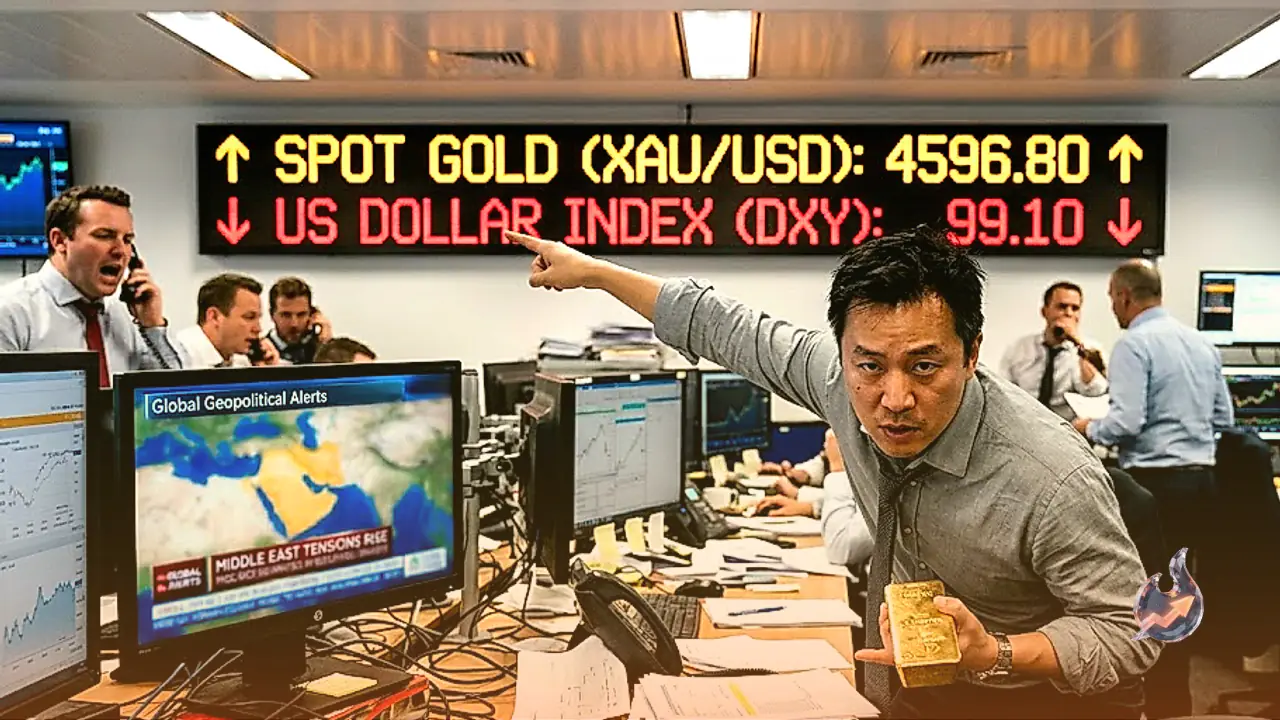
In other foreign exchange pairs, GBP/USD (Cable) maintained its daily gains overall but retreated toward the 1.3630 to 1.3620 price range on Thursday. This slight pull-back occurred despite a modest rebound in the Greenback, as market participants prepared for critical economic data releases scheduled on the UK economic calendar on Friday. Meanwhile, spot gold (XAU/USD) traded steadily above the $4,500 per ounce threshold during Friday's Asian trading session. The precious metal received underlying support as reduced bets on aggressive Fed rate hikes kept US Dollar bulls restrained. However, higher US Treasury yields, driven by energy market volatility amidst the ongoing US-Iran standoff, capped broader upside gains for the non-yielding asset. Despite these headwind constraints, XAU/USD remains firmly on track to register gains for a third consecutive week.