























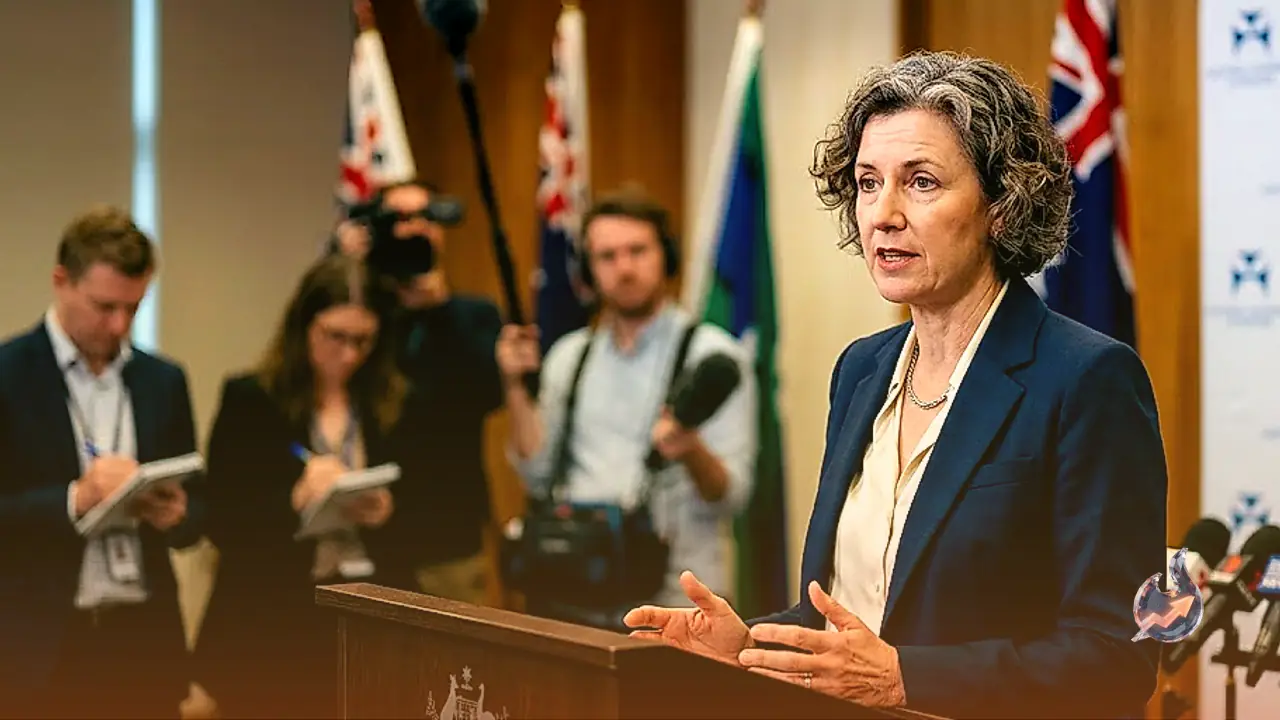

Reserve Bank of Australia Assistant Governor Hunter noted on Tuesday that the housing market serves as an essential transition mechanism for monetary policy. Hunter added that the central bank is actively looking to cool conditions down across both the residential property sector and the broader economy.
Aims to Cool the Housing Market and Broader Economy
The central bank official emphasized that policymakers want to see a weaker economy relative to trend levels in order to manage inflationary pressures effectively. While the direct effect of house price changes on overall consumer spending remains relatively small, authorities continue to monitor these dynamics closely. Officials do not anticipate a recession in the economy, but they maintain a firm stance on reining in excessive momentum.
Inflation Remains the Top Priority for the Board
The board has repeatedly made it clear that inflation is its primary concern and that it maintains a low tolerance for elevated price pressures. Although the July CPI data represented just a single month of readings, the central bank remains vigilant. Hunter indicated that the board may need to hike interest rates further if inflation looks set to intensify moving forward. Meanwhile, authorities are monitoring the Bathla situation closely, though no systemic risks have been identified at this stage.
Overview of the Reserve Bank of Australia
The Reserve Bank of Australia is responsible for setting interest rates and executing monetary policy for the nation. Decisions are formulated by a board of governors during eleven scheduled meetings each year, alongside any ad hoc emergency sessions required by economic developments. The primary mandate of the RBA is to maintain price stability, targeting an inflation rate between 2% and 3%, while also contributing to currency stability, full employment, and the overall economic prosperity of the Australian people. The bank primarily utilizes interest rate adjustments, alongside quantitative easing and tightening measures, to achieve its objectives.
How Inflation and Capital Flows Impact the Australian Dollar
While inflation was traditionally viewed as a negative factor for currencies due to the erosion of purchasing power, modern capital market dynamics often reverse this relationship. With the relaxation of cross-border capital controls, moderately higher inflation frequently prompts central banks to raise interest rates. Higher rates attract global investors seeking lucrative returns, thereby increasing demand for the local currency, which in Australia is the Aussie Dollar.
Macroeconomic Data and Currency Valuation
Macroeconomic indicators measure the ongoing health of an economy and directly influence currency valuations. Global investors prefer deploying capital into safe and expanding markets rather than contracting or unstable ones. Stronger capital inflows naturally boost aggregate demand and elevate the domestic currency. Key indicators such as Gross Domestic Product, manufacturing and services PMIs, employment reports, and consumer sentiment surveys all shape the trajectory of the Aussie Dollar.
Understanding Quantitative Easing and Tightening
Quantitative Easing is deployed in extreme economic scenarios when lowering interest rates alone is insufficient to restore credit flows. Through QE, the central bank prints Australian Dollars to purchase government and corporate bonds from financial institutions, injecting necessary liquidity into the system. This policy generally results in a weaker domestic currency. Conversely, Quantitative Tightening is implemented during economic recoveries when inflation begins to rise. Under QT, the RBA ceases purchasing new assets and stops reinvesting principal payments from maturing bonds, a process that is typically positive or bullish for the Aussie Dollar.
Broader Market Context and Currency Movements
During the Tuesday Asian session, the AUD/USD pair held above the 0.7200 threshold, hovering near its strongest levels since May 14. The US Dollar remained under sustained pressure as a rallying Japanese Yen offset support derived from hawkish Federal Reserve expectations and ongoing geopolitical tensions. Meanwhile, the USD/JPY pair languished near six-month lows around 153.50, driven by upbeat Japanese wage growth data and Q2 GDP revisions that cemented bets on an upcoming Bank of Japan rate hike. In energy markets, while crude oil appeared calm, diesel prices surged significantly, with the US diesel crack spread recently topping $100 per barrel for the first time.