
























Global financial markets are witnessing heightened activity across foreign exchange, commodities, digital assets, and energy sectors as central bank policy directions come into sharp focus. Market participants are closely analyzing central bank signals, ranging from potential hawkish shifts by Sweden's central bank to the eagerly awaited address by Federal Reserve Chair Kevin Warsh at the Jackson Hole Symposium. Inflationary pressures, currency depreciations, and supply chain dynamics in refined fuels are creating distinct movements across major asset classes.
Riksbank Policy Outlook and Swedish Krona Volatility
Sweden's currency dynamics have drawn intense scrutiny from institutional analysts following recent macroeconomic disclosures. Bank of New York Mellon analyst Geoff Yu has highlighted growing inflation risks stemming from the persistent weakness of the Swedish krona and accelerating import prices. According to analysis from BNY, the Riksbank is expected to adopt considerably firmer communication regarding krona valuations, opening up clear scope for financial markets to bring forward their expectations for the central bank's next interest rate increase.
Geoff Yu observed that the initial market reaction to the Riksbank's August policy decision appeared misaligned with official guidance. While price action across foreign exchange markets suggested that investors viewed the board's decision as dovish, Riksbank Governor Erik Thedéen explicitly clarified that the next monetary policy move remains a rate hike. The perception that the policy decision was not entirely clear-cut applies in both directions, creating an equal risk that the forecasted path for repo rate tightening could be accelerated. This stems directly from clear upward momentum in domestic inflation metrics.
A primary concern for monetary authorities is the performance of the KIX import price index, an essential benchmark tracked by the Riksbank to gauge foreign price transmission. The KIX index has surged significantly ahead of general exchange rate movements. While historical fluctuations between the US dollar and euro previously helped smooth out price swings for Sweden, current currency movements indicate that the krona is increasingly being utilized as a funding currency. This structural shift requires a substantial policy offset from the central bank.
Historically, the Riksbank has demonstrated a willingness to take decisive action regarding exchange rate valuations, standing out as one of the few G10 central banks that explicitly targets a stronger currency to achieve its inflation targets. With the KIX index repeatedly exceeding official projections and compounding inflationary risks, market observers anticipate more aggressive verbal intervention from policymakers at a minimum, which could eventually translate into unexpected policy tightening. Although market consensus currently does not price in a full rate hike until next year, the prevailing risk-reward balance strongly favors advancing that timeline.
European Central Bank Signals and EUR/USD Weakness
In European currency trading, the euro remained under persistent pressure on Thursday, sliding below the 1.1650 handle to reach its lowest level in a week. The single currency failed to gain support following the publication of accounts from the European Central Bank's recent policy meeting. Investors found little impetus in the ECB documentation to boost confidence in the euro's immediate path.
Concurrently, a cautious mood across global financial markets continued to bolster demand for the US dollar as a safe-haven asset, adding further downward pressure on the EUR/USD pair. Currency traders are exercising restraint, refraining from aggressive positioning prior to Federal Reserve Chair Kevin Warsh's scheduled address at the Jackson Hole Symposium on Friday. The policy guidance delivered at this key central banking forum is expected to dictate the broader directional momentum for the currency pair.
British Pound Consolidates Ahead of Jackson Hole Address
The British pound experienced consolidated trading activity during European business hours on Thursday, lingering near the lower boundary of its weekly trading range below the 1.3600 level. Despite the prevailing softness, downside movement for the GBP/USD pair remained contained as market participants adopted a wait-and-see stance.
Traders in sterling markets are focusing almost exclusively on upcoming monetary policy cues from the United States. Federal Reserve Chair Kevin Warsh's speech on Friday is expected to provide essential insights into the future interest rate trajectory of the US central bank, helping market participants determine whether new directional bets on the pound are warranted.
Gold Trades Near Weekly Lows Around $4,600 Threshold
Precious metals markets reflected broader market caution, with gold prices hovering near the $4,600 per ounce benchmark throughout the first half of Thursday's European session. The bullion remained positioned close to the weekly low established during the previous trading session, as investors showed reluctance to push prices significantly in either direction.
The downside risk for gold appears restricted for the moment, as market participants await concrete signals regarding monetary policy. Because gold is a non-yielding asset, its price dynamics are heavily influenced by interest rate expectations and US dollar strength. The upcoming Jackson Hole address by Fed Chair Kevin Warsh is expected to act as the primary catalyst for precious metal valuations in the near term.
Crypto Market Resilience: Bitcoin Nears $80,000 Milestone
In contrast to traditional foreign exchange markets, digital asset markets demonstrated broad positive momentum on Thursday. Leading cryptocurrency Bitcoin spearheaded the upward movement, advancing toward the $80,000 threshold. The short-term bullish sentiment surrounding Bitcoin provided a favorable backdrop for the wider crypto ecosystem.
Altcoins tracked Bitcoin's upward trajectory, reflecting widespread gains across major tokens. Ethereum maintained a firm footing above the $2,500 level, while Ripple (XRP) continued to trade above its critical support zone at $1.40. Market technicals suggest that key support levels are holding firm as digital asset investors remain optimistic.
Energy Sector Alert: US Diesel Crack Spread Hits Record $102
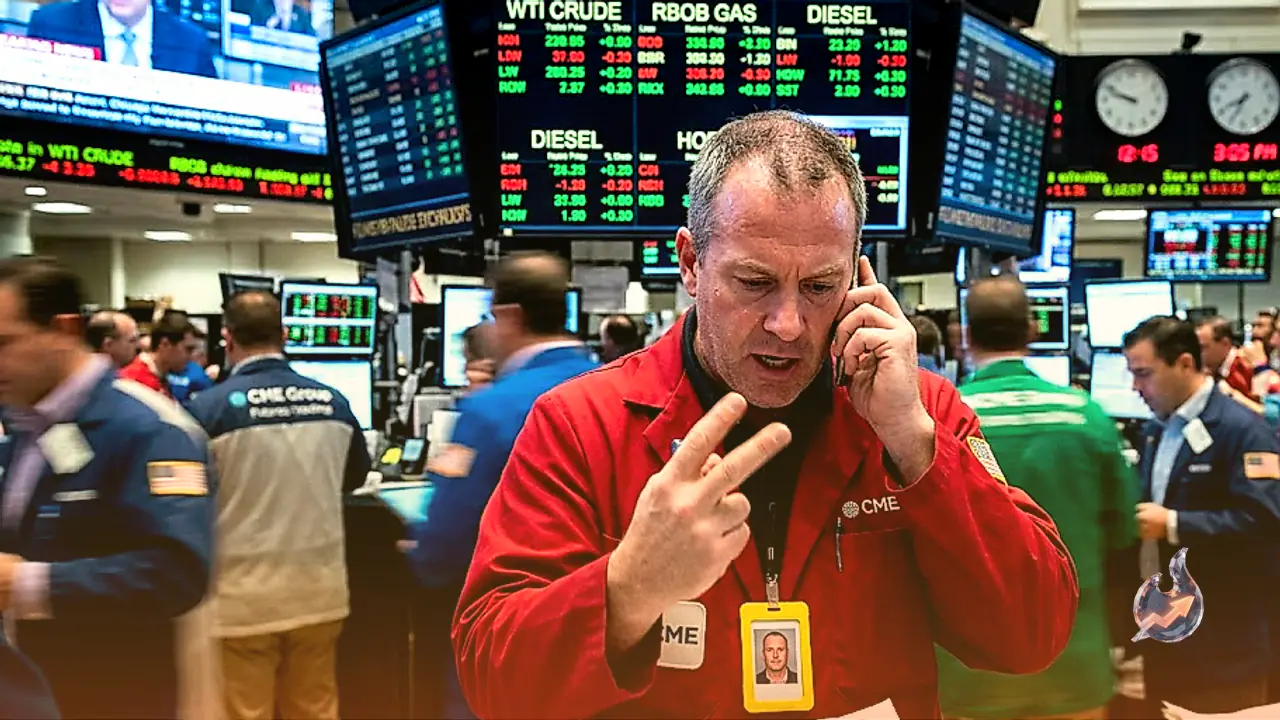
While global crude oil markets have displayed relative calm compared to previous months, the refined products sector is sending stark signals of supply tightness. The US diesel crack spread, which measures the differential between ultra-low sulphur diesel futures and West Texas Intermediate (WTI) crude oil futures, surged past the $100 per barrel mark for the first time in history.
During intraday trading, the diesel crack spread reached an all-time record of just over $102.00 per barrel. This unprecedented spread underscores acute pressures in refining capacity and middle distillate supplies, standing in sharp contrast to the broader stabilization seen in benchmark crude oil prices.
Anticipation Builds for Fed Chair Kevin Warsh's Jackson Hole Speech
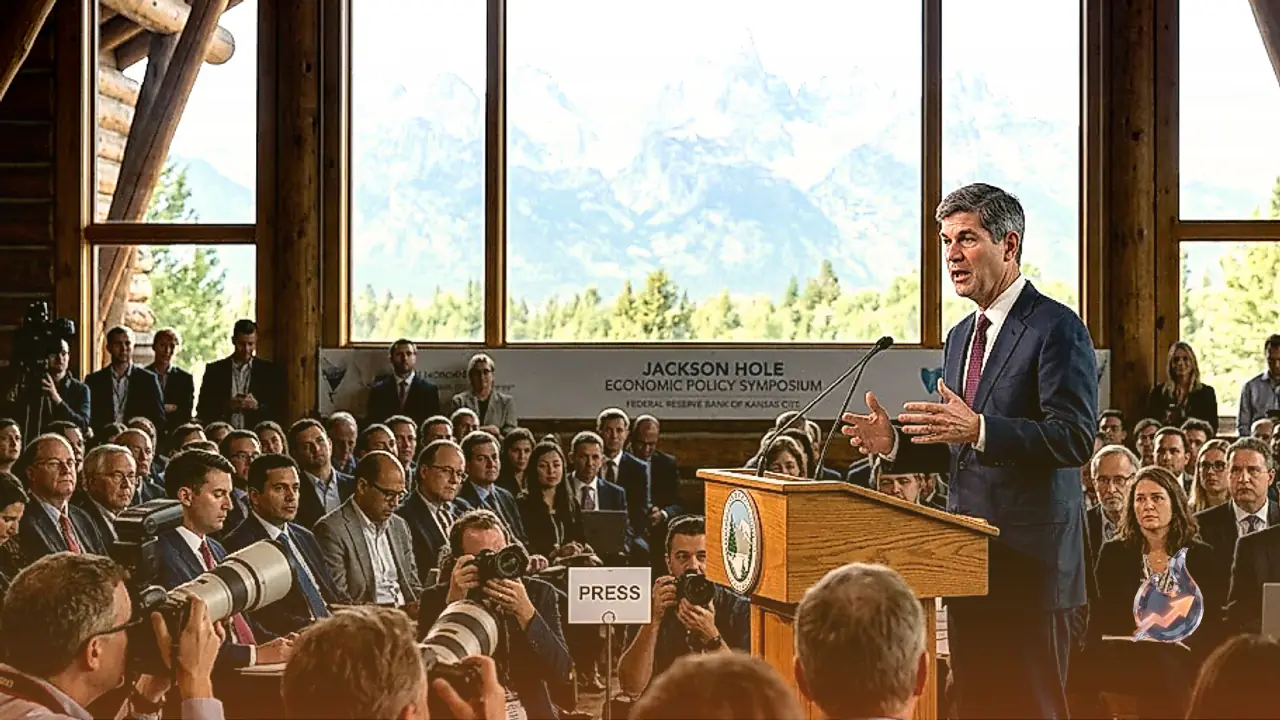
Global financial attention is heavily concentrated on Federal Reserve Chair Kevin Warsh as he prepares to deliver his maiden Jackson Hole speech in his capacity as Fed Chair on Friday. Market expectations surrounding this address extend far beyond immediate questions of whether interest rates will be adjusted or held steady at the upcoming September policy meeting.
Central bank watchers and institutional investors are seeking broader clarity on long-term monetary policy framework, inflation management strategies, and economic growth forecasts. The stance articulated by Warsh is anticipated to reverberate across global currency, bond, commodity, and equity markets, setting the tone for financial conditions into the final months of the year.