
























Global financial markets are navigating a complex economic landscape as central bankers evaluate persistent inflationary pressures alongside emerging supply shocks. Federal Reserve official Schmid highlighted that recent energy market disruptions are increasingly leaking into the broader economy. Emphasizing that inflation remains sticky and stubborn, Schmid noted that the central bank faces a clear mandate to restore inflation back to its 2% target. With the upcoming policy meeting on the horizon, uncertainty lingers regarding how restrictive current monetary settings truly are. The official indicated that policymakers require further comprehensive information before modifying existing interest rate trajectories. Additionally, adjusting the Federal Reserve balance sheet will inevitably take considerable time, even as discussions continue regarding potential options to hold fewer policy meetings in the future.
Jackson Hole Symposium and Chair Warsh Address Take Center Stage
Market participants worldwide are shifting their immediate focus to Friday's Jackson Hole Symposium, where Kevin Warsh is scheduled to deliver his first speech as Federal Reserve Chair. Expectations surrounding Chair Warsh's address extend well beyond the immediate decision of whether interest rates will be increased or left unchanged at the September meeting. Traders and analysts are seeking definitive guidance on the broader path of US monetary policy amidst shifting macroeconomic conditions. Ahead of the event, the US Dollar exhibited a cautious tone, while investors prepared for key data releases scheduled for Friday, including crucial revisions to Non-Farm Payrolls (NFP) figures that could offer fresh insight into labor market momentum.
Diesel Crack Spread Reaches Unprecedented Heights
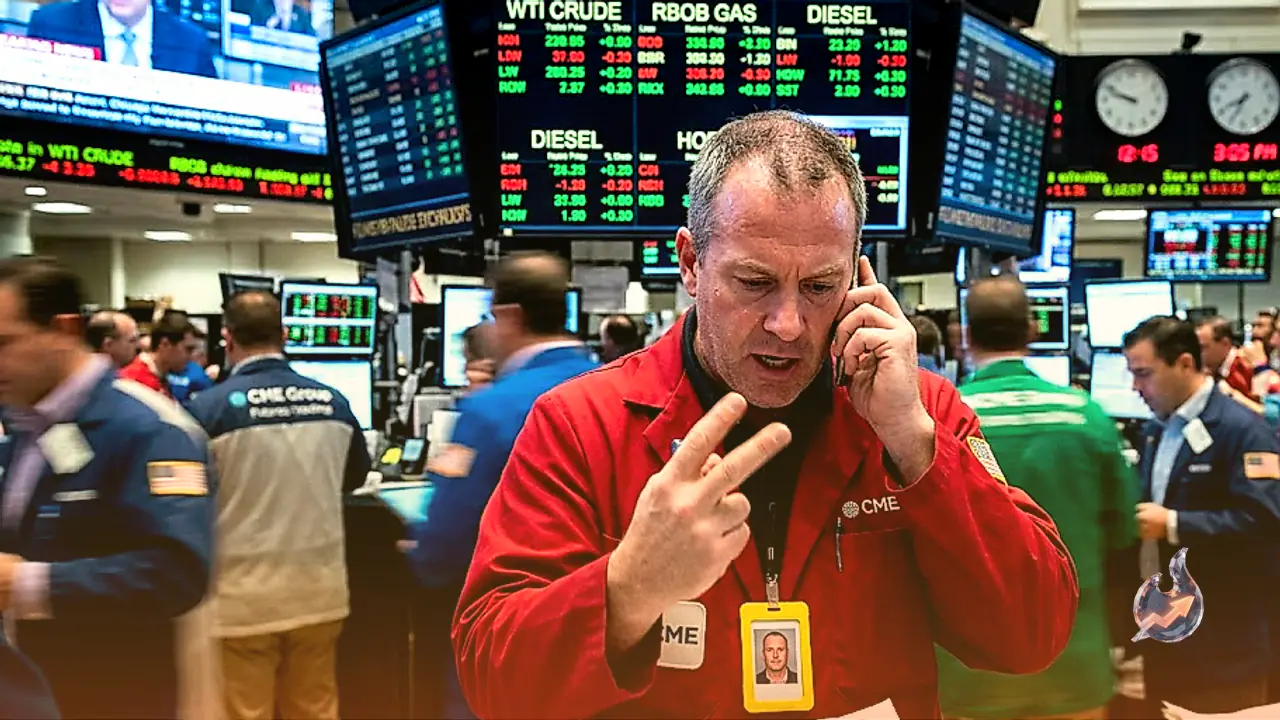
While headline crude oil prices have appeared relatively stable compared to previous months, the middle distillate market is signaling underlying distress. The US diesel crack spread, which measures the differential between ultra-low sulphur diesel futures and WTI crude futures, recently surged past $100 per barrel for the first time on record. The spread posted an intraday record high of just over $102.00 per barrel. This historical spike in diesel refining margins underscores severe tightness in transport fuel supplies, creating cost pressures across supply chains that threaten to pass through into broader consumer price inflation.
Foreign Exchange Dynamics Across Major Currency Pairs
Foreign exchange markets displayed selective movement against the backdrop of broad market caution. The GBP/USD exchange rate managed to gather upside traction on Thursday after initially dipping to fresh six-day lows. The currency pair trimmed its losses to trade just shy of the key 1.3600 technical barrier. Simultaneously, EUR/USD recovered its footing, reclaiming the mid-1.1600s after erasing earlier weakness. The slight recovery across major European currencies coincided with marginal movements in the Greenback as traders refrained from taking aggressive directional bets prior to Chair Warsh's symposium speech.
Interactions Between Central Bank Policy, Gold, and Yields
Central banks generally operate under strict mandates to maintain price stability, typically aiming for a core inflation rate around 2%. When inflation accelerates significantly above this benchmark, monetary authorities normally respond by raising base lending rates to cool demand. Conversely, when inflation drops below target, central banks may lower lending rates to stimulate credit growth and economic expansion. Higher base interest rates usually strengthen a national currency by attracting international yield-seeking capital. However, elevated interest rates tend to weigh heavily on Gold, as higher yields increase the opportunity cost of holding non-yielding precious metals relative to cash or fixed-income assets. Reflected in this environment, Gold extended its midweek retreat on Thursday, falling toward new weekly lows near $4,570 per troy ounce.
Crypto Assets Firm Up as Markets Monitor Fed Rate Framework
In contrast to precious metals, cryptocurrency markets edged higher on Thursday, buoyed by positive sentiment across major digital assets. Bitcoin led the sector's uptick, trading close to the $80,000 threshold. Altcoins largely reflected Bitcoin's short-term bullish technical pattern, with Ethereum maintaining its position above $2,500 and Ripple holding above its crucial $1.40 support level. Market participants continue to monitor the Fed funds rate, the benchmark overnight rate at which commercial banks lend reserves to one another. Formally set by the Federal Open Market Committee (FOMC) as a target range, such as 4.75%-5.00% where the 5.00% upper limit represents the benchmark headline rate, expectations surrounding future rate paths remain actively tracked through tools like the CME FedWatch index.