
























Federal Reserve official Austan Goolsbee has issued a clear warning that political pressure on central banks risks fueling broader inflation. He noted that political interference puts monetary policymakers on edge and historically drives up price pressures. His remarks arrive at a critical juncture for global financial markets, as investors closely monitor economic indicators and prepare for Federal Reserve Chair Kevin Warsh's upcoming speech at the Jackson Hole Symposium alongside Friday's revisions to Nonfarm Payrolls data.
Central Bank Independence and Short-Term Inflation Risks
Reflecting on current economic dynamics, Goolsbee highlighted that tariffs and war-related price surges pose an ongoing challenge for the central bank. He candidly stated that political pressure on monetary policy decisions places him on edge, warning that interference with central bank autonomy generally results in higher inflation. Despite these headwinds, he characterized the broader economy as largely stable, though he described the present labor market pattern of low hiring alongside low firing as distinctly unusual.
Goolsbee emphasized that the primary short-term fear remains whether inflation is fully brought under control. However, he observed that three-month inflation metrics do not look terrible. Moving forward, he stressed that policymakers must carefully evaluate what incoming economic data suggest for the interest rate trajectory before enacting further policy changes.
Inflation Dynamics, Core CPI Targets, and Interest Rate Transmission
Inflation quantifies the rate of price increases across a representative basket of goods and services. Headline inflation is traditionally measured as a percentage change on both a month-on-month and year-on-year basis. Core inflation excludes volatile food and energy components, which often swing due to geopolitical and seasonal factors. Economists and central bankers focus heavily on Core CPI because central banks are mandated to maintain stable prices, typically targeting a rate around 2%.
When Core CPI climbs above the 2% target, central banks generally respond by hiking interest rates to cool economic activity. Conversely, when Core CPI falls below 2%, interest rates are typically lowered. Higher interest rates enhance currency valuations by attracting international capital inflows from investors seeking higher yield returns. Conversely, lower inflation expectations lead to reduced interest rates, which tend to weigh on currency values.
This interest rate dynamic also shapes the behavior of Gold. Traditionally, Gold serves as a safe-haven asset during periods of severe inflation or acute market distress. However, under typical market conditions, elevated inflation prompts central banks to raise interest rates. Higher yields increase the opportunity cost of holding non-interest-bearing assets like Gold compared to cash deposits or fixed-income instruments. When inflation cools and interest rates decline, the opportunity cost falls, making Gold a more attractive investment alternative.
Foreign Exchange Shifts and Gold Pullback
Foreign exchange markets witnessed notable price action on Thursday. Following an initial drop to fresh six-day lows, GBP/USD regained upward momentum, trading just shy of the 1.3600 threshold. Market participants maintained a cautious stance ahead of Friday's economic releases and Federal Reserve communications, providing underlying support to the US Dollar.
Similarly, EUR/USD managed to trim its earlier intraday losses, reclaiming the mid-1.1600s on Thursday. The currency pair's recovery came despite modest gains in the US Dollar index, as traders turned their attention toward Friday's upcoming NFP data revisions and Chair Kevin Warsh's speech at the Jackson Hole Symposium.
In precious metals, Gold extended its pullback from Wednesday, touching new weekly lows around $4,570 per troy ounce on Thursday. The metal remained under pressure despite general market caution and a lack of clear directional momentum in the US Dollar.
Cryptocurrency Strength and Record Diesel Crack Spreads
Cryptocurrency prices trended higher on Thursday, led by Bitcoin advancing toward the $80,000 mark. Altcoins mirrored Bitcoin's short-term bullish momentum, with Ethereum trading comfortably above $2,500 and Ripple maintaining its position above key support at $1.40.
In energy markets, while crude oil trading appeared relatively calm, diesel markets signaled significant tight supply conditions. The US diesel crack spread, which measures the premium of ultra-low sulfur diesel futures over WTI crude oil, surged above $100 per barrel for the first time on record, touching an intraday peak of just over $102.00.
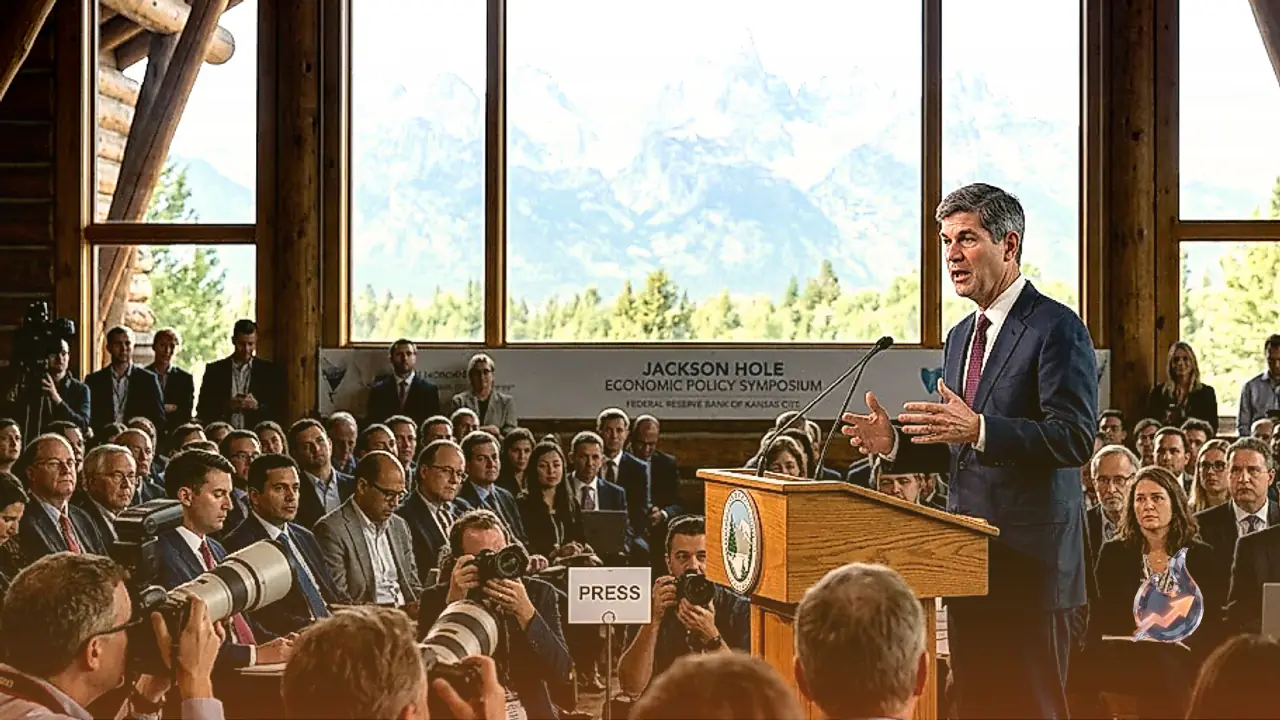
Market participants are now focused on Friday's address by Kevin Warsh at Jackson Hole, where his debut speech as Fed Chair is expected to set expectations for upcoming September interest rate decisions and broader monetary strategy.