
























Global financial markets are navigating a complex landscape shaped by evolving central bank policy expectations, crucial macroeconomic data revisions, and shifting commodity prices. Financial projections indicate that the European Central Bank may proceed with a series of deliberate monetary policy adjustments in the coming quarters. At the same time, market participants across the globe are maintaining a cautious stance ahead of major policy statements from the Federal Reserve and impending labor market revisions in the United States.
European Central Bank Monetary Policy Horizon
The outlook for the European Central Bank suggests a structured approach toward monetary tightening over the medium term. Baseline projections anticipate that the central bank will likely implement 25 basis point rate increases at a quarterly frequency. This policy trajectory points to potential rate hikes occurring in September, December, and March 2027. If this schedule materializes as projected, it would gradually elevate the central bank deposit rate to a terminal target of 3%.
Currently, the absence of pronounced second-round inflation effects provides policymakers with sufficient latitude to observe ongoing macroeconomic conditions without immediately resorting to aggressive policy measures. However, financial assessments highlight that this measured pace remains contingent on broader price stability dynamics. A shift toward faster, pre-emptive rate increases could be triggered if underlying economic conditions escalate significantly.
Specific indicators that could justify a more aggressive monetary stance include an unanchoring of long-term inflation expectations, clear signals of rising underlying price pressures, or a widespread tendency among commercial firms to adjust prices at a more rapid frequency than historically observed. For the time being, analysts evaluate the balance of risks as leaning slightly toward fewer rate increases rather than an accelerated sequence of hikes.
Federal Reserve Signals and Jackson Hole Symposium
In the United States, investor attention is squarely focused on the upcoming Jackson Hole Symposium, where Federal Reserve Chair Kevin Warsh is scheduled to deliver his first major address in this official capacity. Financial markets are closely scrutinizing the event for fresh guidance on the future direction of US monetary policy. Market expectations extend well beyond immediate interest rate decisions for the upcoming September meeting, as traders seek insights into long-term inflation targets and central bank balance sheet strategy.
Adding to the cautious market sentiment is the anticipation surrounding Friday's release of revised Non-Farm Payrolls data. The impending labor market figures, combined with key central bank speeches, have provided underlying support for the US Dollar, prompting traders to adopt a watchful approach across major currency pairs.
Foreign Exchange Market Trends
Currency markets reflected this prevailing caution with noticeable fluctuations across major trading pairs. The British Pound against the US Dollar (GBP/USD) initially registered a decline to fresh six-day lows before regaining upward momentum. The currency pair managed to recover lost ground, advancing back toward levels just below the 1.3600 technical barrier on Thursday.
Similarly, the Euro demonstrated resilience against the Greenback. The EUR/USD pair trimmed its session losses and reclaimed trading levels in the mid-1.1600 zone. This recovery occurred even as the US Dollar posted marginal gains, illustrating a balanced tug-of-war between European policy expectations and US dollar strength across international foreign exchange desks.
Energy Markets and Diesel Crack Spread Surge
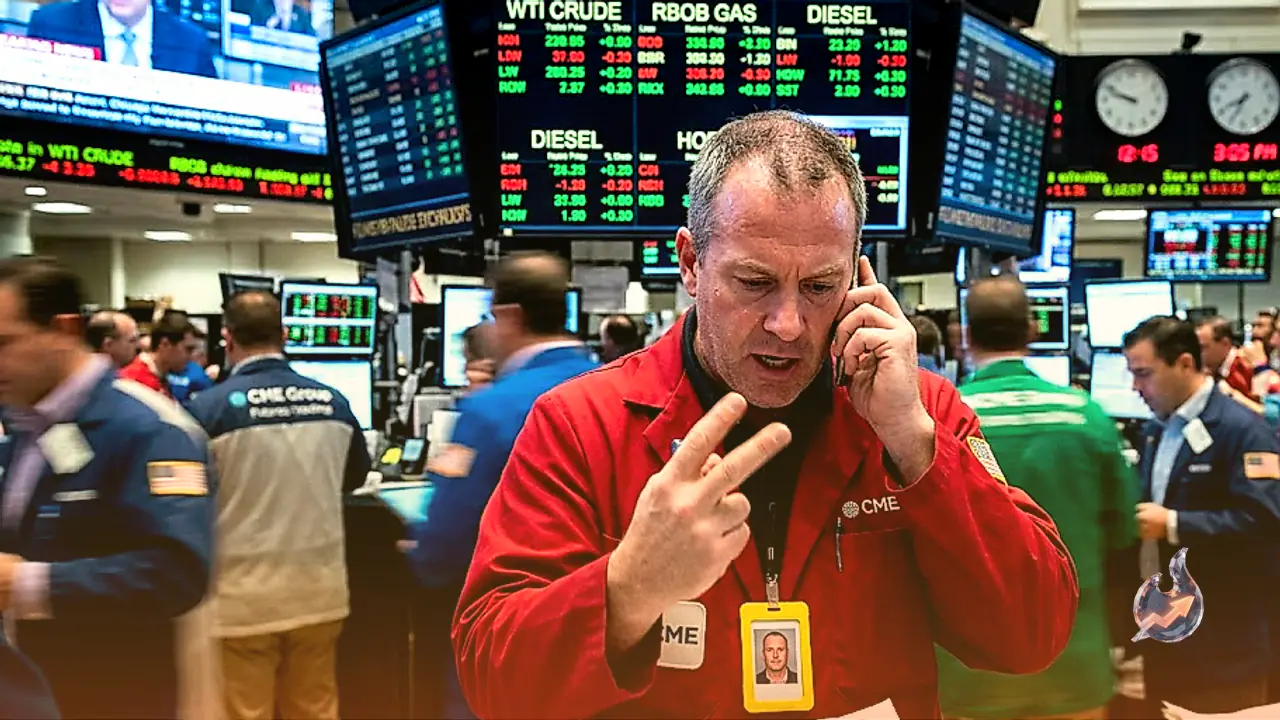
While crude oil markets appeared relatively calm compared to volatile trading sessions seen in previous months, the refined fuel sector displayed significant underlying tightness. A notable development emerged in the distillate market, where the US diesel crack spread experienced an unprecedented rally. The crack spread, which measures the market premium of ultra-low sulfur diesel futures over West Texas Intermediate (WTI) crude oil, climbed above $100 per barrel for the first time on record.
During intraday trading, this key energy metric reached an all-time high of just over $102.00 per barrel. Financial analysts view this surge in the diesel premium as a stark indicator of tight refining capacity and robust structural demand for industrial fuels, standing in sharp contrast to the calmer top-line crude oil market movement.
Precious Metals and Cryptocurrency Performance
Precious metals experienced continued selling pressure on Thursday. Gold extended its previous retreat from Wednesday's trading session, touching new weekly lows near $4,570 per troy ounce. Despite the broader market caution and a lack of clear directional momentum in the US Dollar, gold remained on the back foot as elevated yield expectations weighed on non-yielding asset demand.
Conversely, digital assets recorded broad-based gains. The cryptocurrency market traded higher, driven by Bitcoin advancing toward the $80,000 mark. Altcoins mirrored this positive momentum, with Ethereum trading above the $2,500 threshold and Ripple holding firm above its key $1.40 support level.