





















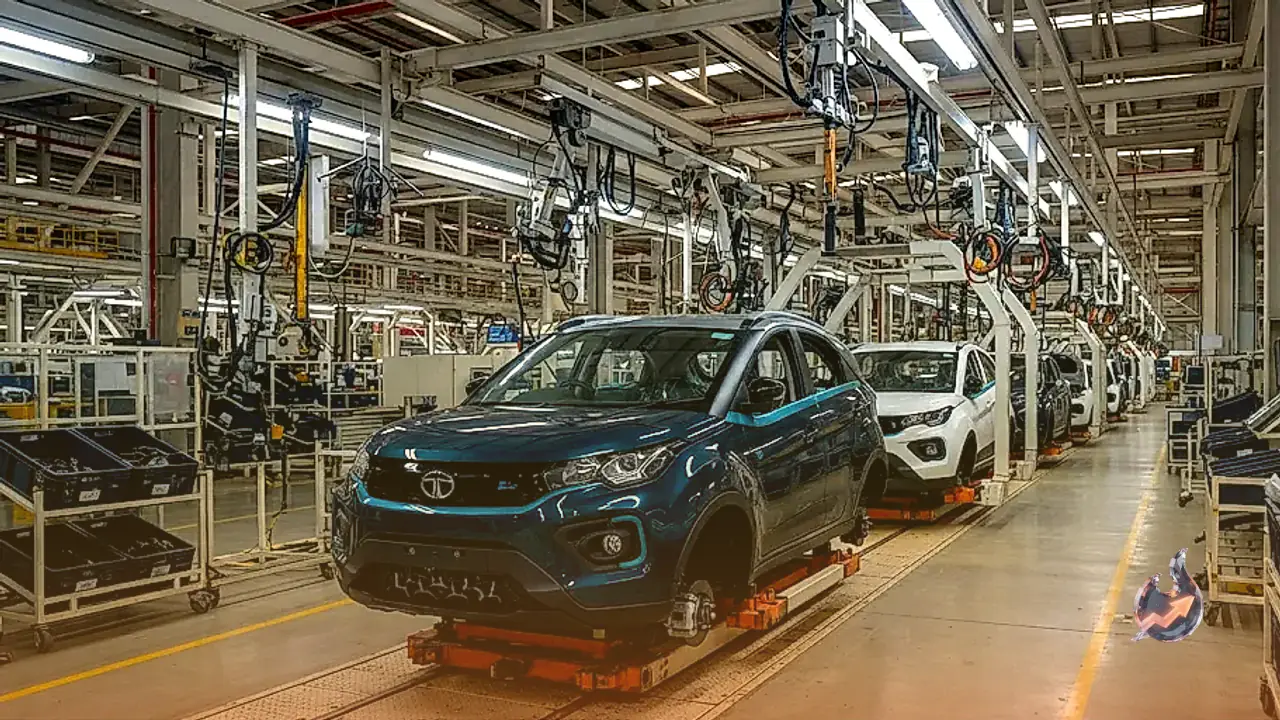

Shares of Tata Motors Passenger Vehicles took a severe beating in Monday trading as investors reacted to weak quarterly financial numbers. The automaker saw intense selling pressure throughout the session, driving the stock down by more than nine percent. The slump followed the company reporting a consolidated net loss of ₹5,531 crore for the September quarter. Sentiment took a further hit after luxury subsidiary Jaguar Land Rover trimmed its revenue and operating margin targets for the ongoing financial year.
Equities Tumble Across BSE and NSE
Selling was visible across both major Indian bourses right from the start of the trading session. On the BSE, Tata Motors Passenger Vehicles fell 9.23 percent to settle at ₹260.50 per share. The drop was mirrored on the NSE, where the stock slid 9.41 percent to finish at ₹260.35. Market participants moved quickly to pare exposure following the weak earnings release and lowered subsidiary forecasts.
Hefty Exceptional Outlays Push Bottom Line into the Red
According to the regulatory filing submitted to stock exchanges, the consolidated net loss of ₹5,531 crore for the July-September period contrasts sharply with the performance of the corresponding period last year. In that previous-year quarter, the company had delivered a net profit of ₹76,170 crore. The sharp reversal in earnings was primarily driven by exceptional one-off charges incurred during the quarter, totaling ₹6,738 crore.
These extraordinary costs included ₹3,776 crore allocated toward employee separation and rationalization payouts. In addition, the automaker recognized an impairment charge of ₹2,856 crore due to markdowns in asset values. Together, these exceptional items heavily depressed quarterly operating earnings and dragged the consolidated performance into negative territory.
Jaguar Land Rover Trims Revenue Target and Profit Margins
Adding to investor caution, luxury brand Jaguar Land Rover signaled a softer outlook ahead. Citing elevated geopolitical risks along with ongoing internal restructuring costs, JLR reduced its top-line forecast for the 2026-27 fiscal year. The unit now anticipates annual revenue of 25 billion pounds, scaled down from its earlier guidance of 26 billion pounds.
The unit's profitability metrics were lowered as well, with projected pre-tax profit margins revised down to a range of 2 to 3 percent, compared to the previously targeted 4 percent. For the September quarter, JLR reported exceptional costs of 530 million pounds, covering workforce rationalization and restructuring expenses.
Top-Line Expansion Overshadowed by Rising Input Expenses
Despite the bottom-line loss, top-line operations registered double-digit growth. Consolidated revenue from operations jumped 34 percent year on year to ₹96,920 crore during the September quarter. However, the top-line momentum failed to cushion earnings because operational expenditures expanded at a similarly aggressive pace.
Total expenses for the period surged to ₹97,827 crore, up from ₹79,310 crore recorded in the same quarter of the prior year. Rising raw material procurement expenses represented the bulk of this pressure, jumping from ₹36,300 crore in the prior-year period to ₹58,825 crore. This sharp increase in input outlays outweighed the revenue gains and eroded operational margins.