





















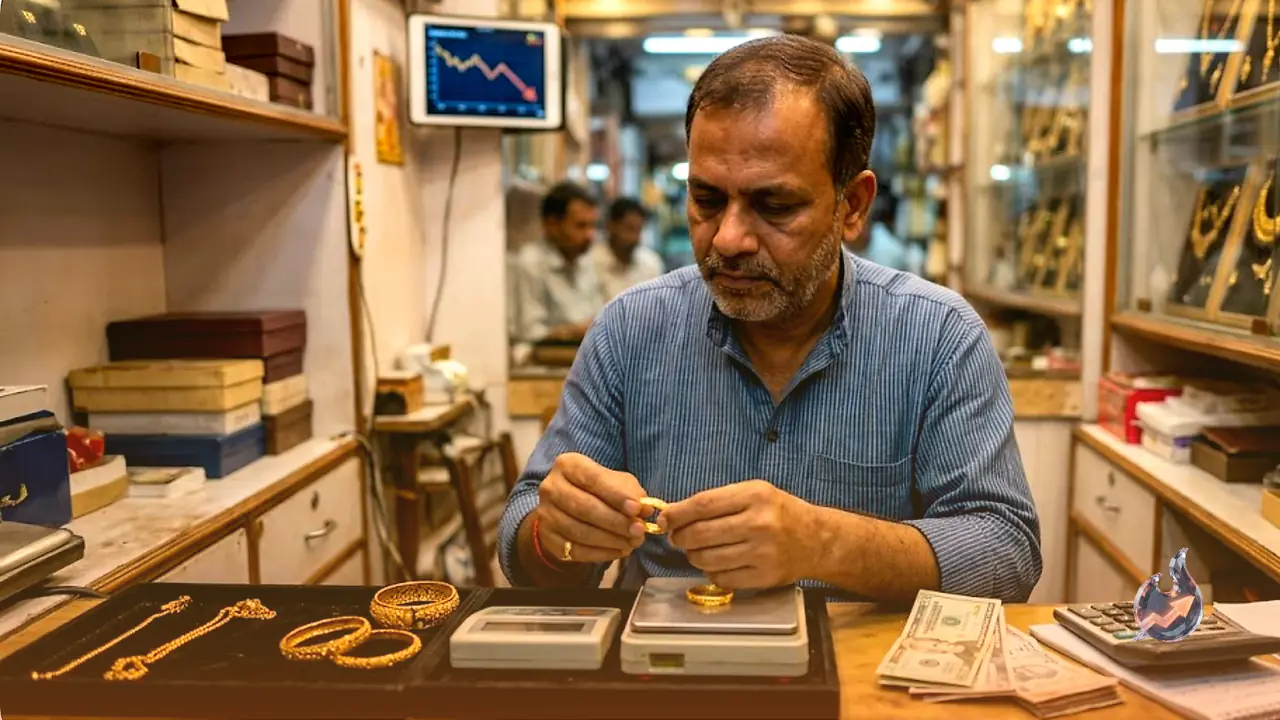

Gold lost a little of its shine in India on Wednesday. The price of one gram dropped to 12,397.88 Indian Rupees, down from 12,536.40 the previous day. The measure that matters most to bulk buyers, the per-tola rate, also fell, sliding to 144,611.40 rupees per tola from 146,222.10 a day earlier.
This marked the second straight session of declines, pushing Gold to a nearly two-week low. What is striking is that even as easing crude oil prices have softened inflation fears, traders are now pricing in a greater chance of a rate hike by the US Federal Reserve. That shift in expectations has kept the market mood tilted against the metal.
The dollar and gold move in opposite directions
Gold's path depends heavily on how the US Dollar behaves, since the metal is priced in dollars (XAU/USD). When the Dollar is strong, Gold prices tend to stay capped, and when the Dollar weakens, Gold usually climbs. The metal also has an inverse relationship with US Treasuries, and both of those are considered major safe-haven assets. When the Dollar depreciates, Gold tends to rise, letting investors and central banks spread their holdings during turbulent times.
Gold is also inversely linked to risk assets. A rally in the stock market tends to pull Gold down, while sell-offs in riskier markets usually send investors rushing toward the precious metal.
What moves the price
A wide range of forces can push Gold up or down. Geopolitical instability or fears of a deep recession can lift the price quickly because of its safe-haven status. Since Gold pays no yield, it tends to rise when interest rates are low, while a higher cost of money usually weighs on the metal. Even so, most of the swings ultimately come back to the Dollar's movements.
Why gold is special
Gold has played a key role throughout human history. For a long time it has been used as a store of value and a medium of exchange. Today, beyond its shine and its use in jewelry, it is widely treated as a safe-haven asset, meaning it is seen as a sound choice during unsettled times. Gold is also viewed as a hedge against inflation and against weakening currencies, because it does not depend on any single issuer or government.
Central banks are the biggest buyers
Central banks hold more Gold than anyone else. To support their currencies in difficult times, they diversify their reserves and buy Gold to strengthen the perceived health of their economy and currency. Large Gold reserves can build trust in a country's solvency. According to the World Gold Council, central banks added 1,136 tonnes of Gold worth around $70 billion to their reserves in 2022, the highest yearly purchase since records began. Central banks in emerging economies such as China, India and Turkey are rapidly expanding their Gold holdings.