























Global financial markets are currently witnessing a period of intense structural shifts, technical consolidations, and geopolitical anxieties. From the currency corridors of Asia and Europe to the volatile domains of cryptocurrency and gold, investors are navigating a complex web of indicators. Underpinning this entire landscape is a historic transition at the Federal Reserve, where newly appointed leadership has begun reshaping monetary expectations.
USD/JPY Consolidates Near Support Levels
In the foreign exchange market, the USD/JPY currency pair continues to display structural resilience, maintaining a constructive outlook that keeps the Japanese Yen under a persistent bearish bias. Financial experts Quek Ser Leang and Lee Sue Ann from United Overseas Bank have highlighted that the pair has successfully held its ground above a vital support level at 161.10. While trading has remained relatively quiet around the 161.78 mark, the underlying technical indicators suggest that the upward momentum for the US Dollar remains intact. For the immediate session, analysts expect a highly restricted trading band between 161.45 and 161.95.
This narrow consolidation follows a previous trading session where the pair fluctuated tightly between 161.54 and 161.94, eventually finishing the day with a marginal gain of 0.01% to close at 161.78. Looking at a broader timeframe of one to three weeks, the positive outlook for the US Dollar is still highly active. As long as the primary support floor at 161.10 is not breached, the primary target is a retest of the 2024 high of 162.00. In the longer term, there is also potential for the pair to probe the upper boundary of a rising wedge pattern near 161.15.
European Majors Struggle for Momentum Amid Geopolitical Fears
Meanwhile, major European currencies are experiencing their own set of unique challenges. The GBP/USD pair has established a steady presence around the 1.3200 level during Friday's European trading hours, building on the positive momentum it achieved during Thursday's close. Despite this stability, a cautious and risk-averse market sentiment is making it increasingly difficult for the Pound to gather any significant bullish momentum. Investors are heavily weighing the implications of the ongoing geopolitical conflict between the United States and Iran, alongside a period of intense volatility within global technology shares.
Simultaneously, the EUR/USD currency pair is finding some traction, advancing toward the 1.1400 region in European trading. This upward movement is primarily a reflection of the US Dollar struggling to find sustained demand across global markets. However, the gains remain capped as traders remain highly sensitive to incoming headlines from the Middle East and the erratic price movements in international tech stocks.
Gold Hovers Above Key Threshold as Fed Policy Looms
The commodity markets are reflecting similar patterns of cautious consolidation. Gold has been trading sideways, locked within a narrow range just above the highly significant $4,000 threshold. While the precious metal managed to secure some modest gains on Thursday, its path toward a broader rally is being blocked by a wall of anxiety. Investors are increasingly concerned about a hawkish policy outlook from the Federal Reserve, which could keep borrowing costs elevated for longer than previously anticipated, thereby reducing the appeal of non-yielding safe-haven assets.
XRP Faces Liquidations and Bearish Pressure
The cryptocurrency sector has not been spared from this wave of market volatility. Ripple's native token, XRP, is currently fighting to maintain its position near the vital psychological support level of $1. This comes after a painful weekly performance during which the digital asset surrendered more than 8% of its value.
The underlying metrics suggest a highly bearish environment, with derivative market data from CoinGlass revealing that a staggering 97% of leveraged XRP long positions were completely wiped out within a single 24-hour window. This massive liquidation event has left the bears firmly in control of the market dynamics, as other key indicators continue to lean heavily in favor of further downside.
Kevin Warsh Dismantles Decade-Old Fed Framework
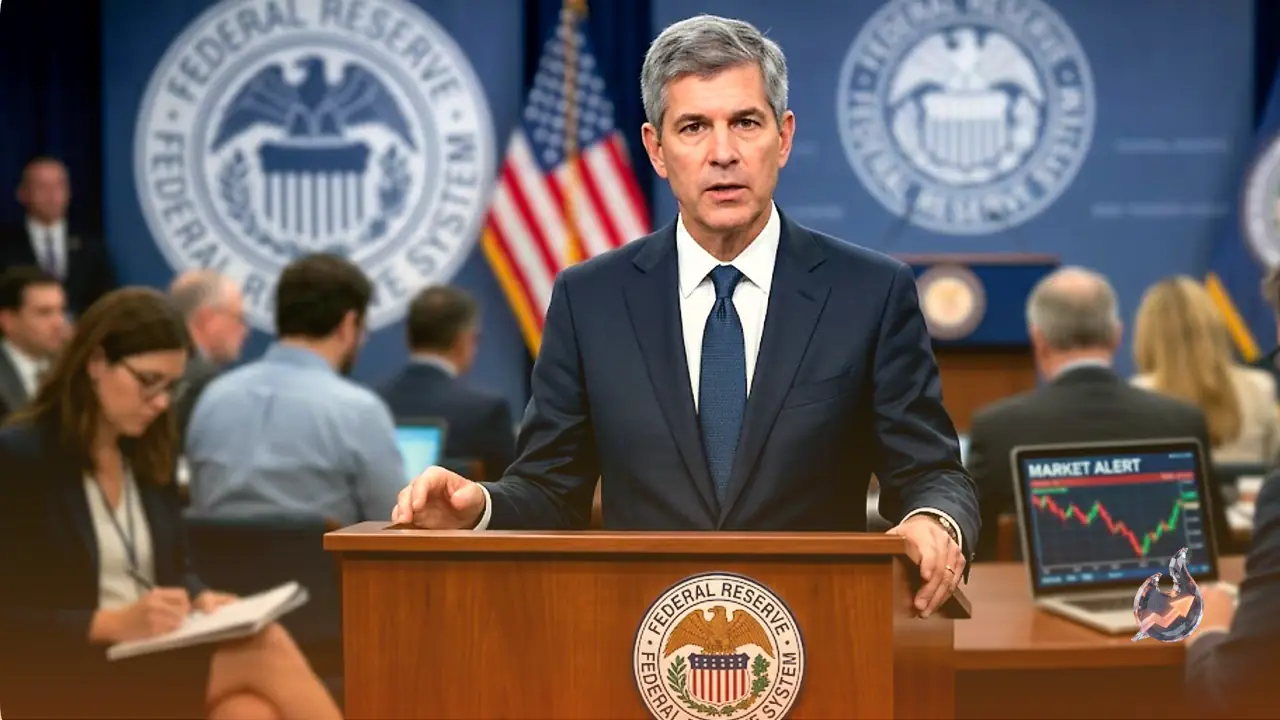
In the midst of these diverse market movements, the most significant structural shock occurred at the Federal Reserve. The Federal Open Market Committee (FOMC) decided to maintain its benchmark interest rate at the 3.50% to 3.75% range for the fourth consecutive meeting. While this decision was fully expected and priced in by market participants, the real surprise came during the post-meeting press conference.
Marking his first meeting as the head of the central bank, the newly appointed Chair, Kevin Warsh, delivered a performance that took global markets by storm. Warsh used his inaugural appearance to systematically dismantle the communication and forward-guidance machinery that financial markets had relied upon for over a decade, signaling a major paradigm shift in how monetary policy will be conducted moving forward.