






















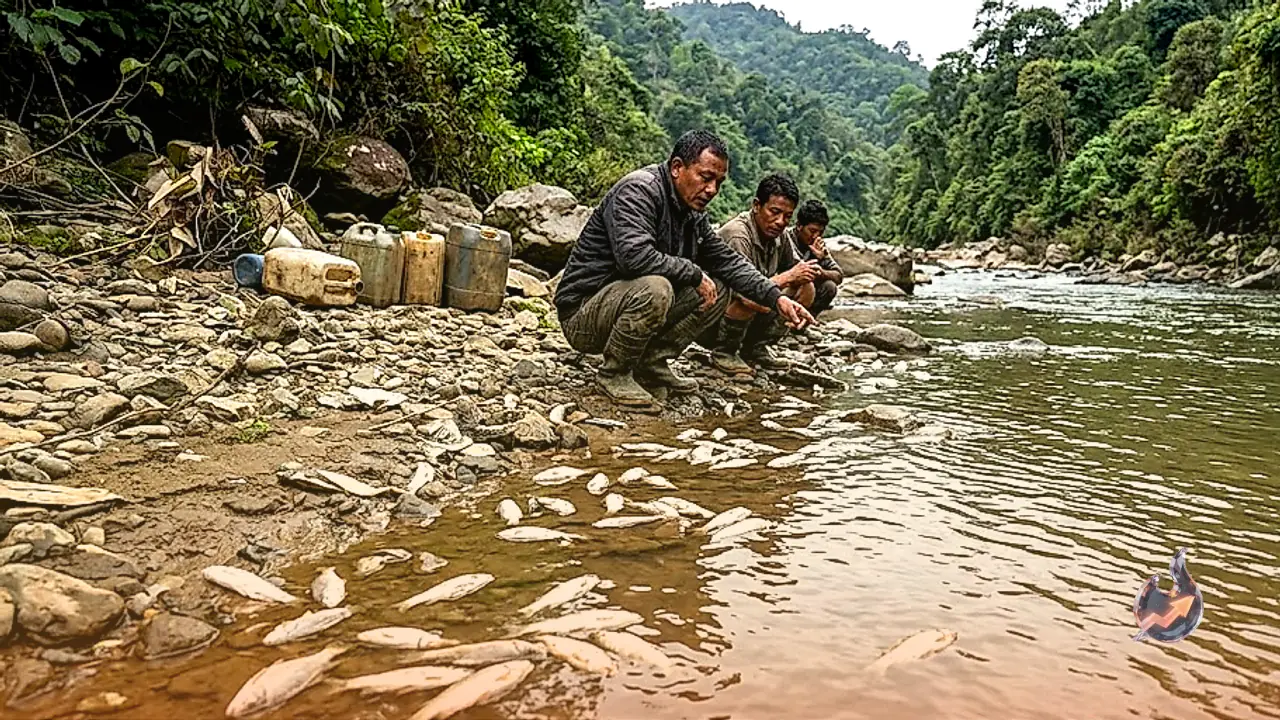

Residents of Umkiang village located in Meghalaya's East Jaintia Hills district have raised serious environmental concerns following the discovery of numerous dead fish floating in the Apha River. The sudden appearance of aquatic life washing up dead has triggered widespread alarm among local communities living along the riverbanks.
Adding to the anxiety, empty containers suspected of previously holding poisonous chemicals were discovered scattered along the riverbank. This finding has heightened fears among villagers that the vital waterway may have suffered severe toxic contamination. However, authorities have noted that the exact cause behind the massive fish mortality has not been officially established yet.
Local inhabitants pointed out that similar distressing incidents have reportedly occurred for three consecutive years, yet the perpetrators responsible for these actions have still not been identified. Expressing deep concern over the recurring nature of the problem, villagers strongly urged the authorities, and specifically the District Council, to launch a thorough investigation, uncover the root cause, and take strict action against anyone found culpable.
Smuggling Suspicions and Calls for Protection
A section of the residents has also expressed suspicions regarding a potential link between the contamination event and alleged cross-border smuggling activities in the region. Despite these theories, no official confirmation has been issued by any governing body to establish a connection between illegal activities and the sudden death of the fish.
This latest environmental scare has renewed urgent discussions among residents regarding the critical need to protect the Apha River from ongoing pollution. Villagers are demanding immediate intervention to halt further degradation of the river ecosystem and to safeguard the livelihoods of local families who depend heavily on fishing for survival. They emphasized that an effective and comprehensive investigation is essential to locate the source of the suspected contamination and enforce preventive measures against future recurrences.