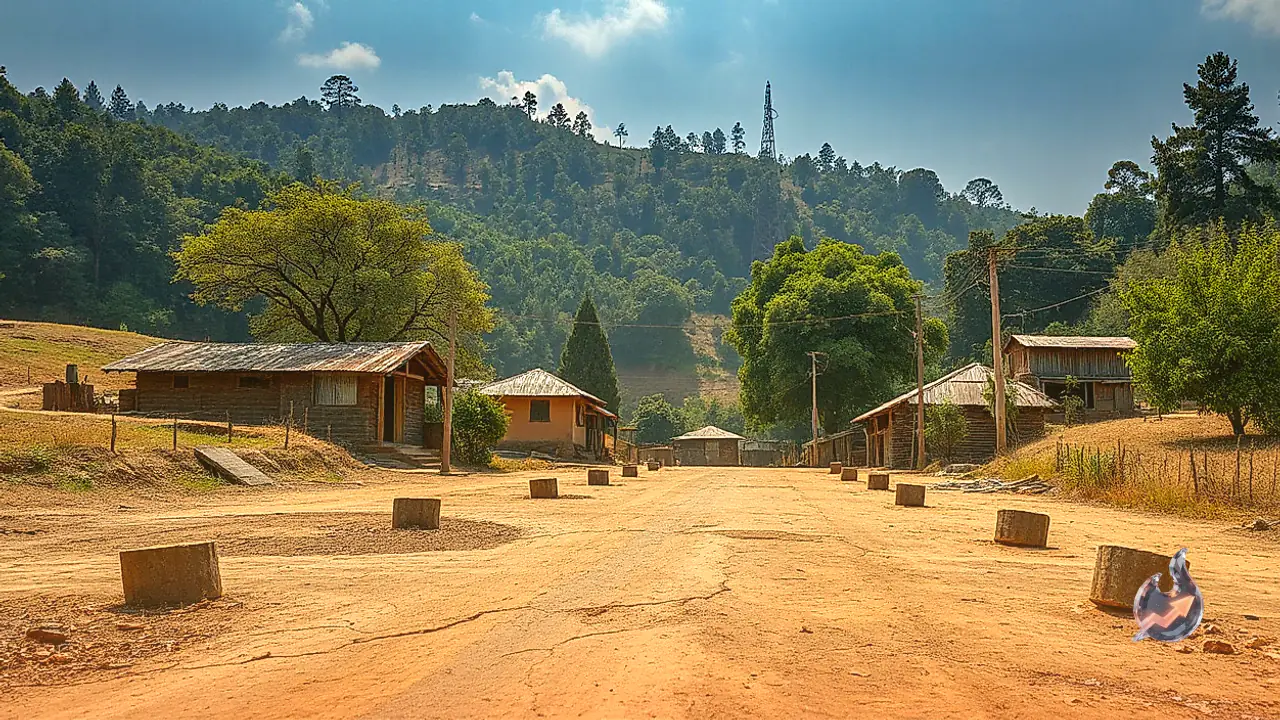

















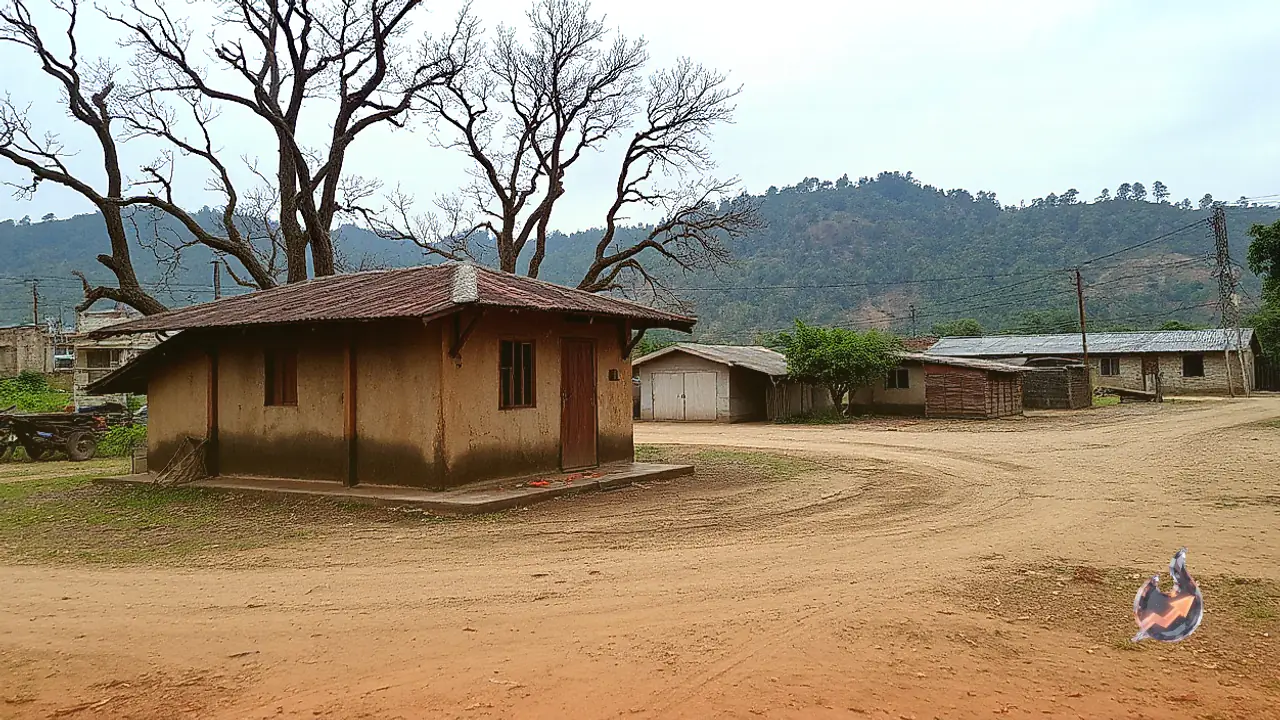

A severe dry spell has gripped the hill state of Meghalaya, with October recording an alarming 85 per cent deficit in precipitation. Official figures from the India Meteorological Department reveal that the state received a mere 38.3 mm of rainfall during the month, compared to its typical monthly normal of 255 mm. This drastic drop has intensified an already critical water shortfall across the region.
All 11 Districts Fall Under 'Large Deficient' Category
The shortfall was widespread and spared no part of the state. The meteorological department classifies rainfall deficits between 60 and 99 per cent as 'large deficient', and all 11 districts in Meghalaya dropped into this bracket during October. Across various regions, the precipitation deficit ranged from 74 per cent to a staggering 93 per cent.
South West Garo Hills suffered the steepest decline at 93 per cent, closely followed by East Jaintia Hills and North Garo Hills, both recording a 92 per cent drop. In East Khasi Hills, the deficit touched 91 per cent, while West Garo Hills experienced an 86 per cent reduction in monthly rainfall.
Further west, South West Khasi Hills and West Khasi Hills each witnessed an 84 per cent rainfall deficit. East Garo Hills and West Jaintia Hills logged shortfalls of 81 per cent and 80 per cent, respectively. Ri Bhoi and South Garo Hills recorded the lowest shortfall in the state, yet both still faced an extensive 74 per cent deficit.
Lingering Deficit Since the Southwest Monsoon
The current dry spell is the continuation of a long-running shortfall throughout the monsoon calendar. Between June and September, the southwest monsoon yielded only 1,077.1 mm of rain across Meghalaya, falling well short of the seasonal baseline of 2,695.3 mm, an overall seasonal deficiency of 60 per cent.
The deficit widened steadily as the season progressed. July recorded a minor 9 per cent gap, but by August, the shortfall had widened sharply to 38 per cent. In August, Meghalaya received just 359.7 mm of rainfall against the expected normal of 581.6 mm. The situation then worsened drastically in October, pushing the shortfall to 85 per cent.
Threat to Natural Springs and Drinking Water Networks
Beyond weather statistics, the prolonged dry weather is directly threatening basic water security. Meghalaya relies heavily on spring-fed hydrology, where rural and urban populations depend on natural springs for drinking water. Prolonged dry conditions curtail groundwater recharge, leaving these fragile water bodies vulnerable to exhaustion.
Chief Minister Conrad K. Sangma had previously acknowledged that several initiatives under the Jal Jeevan Mission were facing severe operational hurdles due to drying sources, unpredictable rainfall, and shifting climatic conditions.
The Public Health Engineering Department has similarly warned of acute vulnerabilities surrounding these sources, particularly during the upcoming dry months. In response, authorities have mapped roughly 55,000 springs across more than 70,000 springsheds, earmarking 785 critical water sources for immediate rejuvenation to protect long-term water availability across the state.