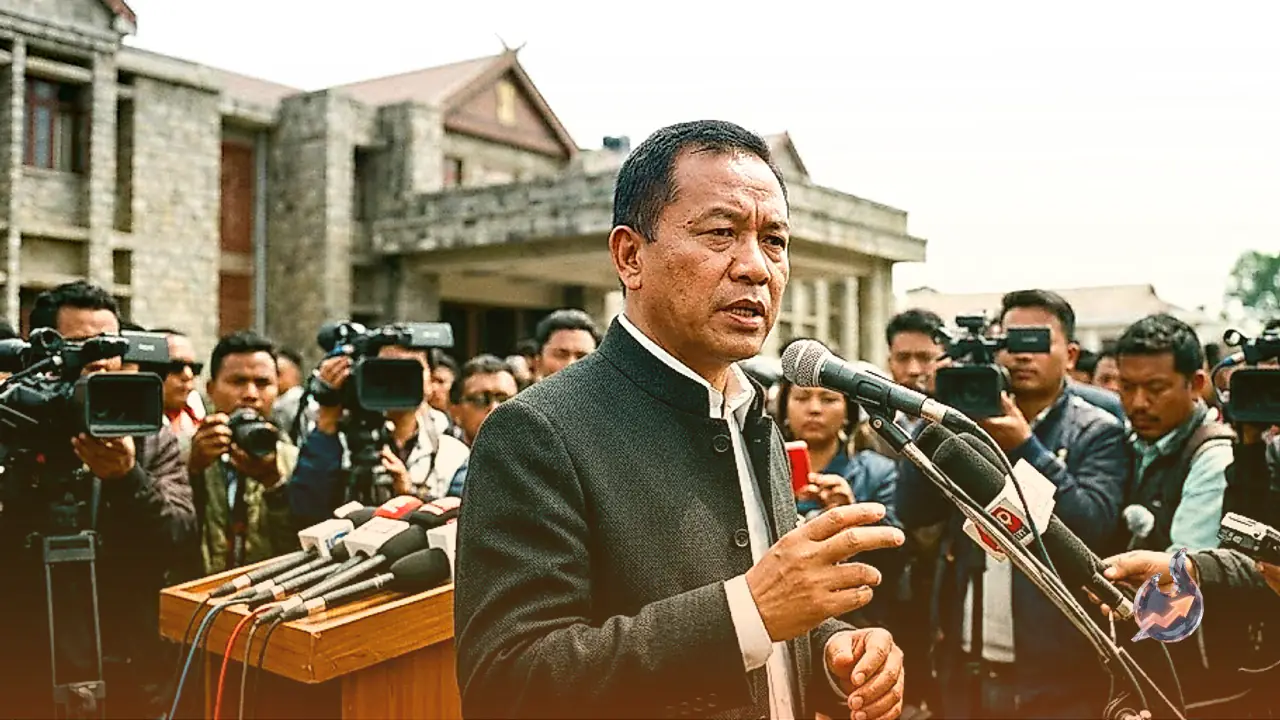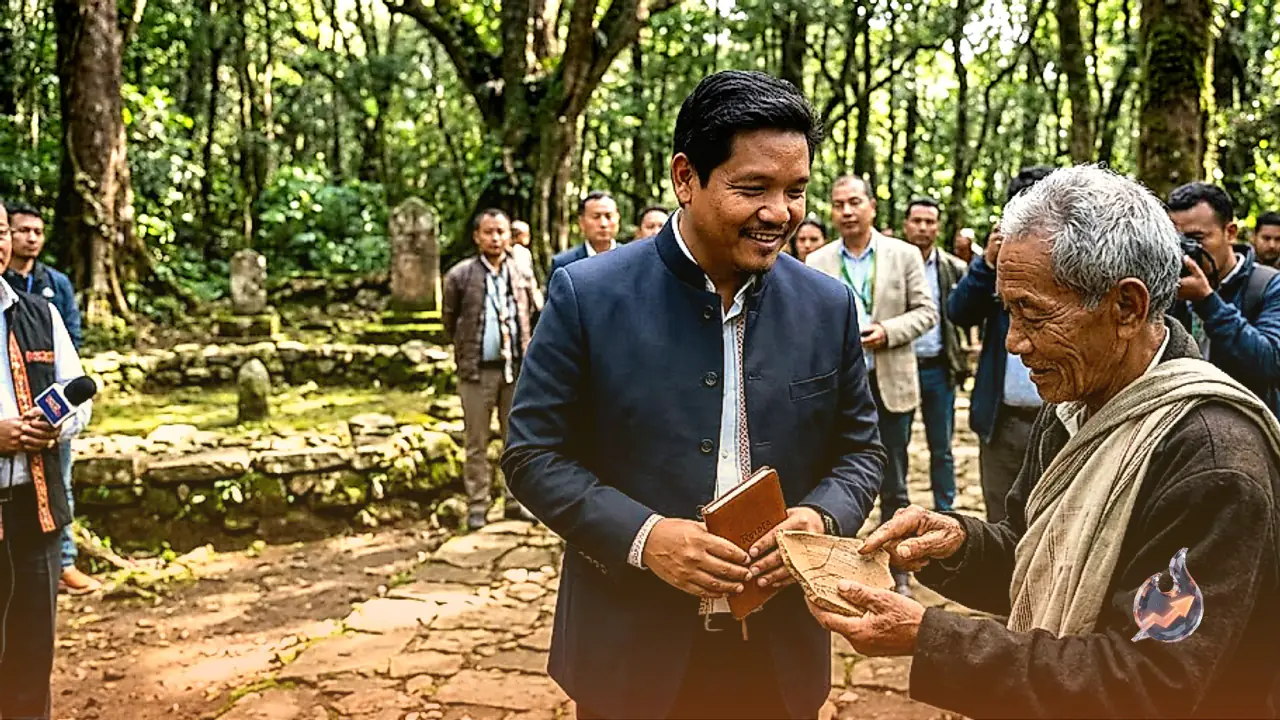























Meghalaya Chief Minister Conrad K Sangma announced that more than 20,000 school students across the state have gained significant benefits from the SPARK initiative. Speaking at the District Talent Event 2026 organized under the SPARK Meghalaya banner in Tura on Wednesday, the Chief Minister confirmed that the state government is transitioning this initiative into a long-term, state-funded programme. Designed to build essential soft skills, expand awareness in science, technology, engineering, and mathematics (STEM), and nurture young talent, the project aims to reshape how foundational education is delivered to schoolchildren.
From Pilot Project to State-Wide Rollout
The SPARK acronym stands for School Programmes in Articulation, Resilience and Kindness. Launched initially in 2024 as a pilot intervention, the project originally reached 5,143 students spread across 25 government schools in all 12 districts of Meghalaya. Demonstrating strong participation among female students, young girls accounted for approximately 73 per cent of the total beneficiaries during this initial phase.
Following its initial success, the initiative gained additional support through the Ministry of Education's Samagra Shiksha Abhiyan (SSA) funding. This financial backing allowed the expansion of the program across 28 educational campuses, extending its reach to more than 8,000 students. Recognizing its practical impact on holistic learning, the Union Ministry of Education formally acknowledged SPARK as a Best National Education Policy (NEP) Practice.
Building on these milestones, the state administration scaled up SPARK into a multi-year, state-funded handholding system for students enrolled in Classes 6 through 10. Official data recorded as of August 31 shows that the direct reach of SPARK for Students expanded to 12,078 students across 53 benchmark campuses in all 12 districts. This student cohort comprised 6,592 girls and 5,486 boys.
Addressing Skills Beyond the Traditional Marksheet
During his address, Chief Minister Sangma emphasized that SPARK targets fundamental human capabilities that are rarely captured by conventional academic examinations, yet remain crucial to long-term life outcomes. He noted that academic marksheets fail to show whether a student can comfortably ask questions, articulate ideas, collaborate in group settings, face job interviews, or bounce back from personal setbacks.
Reflecting on his own youth, Sangma shared personal memories of public speaking struggles, recalling how he frequently experienced nervousness and lacked the self-assurance seen in today's youth. He remarked that his generation lacked programmes like SPARK for guidance, while praising the operational efforts of Team SPARK and implementation partner Avenues for facilitating this transformation.
Empowering Educators and Preparing for Future Workspaces
The Chief Minister highlighted that teachers serve as the backbone of the initiative. Through the dedicated SPARK for Teachers vertical, 526 educators representing 287 schools have completed an intensive 30-hour semi-residential training module held at various district headquarters. Sangma noted that participating teachers reported re-engaging with their core educational purpose and developing a renewed appreciation for positive communication and strong interpersonal relationships inside classrooms.
Addressing the broader technological landscape, Sangma alerted that rapid innovations are reshaping global employment markets, requiring educational frameworks to prepare students for shifts expected over the coming decade. Pointing out that education systems change slowly with a ten-year lag between decisions and results, he explained that SPARK provides the agility needed to unlock student potential early. He observed that while automated systems may handle repetitive tasks, essential human qualities like taking responsibility, diagnosing problems, maintaining a sense of purpose, and devising creative solutions will always remain in high demand across organizations.
Unearthing Hidden Potential: The STAR Sports Parallel
To illustrate the vital importance of identifying talent early, Sangma drew a parallel to the state's STAR Programme in sports. Over the past five years, the state partnered with an Australian firm to conduct standardized global talent screenings covering 24,000 children. This rigorous process identified 10 children who ranked in the top one per cent globally as super athletes, despite many coming from remote rural backgrounds without formal training or athletic shoes. Notably, one youngster from a deep rural area clocked an impressive 10.8 seconds in the 100-metre sprint.
Sangma emphasized that raw talent exists everywhere across Meghalaya, and the government's duty is to extend opportunities directly to children regardless of location. Asserting that Meghalaya's smaller population size should not constrain its ambitions, he stated that future progress will be determined by human resource quality rather than headcount. He reaffirmed the government's commitment to sustain SPARK as a permanent handholding model, adding that the self-confidence cultivated in young students today will serve as a valuable asset for the state over the coming decades.