




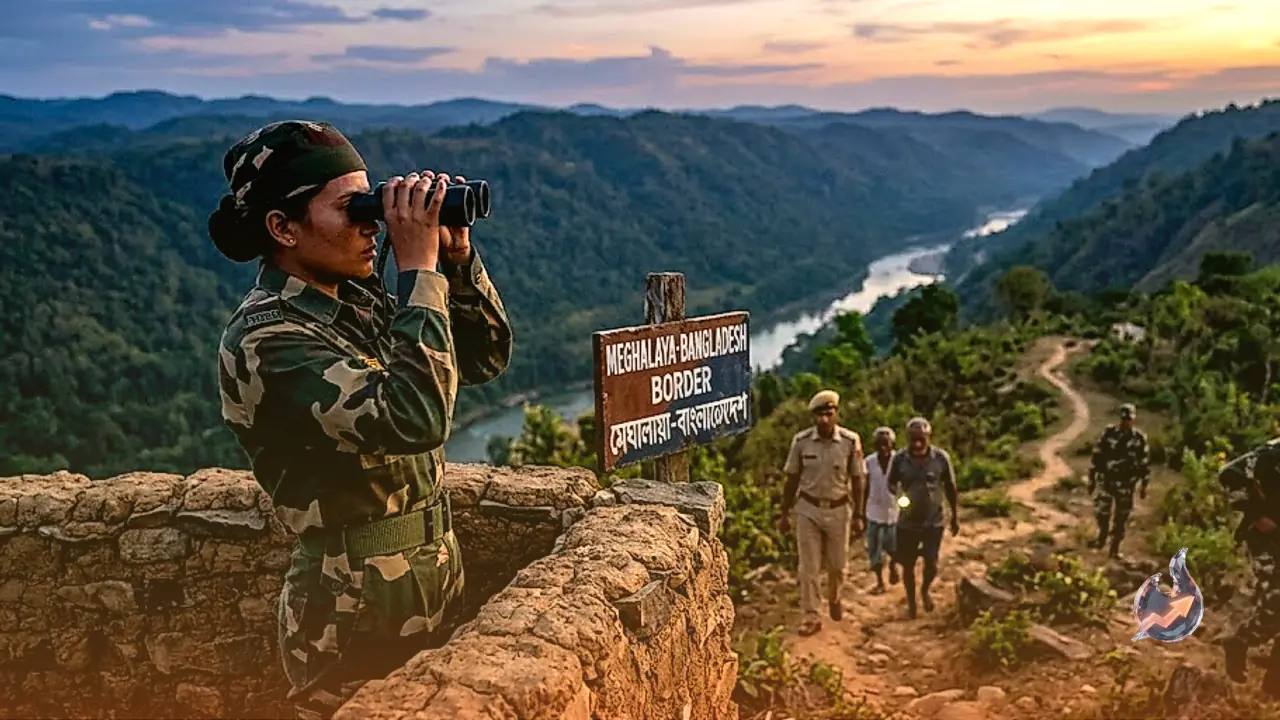














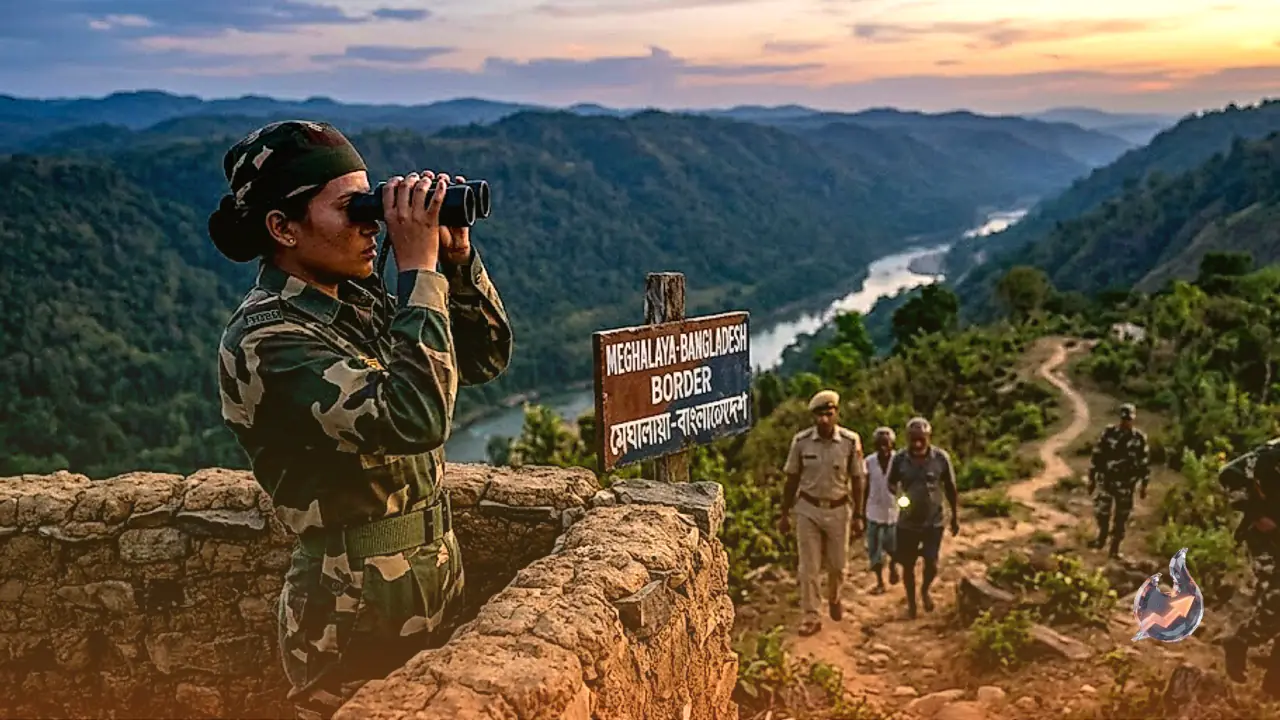

Meghalaya has moved to reinforce surveillance along its 443-km international boundary with Bangladesh, bringing together state authorities, the state police, and the Border Security Force (BSF) to review exposed sectors and establish closer operational coordination to halt unauthorised movements.
High-Level Review and Directives on Vigilance
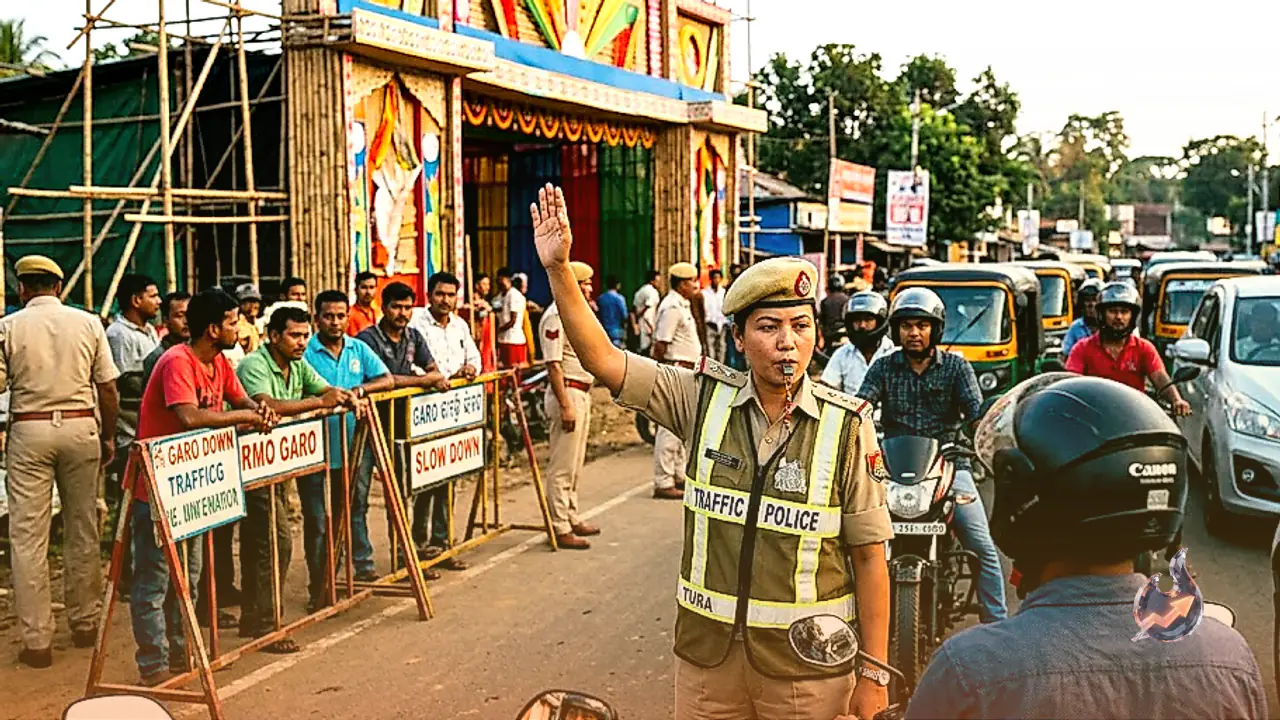
The operational shift came following a high-level security meeting held on Tuesday, where Deputy Chief Minister Prestone Tynsong instructed all participating agencies to significantly tighten ground-level monitoring. Attention was directed primarily toward sectors where broken terrain and gaps in physical fencing complicate border oversight.
During the review, Tynsong noted that enforcement personnel encounter unauthorised attempts to cross over into Meghalaya from across the boundary on an almost daily basis. The recurring attempts underscore the persistent challenge of guarding an expansive and demanding international perimeter against irregular entry.
Terrain Constraints Across Sensitive Sectors
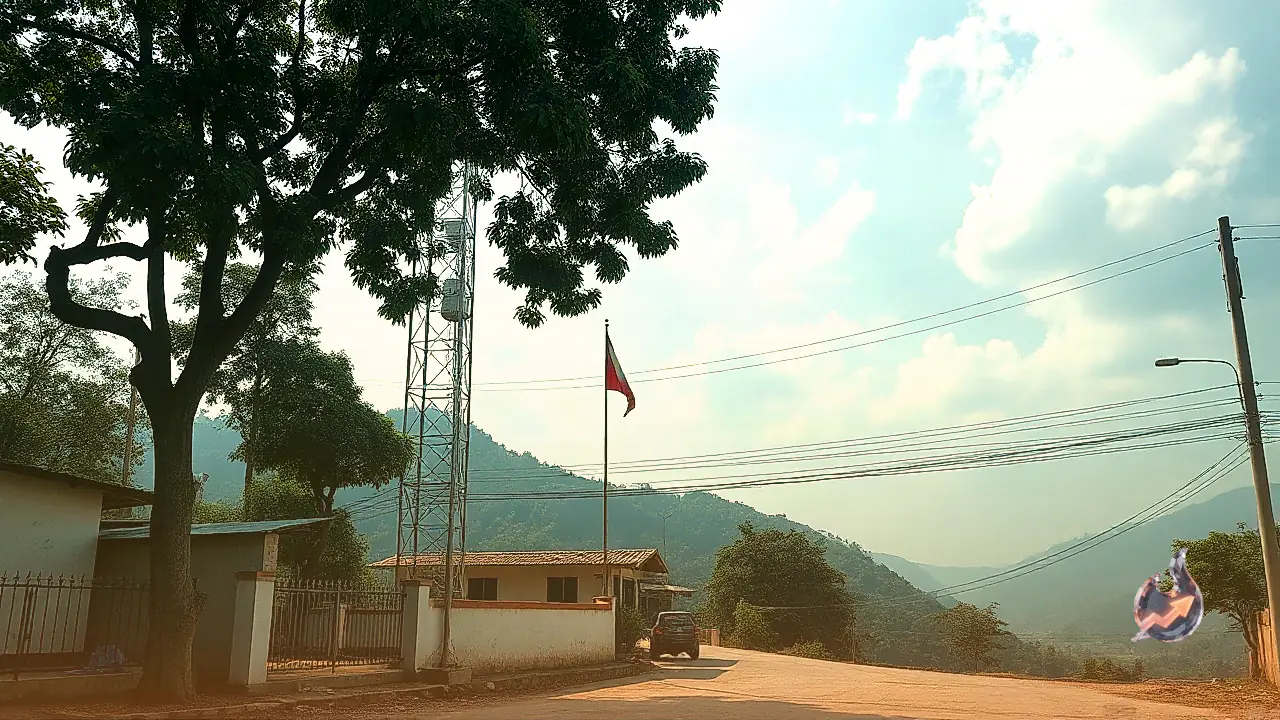
Portions of East Khasi Hills and West Jaintia Hills were highlighted as particularly problematic sections during the assessment. Along these tracts, several border stretches are either exceptionally difficult to access on foot or still lack continuous protective fencing.
The physical landscape across these regions is predominantly mountainous and heavily forested, conditions that severely impede vehicular movement, regular foot patrols, and engineering projects such as barrier construction. These natural barriers also limit the reach of conventional round-the-clock observation, making dedicated surveillance strategies essential.
Mobilising Village Units and Traditional Leaders
To supplement standard border deployments, the state administration is expanding the role of civilian populations residing adjacent to the international boundary. Village Defence Parties (VDPs) situated in border settlements have been mobilised to work alongside formal security agencies.
Concurrently, traditional community leaders are being integrated into local monitoring efforts to ensure prompt reporting of unusual or suspicious activities. The strategy aims to build a responsive communications network connecting civil administration officials, district police units, and BSF detachments so critical intelligence from village residents reaches operational teams without delay.
Strengthening a Multi-Layered Border Mechanism
Unauthorised border crossings and irregular infiltration have long posed complex security and administrative dilemmas for Meghalaya, particularly where geographical obstacles interrupt continuous physical fencing.
To counter these vulnerabilities, authorities are implementing a multi-tiered surveillance structure that relies on active cooperation among paramilitary troops, district authorities, and local village communities. Tynsong reiterated that direct community involvement remains indispensable for territorial integrity, especially along corridors where harsh terrain reduces the efficiency of standard fencing and routine patrols.