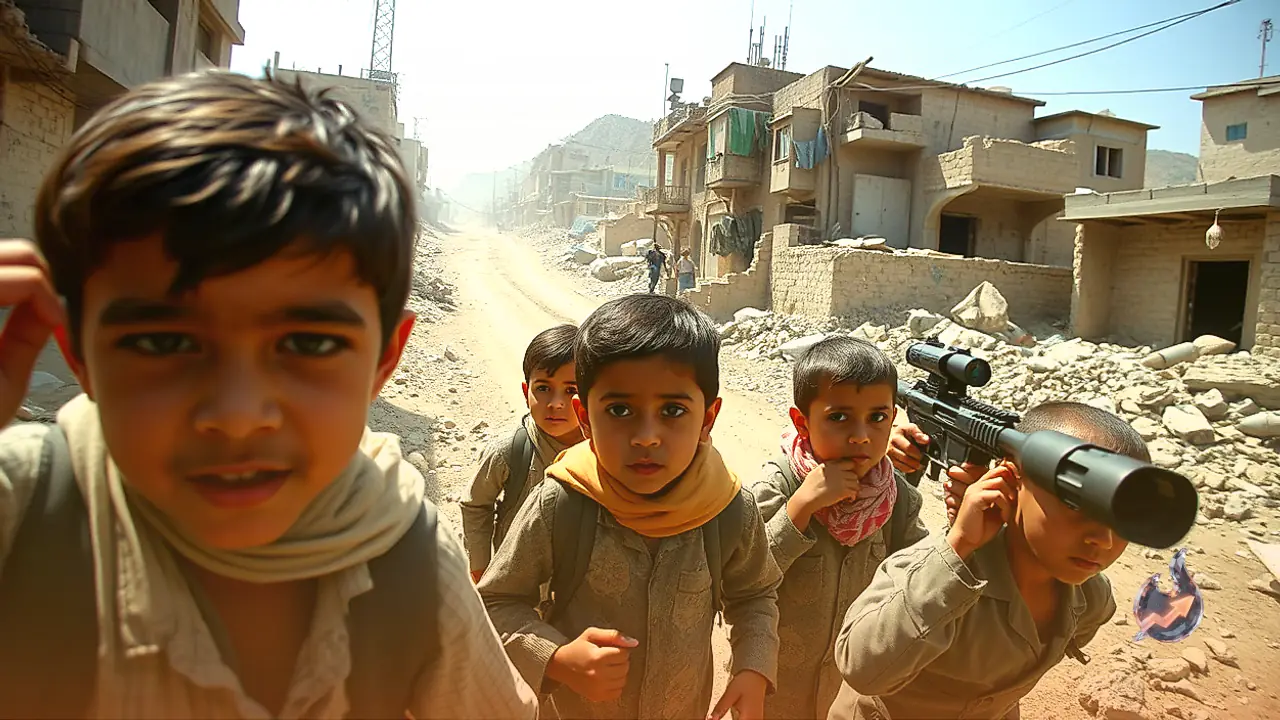




















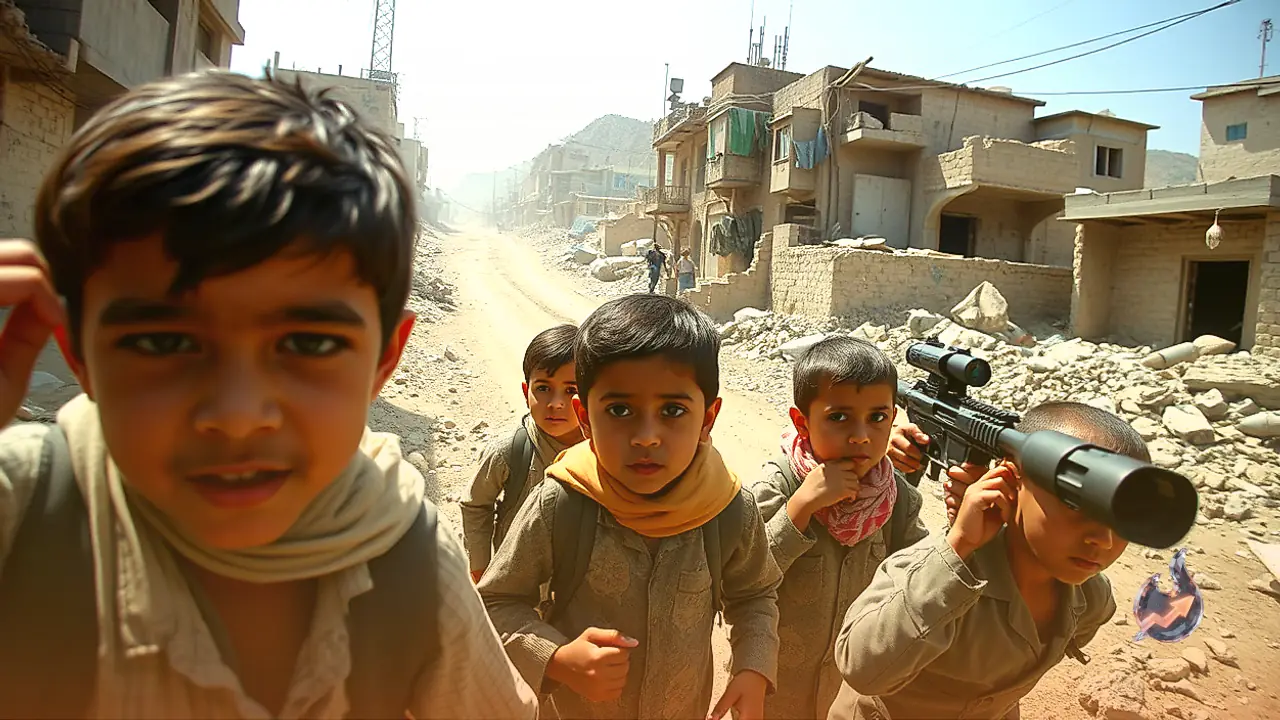

For young pupils in the southwestern Yemeni city of Taiz, the daily morning walk to class carries dangers far beyond heavy traffic or missed transport. Every morning at 6:00, ten-year-old Rafeef and her younger brother dress in their cream and brown uniforms to begin their ascent up the mountain. While both eagerly anticipate their lessons and seeing classmates, each step uphill requires walking with their backs turned directly toward active sniper positions stationed across the valley.
A Classroom on the Front Line
Rafeef attends a school positioned high on a mountain overlooking a valley widely referred to as no-man's land. This ridge forms a fiercely contested front line in Yemen's long-running civil conflict between forces backing the internationally recognised government, supported by Saudi Arabia, and the Iran-backed Houthi movement. Government troops hold the terrain immediately adjacent to the school, while Houthi military encampments and sniper nests occupy the higher ridges across the divide.
Living lower down the slope, Rafeef faces immediate exposure whenever she journeys to school. She openly admits to being afraid during the climb, yet she refuses to abandon her education. For her, school offers a rare sanctuary and the only environment where her parents permit her to venture outside. Her parents remain steadfast in their desire to secure a better life for her through learning, while Rafeef focuses on her dream of one day becoming a physician.
Displacement and Lingering Scars
Rafeef's family originally fled to Taiz nine years ago from the Red Sea port city of Hudaydah after Houthi forces established control there. Yet seeking refuge in Taiz did not shield them from violence. Two years ago, a mortar shell detonated immediately outside their residence while Rafeef and her brother were home alone. Metal fragments punched through the front entrance, fracturing her arm and leaving permanent physical scarring.
Her deep attachment to her classroom keeps her moving forward despite past trauma. She readily recites the names of her peers, eager to study subjects ranging from mathematics to Arabic and Islamic studies, alongside looking forward to starting English classes next year. For children living under siege, these daily interactions represent their primary connection to a normal childhood.
The Staggering Cost to Yemeni Youth
The broader educational landscape across Yemen remains devastating. According to Unicef, approximately 3.2 million children were already out of school across the country before fighting escalated over the past month. Since the civil war erupted in 2014, thousands of young people have been killed or permanently maimed, while thousands more have been drawn into recruitment by armed factions on both sides of the conflict.
Taiz has remained one of the most embattled urban centres throughout the war. Following the expulsion of the government from the capital, Sanaa, in 2015, Houthi forces pushed to capture Taiz but were largely pushed back from the urban core by local militias. Securing Taiz remains a key objective for the Houthis, as complete control over the city would cement their hold over the northern portion of Yemen. In recent operations, the group has deployed armed drones alongside heavy artillery and ground attacks.
Escalating Clashes and Shifting Control
Military pressure around Taiz has intensified significantly in recent days. Houthi units cut off a primary logistics artery connecting Taiz to the southern port city of Aden on Sunday, effectively tightening an encirclement around urban neighbourhoods. Control over that highway has repeatedly shifted as fighting rages. Residents express persistent worry that opposing fighters could push further into the city at any moment.
Simultaneously, government forces have reported operational advances in adjacent theatres. State troops have recaptured key tactical positions along the Bab al-Mandab Strait, a vital international shipping corridor, and initiated an offensive aimed at pushing toward Sanaa. Across Taiz, numerous residential buildings on the exposed mountain slopes stand deserted, abandoned by occupants seeking shelter from constant crossfire and sniper strikes that have left several civilians wounded in surrounding streets.
Living Under Permanent Threat
At Rafeef's school, forty-five-year-old teacher Abdel Raqeeb al-Obaidi observes that exposure to combat has become a routine reality of education. The school building has sustained incoming fire on previous occasions. From the facility's open rooftop, Houthi barracks, camps, and sniper emplacements across the peaks remain clearly visible, prompting security personnel to limit time spent exposed in the open.
Abdel Raqeeb reflects on the pervasive uncertainty facing educators and students alike, noting that fighting can erupt without warning while people are sitting in class, asleep at home, or walking down the street. The inability to predict what tomorrow will bring has become an unsettling fixture of life in the city.
Devastation in Civilian Quarters
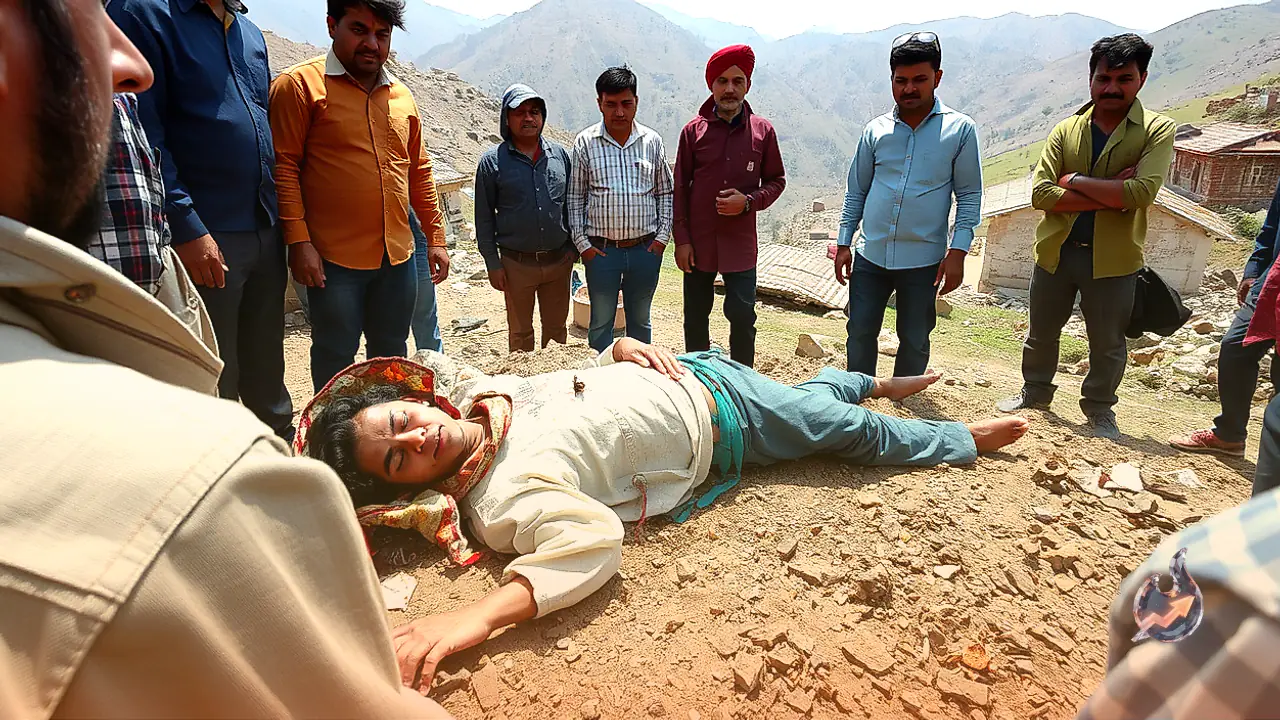
The heavy toll of urban shelling falls hardest on non-combatants throughout the area. At Al-Rawdah Hospital, located just a five-minute drive from the school, medical personnel regularly treat victims of artillery strikes. One recent mortar explosion at an automotive workshop claimed the life of three-year-old Ahmed, who was struck in the back by shrapnel that penetrated his heart.
The toddler had accompanied his father to have a motorcycle tyre inflated after crying to come along instead of staying behind at home. While his father survived without injury, the child died from his wounds. Nurse Ikram Shamsan, holding the blood-stained rubber sandals the boy was wearing, wept over the tragedy, questioning what the young child or his family had done to deserve such grief as the father prepared to bring his son's body home.
A Critical Fight for Survival
The same workshop strike left eleven-year-old Amjad critically wounded. Amjad and his brother had been working alongside their uncle at the garage to earn money to support their family in their rural village. Shrapnel caused severe trauma to Amjad's lung and abdomen, placing him in intensive care on life support.
Following an eight-hour journey from the village, Amjad's mother arrived at the hospital early the next morning, praying at his bedside before breaking down outside the ward. Doctors noted an improvement in his vital signs during her presence, allowing them to proceed with secondary surgery. While the procedure was completed, medical staff confirm that he remains in critical condition. Healthcare workers continue to plead for an end to hostilities, exhausted by the relentless stream of child casualties.