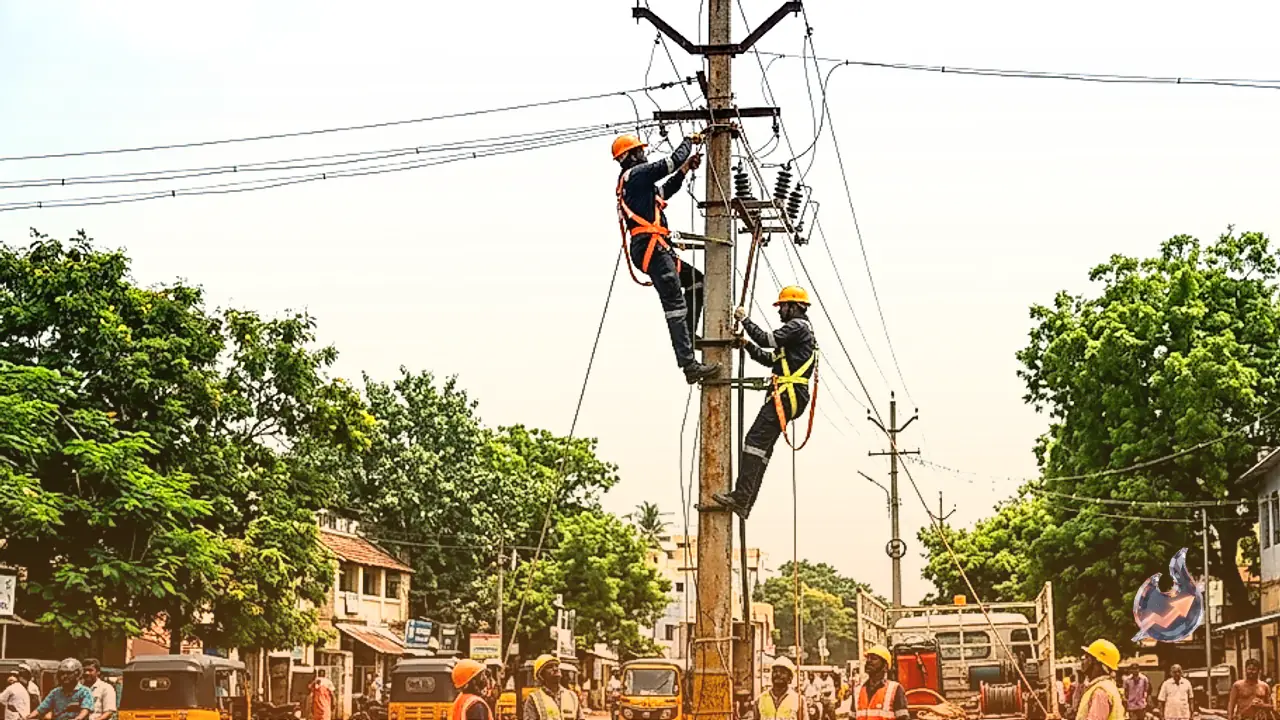




















Electricity consumers across Jammu and Kashmir will face higher power bills starting this autumn, as the Joint Electricity Regulatory Commission (JERC) has approved an average tariff increase of 6.83 percent. The new tariff order, originally issued by the regulatory body on August 20, 2026, takes effect on September 1, 2026, and will remain in force through March 31, 2027. This upward revision applies uniformly to all consumer categories served by both the Jammu Power Distribution Corporation Limited (JPDCL) and the Kashmir Power Distribution Corporation Limited (KPDCL).
New Domestic Electricity Slabs and Fixed Charges
Under the updated order issued by the commission, domestic electricity consumption has been restructured into distinct billing slabs. Households consuming between 0 and 200 units per month will now be billed at ₹2.45 per unit for energy charges, up from the previous rate of ₹2.30 per unit. For monthly consumption ranging from 201 to 400 units, the energy rate has been set at ₹4.20 per unit. Domestic usage exceeding 400 units in a month will attract a higher charge of ₹4.60 per unit for every unit consumed above the 400-unit threshold. In addition to unit rate revisions, fixed charges for domestic connections have been increased by ₹10 per kilowatt (kW) per month.
Impact on Monthly Bills for Household Consumers
The revised tariff structure will lead to a direct increase in monthly outgoings for residential power users. For instance, a household consuming 200 units of electricity in a month will see its monthly energy charge rise from ₹460 to approximately ₹490, representing a direct increase of ₹30. For households consuming 300 units monthly, the estimated overall power bill will climb to around ₹910. These adjustments mean middle and high-consumption domestic users will experience a notable rise in their utility expenses.
Concessions for BPL Families and Agricultural Power Users
To protect vulnerable households and the farming community, the tariff order incorporates targeted concessions. Eligible Below Poverty Line (BPL) domestic consumers with monthly consumption up to 30 units will pay a reduced energy charge of ₹1.40 per unit, alongside a fixed charge of ₹5 per kW per month. This relief is strictly limited to households holding a valid BPL certificate issued by a competent authority. Any consumption beyond 30 units per month by BPL households will automatically be billed according to standard domestic slabs. Relief has also been structured for agricultural connections. For agricultural loads up to 20 Horsepower (HP), the energy charge is fixed at ₹1.05 per unit with a fixed charge of ₹23 per HP. Agricultural connections exceeding 20 HP will incur an energy charge of ₹6.30 per unit and a fixed charge of ₹47 per HP.
Tariff Rates for Commercial Establishments and Shopkeepers
The regulatory authority has also established revised billing parameters for commercial consumers and local shopkeepers. Commercial consumption up to 200 units per month will be charged at ₹3.75 per unit, while consumption exceeding 200 units will attract a rate of ₹5.70 per unit. Commercial users will also pay a monthly fixed charge of ₹75 per kW. For three-phase commercial installations, the energy tariff is fixed at ₹6.15 per kilovolt-ampere hour (kVAh), combined with a fixed charge of ₹140 per kVA.
Distribution Loss Targets and FPPCA Framework
The Joint Electricity Regulatory Commission has maintained operational benchmarks for the region's power distribution utilities. The distribution loss target has been kept at 15 percent for JPDCL and 19 percent for KPDCL. Furthermore, the Fuel and Power Purchase Cost Adjustment (FPPCA) system will remain operational to absorb variations in power procurement costs over time, while all miscellaneous service charges remain unchanged.