






















Discovering that physical cash saved at home has been torn, waterlogged, or devoured by pest infestations can cause immense financial stress. Recent news from India highlights two shocking incidents involving severe currency damage, one where a farmer in Rajasthan lost savings to termites, and another where a homemaker in Uttar Pradesh found her hidden cash chewed up by rodents. While most people instinctively assume such ruined banknotes become worthless trash, official regulatory frameworks established by the Reserve Bank of India offer a concrete safety net. Under these binding central bank directives, individuals can deposit severely damaged currency notes at commercial bank branches to reclaim their full or partial monetary value, provided key identity markers remain verifiable.
Dramatic Incidents of Cash Ruin Reported in Rajasthan and Uttar Pradesh
The first major incident of severe currency damage unfolded in Newai village, situated within the Pachpadra police station jurisdiction of Balotra district in Rajasthan. A local farmer named Mangilal had recently sold a land plot for 5 lakh rupees. Fearing potential burglary or theft at his home, Mangilal wrapped the entire cash stack tightly inside a plastic bag and buried it deep beneath the soil in his agricultural field. However, as time elapsed, he lost track of the exact subterranean location. Recently, while plowing the field with farm machinery, the buried bag resurfaced. Upon opening the knot, Mangilal was horrified to discover that termites had infested the container, reducing most of the 5 lakh rupees into unrecognizable dust and fragments.
A second tragic incident of cash destruction occurred in Gonda district, Uttar Pradesh. Over a period of approximately 8 years, a woman had quietly accumulated 12 lakh rupees without informing her husband, aiming to purchase gold jewelry. She chose to store the paper currency inside a heavy household trunk wrapped in cloth. When she finally unlocked the trunk to retrieve the funds for her planned purchase, she discovered a nightmare scenario. Rodents had invaded the trunk, chewing through the stacks of banknotes and leaving behind shredded, heavily mutilated currency. Both cases sparked widespread public concern regarding whether citizens can recover financial losses caused by unforeseen pest damage.
Reserve Bank of India Guidelines Governing Damaged Banknotes
Directives issued by the Reserve Bank of India clarify that banknotes damaged by termites, chewed by rats, or torn into multiple fragments do not automatically lose their legal worth. Citizens holding such compromised currency are advised to handle the notes with care, avoid tearing remaining pieces apart, clean away superficial debris, and present them immediately at the nearest commercial or public sector bank branch, or directly at RBI issue offices.
The determination of refund eligibility depends heavily on physical condition and the visibility of core security elements. If a damaged note retains clear visibility of its unique serial numbers, the portrait of Mahatma Gandhi, and the embedded security thread, banks are authorized to issue a full or partial refund. The precise payout percentage corresponds directly to the proportion of intact surface area evaluated during official inspection.
Rules and Limits for Exchanging Soiled Banknotes
The Reserve Bank of India maintains distinct regulations for soiled currency notes, defined as banknotes that have turned dirty through continuous circulation or have split into two pieces while retaining clear readouts of all essential details.
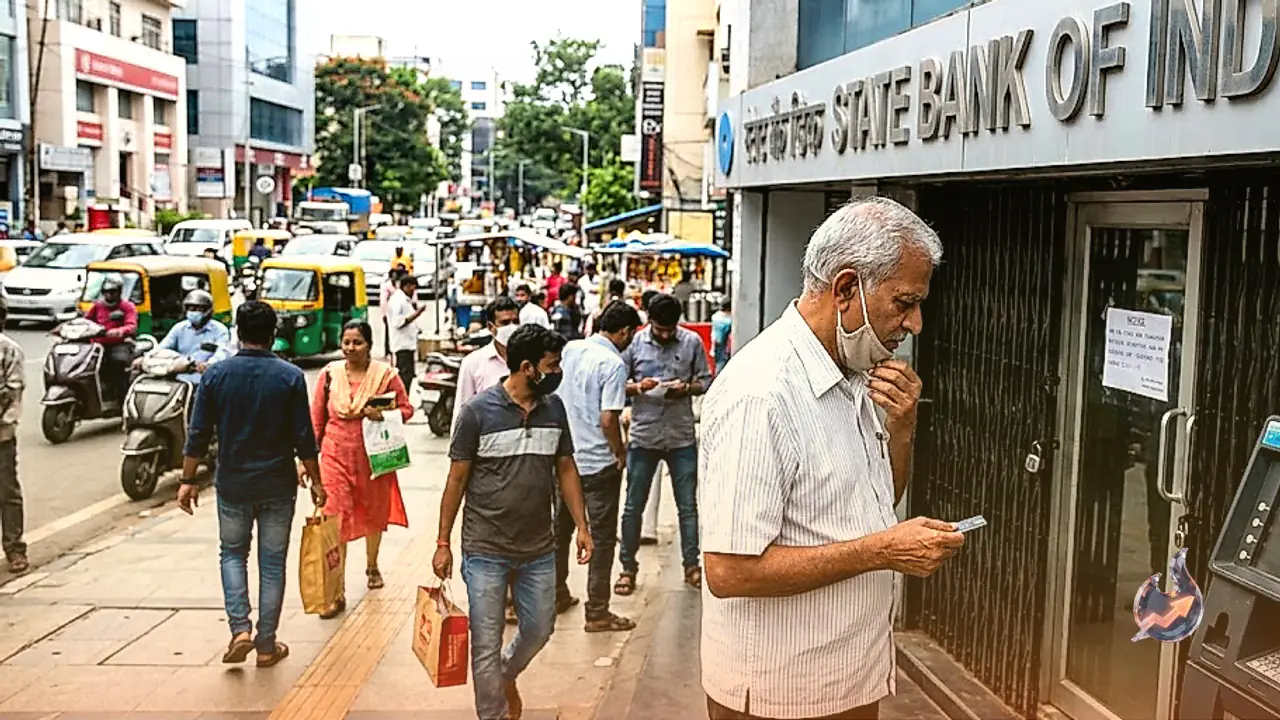
Under standard banking protocols, an individual presenting up to 20 soiled notes per day, or a cumulative face value not exceeding 5,000 rupees, is entitled to an immediate, free-of-charge over-the-counter cash exchange at any bank branch. However, if the deposit exceeds 20 notes or 5,000 rupees in total value, instant cash payouts are suspended. Instead, the receiving bank branch accepts the currency against an official acknowledgement receipt. The submitted bills undergo formal assessment, and the final evaluated refund is transferred electronically into the customer's bank account within a maximum turnaround limit of 7 days, following submission of valid banking details.
Framework for Mutilated and Imperfect Notes under NRR 2009
For banknotes that suffer extreme structural damage, such as missing corners, severe rat bites, termite erosion, or multiple tears, processing follows the statutory provisions of the RBI Note Refund Rules, 2009 (Part III). All public and private bank branches are required to process mutilated and imperfect notes in accordance with these standards.
For smaller daily submissions, if an individual presents up to 10 mutilated notes at a bank counter, branch staff typically evaluate the surviving portions on the spot and disburse the applicable exchange value immediately. Conversely, when deposits exceed 10 notes or cross the 5,000 rupees monetary threshold, the transaction is treated as a bulk submission. The branch retains the notes, issues a paper receipt, and schedules an electronic payout into the depositor's account.
In situations where notes are turned in at a non-chest bank branch lacking specialized currency inspection facilities, the branch accepts the currency, provides a receipt, and forwards the damaged notes to its linked currency chest branch for expert scrutiny. Because currency chest verification involves transportation and technical appraisal, settlement can take up to 30 days. Once verified, the approved payout is deposited directly into the user's registered bank account via electronic transfer.
Service Fees and Safeguards for High-Value Currency Deposits
According to the RBI Master Circular on Bank Customer Service dated July 1, 2015, banking institutions are permitted to levy reasonable service charges to cover administrative and processing costs associated with evaluating damaged currency. These charges are deducted in accordance with established fee schedules.
Furthermore, when the aggregate face value of soiled, mutilated, or imperfect notes presented for exchange reaches or exceeds 50,000 rupees, banks must enforce enhanced due diligence protocols. In these high-value scenarios, financial institutions conduct identity verification, examine the source of funds, and record the circumstances surrounding the cash damage to guard against money laundering or fraudulent claims. Even for large cash holdings exceeding 1 lakh rupees, note exchanges remain permissible, though processing times may extend to a week or more to complete thorough audits.
Practical Recommendations for Citizens Facing Damaged Cash Losses
If you encounter currency damage due to pests, water, or decay, following the correct administrative procedure is critical. Preserve all remaining fragments inside a sturdy container without applying adhesive tape or separating fragile pieces manually. Rather than traveling to distant central bank offices, visit any nearby public sector bank branch, as all commercial banks are mandated to abide by RBI exchange guidelines.
Ensure that you obtain a signed and stamped receipt whenever depositing more than 10 to 20 notes or amounts exceeding 5,000 rupees. Verify that the receipt explicitly states the tentative resolution timeframe, whether 7 days for standard bulk deposits or 30 days for currency chest evaluations. By providing accurate electronic banking information, depositors can recover their legitimate funds directly into their accounts without falling prey to unaccredited middlemen or incurring unnecessary financial loss.