























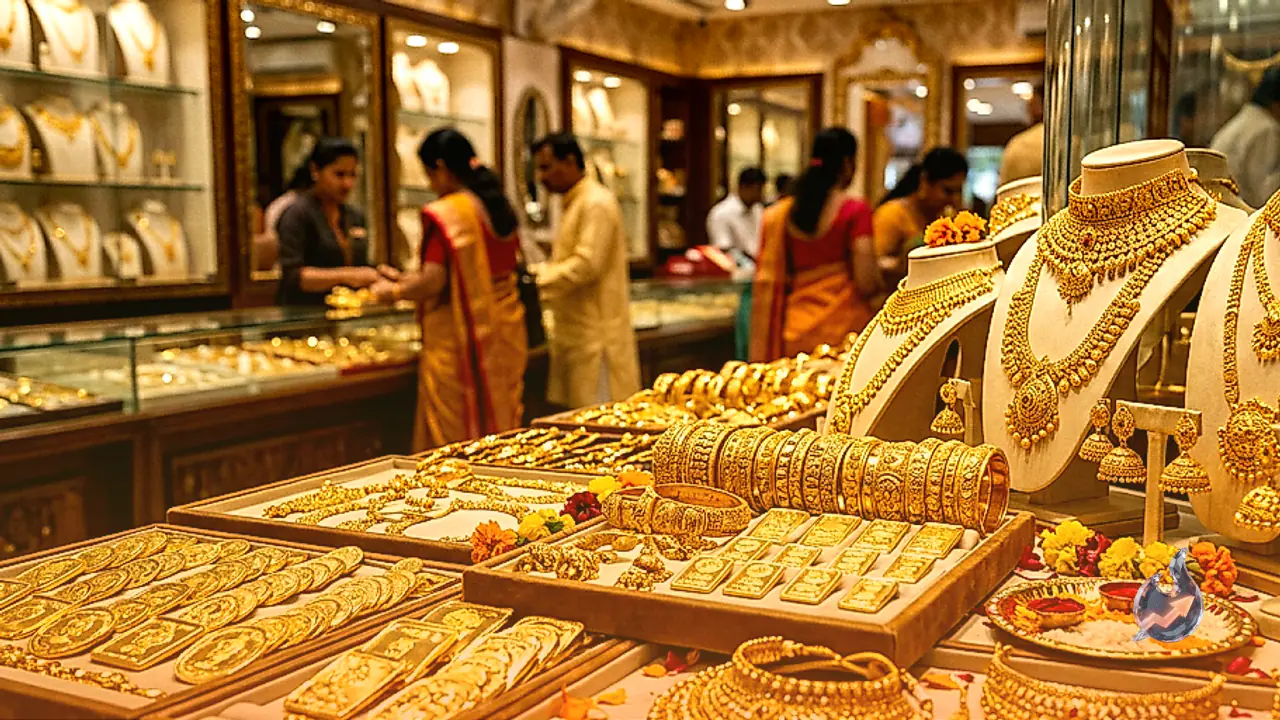

Domestic bullion prices edged upward following vigorous consumer spending during Dhanteras, providing stability to precious metals across Indian retail counters ahead of Diwali. Across the country, households turned out in large numbers to purchase gold and silver, giving the physical bullion market much-needed support after a period of intense price volatility. With the primary festival of Diwali slated for November 8 and the winter wedding calendar set to open immediately thereafter, strong domestic consumption is expected to keep prices relatively resilient in the near term.
Retail Quotations for 22K and 18K Jewellery Segments
In physical retail counters on November 7, 2026, 22-karat gold climbed by Rs 10 to touch Rs 13,160 per gram. For traditional purchases, an 8-gram sovereign of 22-karat gold settled at Rs 1,05,280, while the widely monitored 10-gram denomination reached Rs 1,31,600. High-volume purchases and larger jewellery collections pegged 100 grams of 22-karat gold at Rs 13,16,000. Jewellery buyers often treat these denominations as benchmark references during peak festival seasons.
Concurrently, the 18-karat gold category, which caters heavily to contemporary lightweight and studded jewellery, recorded a rise of Rs 9 per gram to trade at Rs 10,768 per gram. An 8-gram unit of 18-karat gold reached Rs 86,144, whereas 10 grams was quoted at Rs 1,07,680. For commercial and bulk jewellery manufacturing orders, 100 grams of 18-karat gold moved to Rs 10,76,800. These price levels reflect how steady demand across different purity categories continues to shape festive transactions.
Review of Price Fluctuations Across the Past Week
The domestic bullion market has experienced persistent volatility over the opening week of November, reacting closely to shifting momentum in international pricing and foreign exchange values. On November 7, 2026, 24-karat pure gold climbed Rs 11 to reach Rs 14,357 per gram, alongside the Rs 10 advance in 22-karat gold to Rs 13,160 per gram.
This recovery followed a sharp retreat on November 6, when 24-karat gold sank by Rs 256 to Rs 14,346 per gram, and 22-karat gold tumbled by Rs 235 to Rs 13,150 per gram. That drop interrupted a strong upward move seen on November 5, when 24-karat gold had vaulted by Rs 322 to Rs 14,602 per gram, and 22-karat gold increased by Rs 295 to stand at Rs 13,385 per gram.
Prior trading sessions also saw pronounced shifts. On November 4, 24-karat gold advanced by Rs 316 to Rs 14,280 per gram, with 22-karat gold picking up Rs 290 to reach Rs 13,090 per gram. On November 3, 24-karat gold gained Rs 27 to trade at Rs 13,964 per gram, while 22-karat gold rose Rs 25 to Rs 12,800 per gram. Earlier, on November 2, 24-karat gold increased by Rs 49 to Rs 13,937 per gram, as 22-karat gold added Rs 45 to reach Rs 12,775 per gram. The month opened on November 1 with absolute stability, keeping 24-karat gold at Rs 13,888 per gram and 22-karat gold at Rs 12,730 per gram with zero net change recorded.
Derivatives Trend on the Multi Commodity Exchange
While physical spot retail prices nudged slightly higher, the derivatives segment showed a different reaction during the previous session. On the Multi Commodity Exchange (MCX), gold futures linked to the December 4, 2026 settlement contract finished at Rs 1,42,364, marking a drop of Rs 1,731 or 1.20 percent during Friday trade. The fall in domestic futures captured broader profit-booking across international commodity boards.
Conversely, silver futures on the MCX demonstrated mild upward resilience. The December 4 silver contract concluded at Rs 1,84,977, edging up by Rs 190 or 0.10 percent. Industrial requirements paired with sustained festival demand for silver coins and decorative items helped hold the white metal steady despite volatility in gold derivative contracts.
Global Market Dynamics and Central Bank Accumulation
ICICI Direct observed that spot gold should find solid support near the $4,000 level and potentially climb toward $4,120, assisted by a softer US dollar and easing yields on US Treasury notes. Market participants have also recalibrated their interest rate projections. According to data tracked on the CME FedWatch Tool, traders assign an estimated 64 percent probability to the US Federal Reserve raising interest rates in December, which is noticeably lower than the 84 percent probability observed in the preceding week.
Underlying support for gold is also being driven by sovereign reserves management. Global central banks ramped up their gold purchases during the third quarter at the fastest pace recorded since late 2024. In Europe, the central bank of Poland achieved its publicly announced gold reserve target of 700 metric tons, while leaving room for additional buying in future cycles. Market attention remains focused on incoming US nonfarm payroll figures, which are anticipated to offer deeper direction on macroeconomic health and the future course of global monetary policy.