






















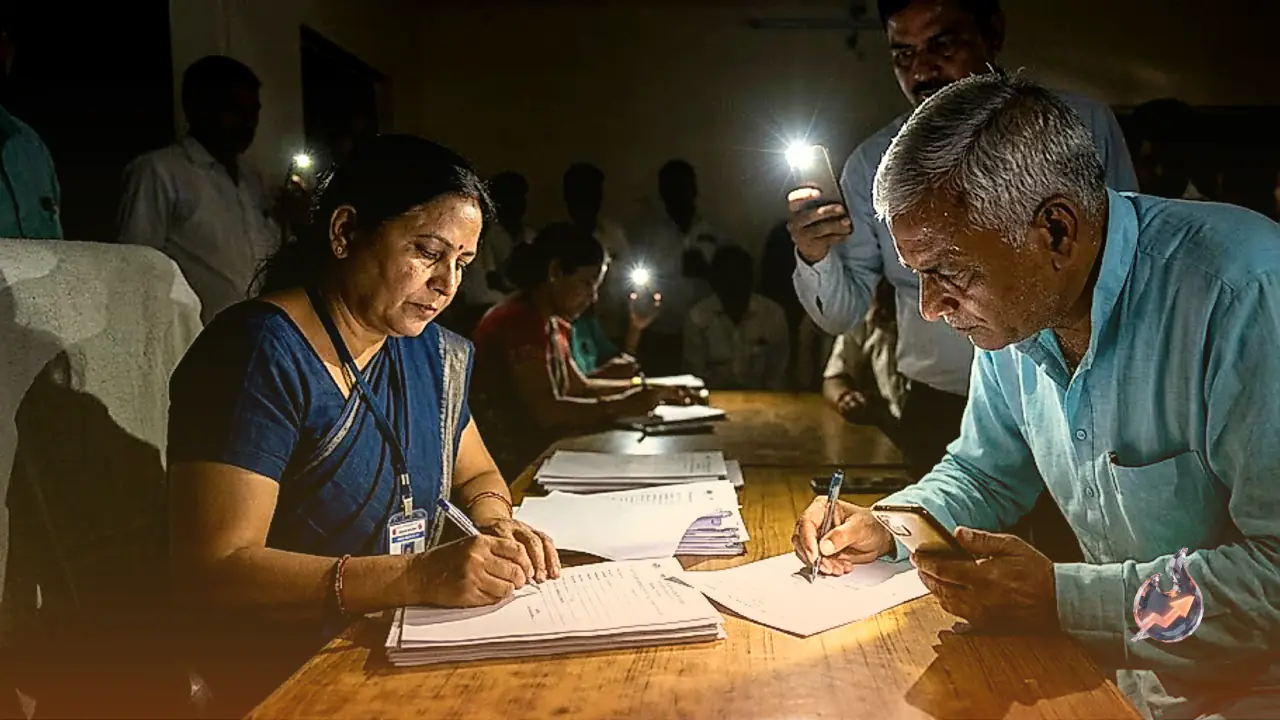

Chaos unfolded at the Dholpur Collectorate in Rajasthan when a sudden power outage struck the premises right in the middle of the municipal election nomination process. The abrupt blackout plunged the administrative building into darkness and immediately disrupted essential electoral tasks. During this unexpected disruption, office employees along with citizens who arrived to file their nominations were forced to navigate through significant difficulties to get their work done.
To ensure the nomination process did not grind to a complete halt, employees resorted to using the flashlights on their mobile phones. Where official documents are normally verified under bright lights, the tiny glow of smartphone screens became the primary source of illumination. Realizing the gravity of the situation, the citizens who came to submit their nomination papers also stepped in to help by holding up their own mobile torches to provide adequate light for the officials to examine papers and advance the paperwork.
The sudden power failure sparked considerable frustration and anger among the people gathered at the collectorate for nominations. Citizens questioned why the collectorate lacked an immediate alternative power backup arrangement, such as a generator, especially during a high-stakes electoral process. Examining critical documents and completing regulatory requirements in the dark proved to be an arduous task, forcing both staff and the public to improvise using personal electronic devices.
This embarrassing incident at the Dholpur Collectorate has raised serious questions about the administrative preparedness of the local authorities. With a massive influx of candidates, supporters, and election staff visiting the complex during election season, the failure of a basic utility like electricity became a major talking point. Despite the entire premises being enveloped in darkness for a considerable duration, the staff managed to push through the hurdles using available resources while the public extended their cooperation.
The unfolding of events amidst a critical democratic exercise highlights glaring gaps in local infrastructure management. As the rush of candidates and their entourages continues through the municipal election phase, unexpected infrastructural lapses continue to cause public inconvenience. The sight of officials verifying election papers in mobile flashlight beams remains a stark reminder of the need for robust backup systems during vital public procedures.