





















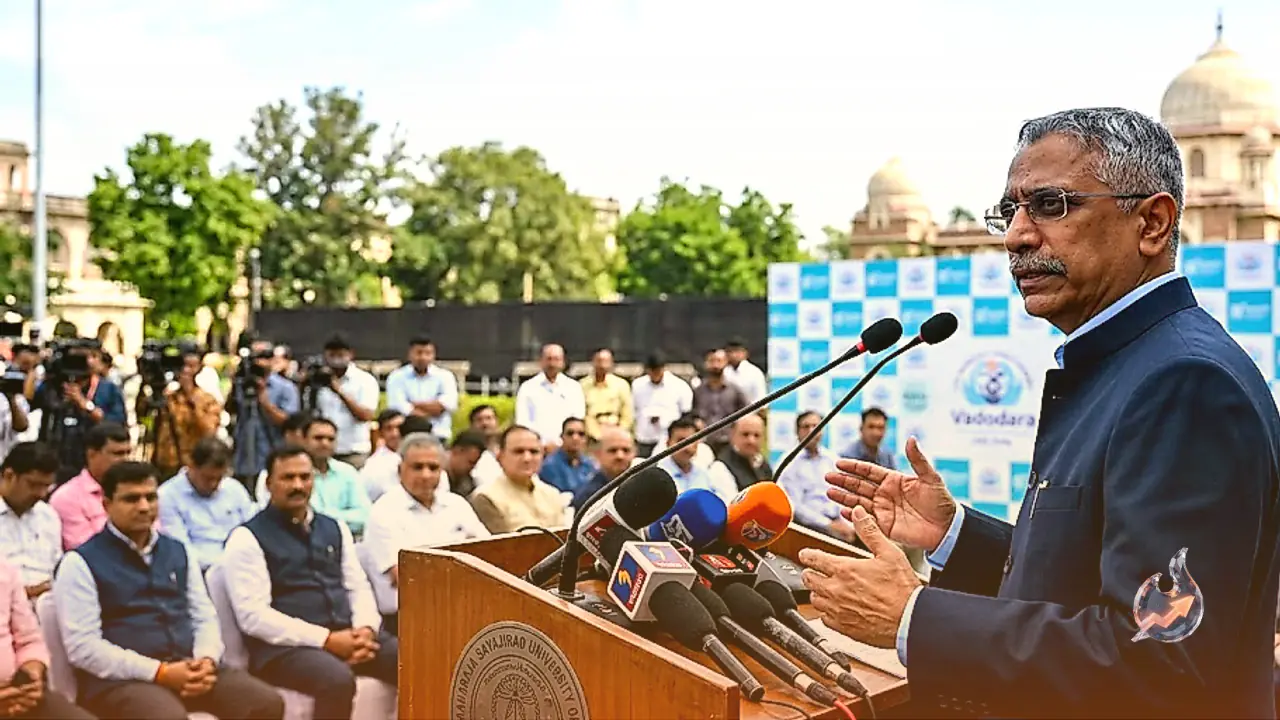

Visiting Vadodara for a private event to support the local startup ecosystem, former Army Chief General MM Naravane shared significant insights regarding recent military strategies during an interaction with journalists on Saturday. He stated that Operation Sindoor has brought about a major shift in India's strategic stance against the neighboring country. Rather than limiting military actions to terrorist launchpads stationed near the border, Indian forces penetrated deep inside Pakistani territory to target individuals and networks providing support and backing to militants. Describing the operation as a necessary and crucial measure, Naravane recalled that the proactive action was launched immediately in the aftermath of the tragic Pahalgam terror attack.
Sending a Strong Message to Terror Enablers Across the Border
Contrasting past military responses with the current doctrine, the former army chief referenced earlier operations like the counter-actions following the Uri assault and the Balakot airstrikes executed after the Pulwama incident. He pointed out that those earlier missions primarily focused on neutralizing militant hideouts situated close to the international border or the Line of Control. In contrast, Operation Sindoor expanded the operational scope significantly by striking deep inside Pakistan at locations such as Muridke and Bahawalpur, where active support networks for terrorists were identified. Through this decisive step, India delivered an unequivocal message that entities aiding terrorism from any location will no longer remain safe from Indian countermeasures.
Constant Surveillance by Indian Armed Forces
Naravane also touched upon Defense Minister Rajनाथ Singh's previous statement asserting that India possesses the resolve to cross over into enemy territory if necessary to eliminate threats. When questioned about heightened activities in Pakistan's Sir Creek region and speculations surrounding a purported Operation Ababeel, he remarked that such routine military movements frequently occur. Noting that he is no longer in active service and lacks granular details about that specific maneuver, he expressed absolute confidence in the vigilance of the Indian armed forces. He assured the public that the military continuously monitors every cross-border development, urging citizens to remain calm because appropriate actions will be executed at the precise time if the situation demands it.
Assessing Pakistan's Capabilities and India-China Ties
When asked directly whether Pakistan retains the capacity to militarily confront India, the former general replied firmly in the negative. Shifting focus to bilateral relations with China, Naravane highlighted the recent high-level talks between National Security Advisor Ajit Doval and Chinese Foreign Minister Wang Yi. He noted that this engagement should be viewed within the broader context of the long-standing boundary dispute, marking the 25th round of special representative-level dialogues between the two nations.
The Core Challenge of Undemarcated Borders
Naravane emphasized that the boundary dispute remains the most critical unresolved issue between India and China. He explained that the exact alignment of the frontier has neither been fully mapped nor completely demarcated on the ground, leaving room for periodic friction. Even as both nations actively work toward normalizing bilateral ties in recent months, addressing this foundational cartographic ambiguity remains essential for lasting regional peace.